

Quick answer
Creator subscription failed payment recovery starts when an existing member's renewal fails. Classify the failure, assign one retry owner, offer a secure payment update and define when grace access expires. Restore paid access only after verified payment success, and keep unpaid renewals out of payable creator earnings. Measure recovered renewal invoices within a fixed window so repeated attempts cannot inflate the result.
Creator subscription failed payment recovery starts with access
A member can still want the subscription while their renewal payment fails. For a creator platform operator, creator subscription failed payment recovery means deciding which failures merit another attempt, what the member can access meanwhile and when unpaid access ends. Configure those decisions together before enabling retries.
Consider a hypothetical paid sewing community with recorded lessons and live workshops. Its operator chooses immediate suspension after failed renewal. A member discovers the lockout before a workshop, although they never intended to leave. Restoring access manually solves that complaint but leaves earnings unclear. The better decision connects collection, access and accounting through the same renewal record.
Separate funding failures from integration failures. A temporary funding problem may justify a later attempt if permitted. An expired card or required authentication needs member action. Invalid request data or broken gateway credentials needs an engineer, not another member reminder. Keep the provider's response alongside your internal category so staff can see why an attempt was blocked.
Start this workflow from an existing subscription's renewal obligation. A visitor who never completed an initial purchase belongs to a different funnel. Check payment processing for creator platforms when deciding whether a gateway supports recurring collection, payment updates and the content your business sells. A payment method that works for a single purchase does not automatically supply the renewal behavior this workflow needs.

Give each renewal a state and each retry an owner
Use a renewal-level state machine that separates awaiting payment from waiting for the member, paid and closed unpaid. Access and earnings follow those states. The table is a proposed operating contract; translate it into the events and controls your chosen gateway actually provides.
For this hypothetical community, assume failure occurs on day zero, permitted retries occur on days two and five, and grace expires on day seven. These are illustrative policy settings, not processor recommendations. Member action can happen throughout the window. If the provider schedules retries, let it own collection; the application observes outcomes and manages access. Do not also run a local retry timer against the same renewal.
| State or trigger | Collection action | Access and earnings | Member communication |
|---|---|---|---|
| Renewal fails; recoverable funding issue | Enter retry_wait; use the designated retry owner | Grace library access; renewal earnings remain pending | Explain failure, update route and grace deadline |
| Expired method or authentication required | Enter action_required; pause blind attempts | Keep original grace deadline; no payable earnings | Request secure update or authentication |
| Invalid request or integration outage | Enter operator_review; investigate before collection | Apply documented outage policy; keep renewal unpaid | Explain service issue without blaming the card |
| Permitted retry becomes due | Confirm invoice is unpaid and subscription permits collection | Preserve existing grace deadline | Suppress duplicate notices |
| Member updates payment method | Reconcile any in-flight attempt, then collect if permitted | Update alone grants no paid entitlement | Confirm update; payment status remains separate |
| Verified payment success | Enter paid; cancel remaining jobs | Restore paid entitlement; post collected amount once | Confirm payment and access |
| Grace deadline reached while unpaid | Enter closed_unpaid; stop scheduled collection | Remove subscription access; no earnings for unpaid renewal | Explain expiration and a deliberate reactivation path |
| Member asks to stop renewal | Suppress future attempts and reconcile in-flight payment | Apply existing paid entitlement rules | Confirm that collection has stopped |
Store subscription and renewal invoice IDs, amount, currency, failure category, retry owner, next action and grace deadline. Keep attempts separately, with provider references and outcomes. A failed attempt must not overwrite a paid invoice. Track access separately: a member can have grace access while their invoice stays unpaid. A content check must not become an accounting decision.
Verify event authenticity, deduplicate event IDs and make invoice changes idempotent. Check ambiguous outcomes with the provider before collecting again. For success after grace expires, confirm amount and invoice, stop pending work and restore access. Send duplicate charges to review rather than granting access twice. Store grace deadlines on access records so expiry does not depend on reminders.

Make the payment update resolve the right problem
A useful recovery message gives the member a specific action and an honest access deadline. Updating a payment method is a credential change, not proof of payment. Keep the renewal unpaid until a verified collection result arrives, and keep its original grace deadline unless an operator explicitly changes it.
For the hypothetical sewing member, a first message could say: Your renewal could not be collected. Your lesson library stays available until the deadline in your account. Open billing to update your payment method or complete verification. New workshop bookings are paused. Show the actual deadline and timezone. Do not expose risk codes, promise an unscheduled retry or suggest the member cancelled.
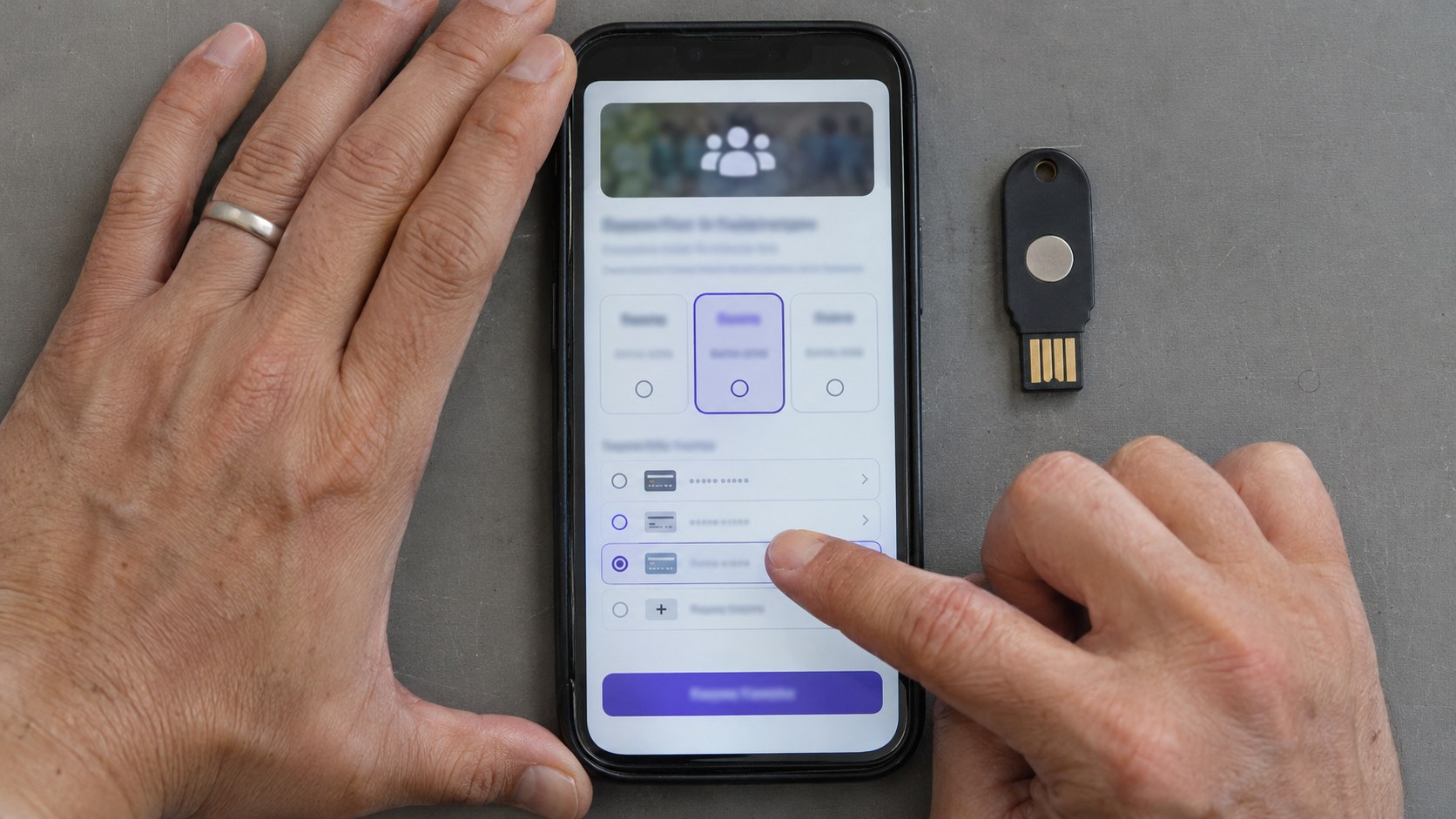
Send the member to an authenticated billing page and the gateway's supported update flow. Never collect card details in support messages. After an update, check for an in-flight attempt before collecting again. Show separate confirmations for a saved method and a paid renewal. If collection fails, keep the reason and next steps visible rather than showing a success banner.
Send notices on state changes and suppress reminders after payment or closure. A final reminder should specify which subscription access ends, without threatening unrelated purchases. For multi-creator sites, name the affected membership clearly. Keep email subjects discreet where the subject matter is sensitive; billing clarity does not require broadcasting what someone watches.
Support needs the last verified payment state, message history and permitted action. Log each manual extension's reason, author and new deadline. Investigate creator platform customer support when assigning who may extend grace or escalate an unclear charge. Without that authority, a helpful override can become a permanent, hidden exception to collection policy.
Stop automated collection when the member revokes renewal, the provider forbids another attempt or the proposed recovery window closes. An in-flight collection still needs reconciliation; hiding the subscription cannot cancel a request already sent. Subsequent reactivation should show the outstanding status and the new billing arrangement clearly. Do not silently combine an old unpaid renewal with a fresh subscription charge.
Count recovered renewals, then reconcile creator earnings
Measure recovery by distinct failed renewal invoices, not retry attempts or messages sent. Hold the failure cohort and observation window constant. Keep recovered gross collections separate from platform revenue and creator payouts; a successful charge does not make the entire amount yours to spend.
Assume a hypothetical cohort of 100 failed renewal invoices, each for USD 20, observed through the proposed seven-day recovery window. Assume 60 distinct invoices are paid within that window and 40 remain unpaid. Exclude new subscriptions, later reactivations and duplicate attempts. These illustrative inputs test the workflow; they are not a forecast for the sewing community or a benchmark for another creator platform.
The hypothetical cohort starts with USD 2,000 in failed renewal value. Its invoice recovery rate is 60 divided by 100, or 60%. Recovered gross collections are USD 1,200; USD 800 remains uncollected at the cutoff. The amounts reconcile to the original cohort. Because every invoice has the same price here, value recovery is also 60%. With mixed membership prices, calculate recovered value against failed value separately.
Before payment, show the failed renewal as pending collection rather than payable creator earnings. On verified success, post the collected amount once and apply the platform's actual commission, fee, tax and settlement rules. The example supplies none of those deductions, so USD 1,200 is gross collection, not net platform revenue or available payout. Grace access creates no collected money. Use creator payout reconciliation to connect the resulting ledger entries to settled funds.
Record recovery route, time from failure, failure category, delivered notices and access corrections. Assign each paid invoice a defined recovery route without counting it again when another notice arrives. Track refunds and reversals separately, and give any net collection measure its own cutoff. Otherwise a later reversed charge remains a triumphant recovery forever.
The sewing operator's choice is now testable: grace protects lessons while the ledger waits for payment and live bookings stay paused. These results cannot prove grace caused recovery; there is no comparison group. Separate action-required failures from eligible retries before changing timing. If members reach billing but leave authentication unfinished, extra retries address the wrong problem.

Commission the workflow against observable outcomes
Implement the state contract before optimizing retry timing. Ask a development partner to demonstrate payment events, entitlement changes and ledger entries together. A clickable billing page is not acceptance evidence if the background jobs can still collect twice or leave paid members locked out.
- Inventory the gateway's recurring-payment, authentication, event and retry controls. Confirm which content categories and payment modes it supports before designing around them.
- Approve the failure categories, retry owner, grace boundaries and stop conditions. Assign operational responsibility for exceptions and member messages.
- Implement the renewal ledger, verified event handling and entitlement transitions. Add reconciliation for missing or ambiguous provider outcomes before switching on automation.
- Rehearse failure, payment update, late success, duplicate event and expiry in a test environment. Verify the invoice, access, earnings and queued jobs after each transition.
- Release with an inspectable cohort report and an operator pause control. Review unexplained collections and access changes before changing the proposed recovery policy.
Make the next vendor demonstration concrete: trigger a failed renewal, update its method, then deliver success after grace expiry. Deliver that success event again. Acceptance means the invoice records payment once, access is restored correctly, earnings are posted once and pending collection jobs are suppressed. For cancellation during collection, require reconciliation of the outstanding request rather than an unsupported promise that the charge vanished.
This approach needs adaptation where off-session charging is unavailable, local authentication requires member presence or paid access includes costly services already delivered. A library grace policy cannot simply be copied to a private live session. During a gateway outage, avoid treating every renewal as a member funding failure. Define outage handling alongside a creator platform disaster recovery plan so incident controls can pause collection and messages without losing renewal records.
Put these cases into the implementation scope, whether AI tools generate the interface or developers write it conventionally. Ask which behaviors are native, gateway-dependent or custom. Require a demonstration of uncertain transitions before buying changes. Choose a branded subscription foundation, then verify how its supported payment integration will deliver your recovery contract.
Choose the foundation, then verify the recovery contract
Scrile Connect provides hosted, white-label software for a branded creator platform with subscriptions, paid content, messaging and creator payout management. Owners can connect supported gateways and set pricing and content access rules. Use your recovery contract to establish which transitions the chosen integration supports and which require implementation work before launch.
Frequently asked questions
What is dunning for creator subscriptions?
Dunning is the recovery process after an existing subscription payment fails. It coordinates permitted collection attempts, member notices, payment updates and the point at which unpaid access expires.
Should every failed renewal be retried?
No. Classify the failure first. Member authentication, expired credentials and integration errors need different actions. Retry only when the provider permits it, with a designated owner preventing overlapping collection schedules.
Does saving a new card restore paid access?
Saving a payment method changes credentials. Restore paid subscription access after verified payment success; any temporary access before that should follow the explicit grace policy.
How long should grace access last?
Choose a disclosed window based on what unpaid access delivers and the gateway's recovery capabilities. A recorded library and a costly private session may need different access rules. The schedule in this article is hypothetical.
Can creator earnings include failed renewals?
Display them as pending collection if useful, but keep them outside payable earnings. Post collected amounts after verified success and apply the actual commission, settlement and deduction rules.
What happens if payment succeeds after access expires?
Reconcile the success with the original invoice, amount and subscription. Restore the promised entitlement, suppress pending collection work and record earnings once. Route duplicate or unexplained charges to review.
Which recovery rate should an operator report?
Report distinct failed renewal invoices paid within a defined window divided by distinct failed invoices in that cohort. Report recovered gross value separately when prices vary, and distinguish later refunds or reversals.
Does a branded creator platform automatically include this workflow?
A platform's subscription feature does not establish every recovery behavior. Verify retry ownership, secure updates, grace access, event reconciliation and earnings treatment for the specific gateway and implementation.

Builds SaaS platforms for content creators, agencies, and entrepreneurs. Writes about the business mechanics behind creator-economy products and how custom software actually ships.