

Quick answer
A membership platform for educators fits an ongoing practice offer with recurring feedback and fresh applications. A finite learning goal with a clear completion date belongs in a course, even if payment is split into installments. Use the teaching-model worksheet below to connect learner goals, curriculum order and instructor capacity to platform acceptance tests. Select software only after you can explain what a learner gains by renewing.
When a membership platform for educators makes sense
A learner who has finished your syllabus needs a reason to stay that is better than another folder of videos. Choose a membership platform for educators when learners need continuing practice, feedback or changing applications. Choose a finite course when they need a defined result and a clear finish.
The tension is practical: recurring income looks attractive, but teaching someone successfully may remove their reason to subscribe. An exam preparation offer can do its job when the learner passes. A professional conversation practice group can remain useful as the learner encounters unfamiliar situations. The billing interval does not explain that difference; the learning goal does.
Consider a hypothetical independent language educator serving adults who present at work. She initially plans to put her presentation syllabus behind a monthly subscription. Her learners want to prepare and deliver a presentation, so the initial offer has a finish line. Calling the library a membership would make completion feel suspiciously like cancellation.
During a hypothetical pilot, learners distinguish between learning the presentation structure and handling questions from colleagues. The structure can be taught in a finite sequence. Unscripted questions require repeated attempts with different prompts. That discovery suggests a foundation course followed by an optional practice membership, with separate promises and no obligation to continue.
Write the renewal promise before the feature list: members bring a new workplace speaking challenge, rehearse it and receive bounded feedback. A learner who no longer needs that practice can leave successfully. If you cannot describe another useful cycle without withholding foundational instruction, keep the offer finite. A subscription should fund continued teaching, not delayed graduation.

A teaching-model worksheet that becomes a software brief
Use the worksheet to connect what learners must demonstrate to what the platform must support. Complete it for a specific offer, then mark each software requirement as essential, manual for the pilot or deferred. A generic checklist cannot tell you whether a feature serves learning.
| Decision factor | Finite course signal | Membership signal | Curriculum and assessment | Platform acceptance test |
|---|---|---|---|---|
| Learner goal | A defined task or qualification | Continued practice in changing situations | Sequence prerequisites; assess a finished task or repeated application | A new learner can identify the next required activity |
| Completion timeline | An identifiable finish | A useful repeating cycle | State course completion separately from membership renewal | A completed learner can find optional practice without repeating foundations |
| Feedback need | Review at milestone submissions | Bounded review in each practice cycle | Specify the submission, rubric and revision opportunity | An instructor can retrieve a submission and return private feedback |
| Recurring value | The same curriculum remains sufficient | New prompts, application and correction remain useful | Publish practice briefs tied to demonstrated skills | A returning learner can find the current brief and relevant replay |
| Instructor capacity | A capped assessment window | A recurring service commitment | Limit review slots and define what feedback includes | Staff can track promised reviews and identify overdue work |
Start with an observable learner action, such as answering an unexpected question without losing the argument. Then define what evidence would demonstrate it: a recording and a revision after feedback. Select lessons that prepare that action. This prevents an attractive content library from becoming the curriculum merely because uploading files is easy.
For the hypothetical language offer, foundational lessons precede the prepared presentation assessment. Membership practice follows a different rhythm: prompt, rehearsal, feedback and another attempt. Returning members need the current challenge; newcomers also need a route to prerequisites. Do not make experienced members restart the course whenever a new participant joins.
Turn the last column into a demonstration script using dummy accounts and sample submissions. Ask the vendor to show a learner finding the next lesson, an instructor locating work and an administrator resolving a missed review. Record whether each step is native, integrated or manual. A promise to customize later needs a written scope and an acceptance test.
This worksheet specifies instructional delivery rather than subscription packaging. If you also sell private coaching alongside group teaching, the membership site for coaches and educators guide helps frame that adjacent service model. Keep the learning evidence in this worksheet so packaging decisions do not quietly expand the feedback promise.
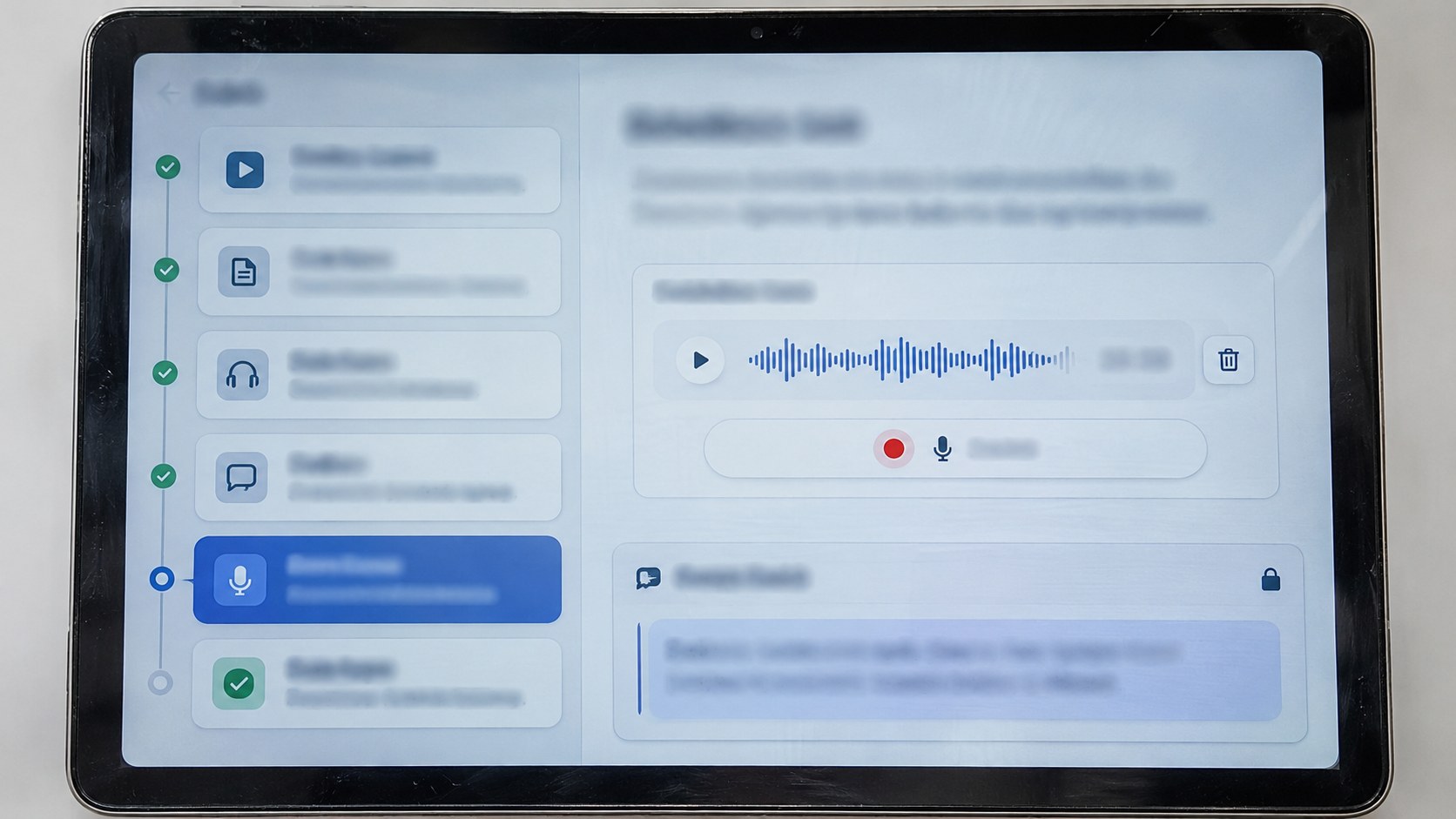
Test the feedback promise before enrolling more learners
Instructor capacity is part of the teaching model. Work backward from the feedback service you can deliver, reserve time for shared teaching and administration, then cap individual reviews. Revenue from extra members does not manufacture extra attention.
For the hypothetical language membership, assume 24 members, each entitled to one individual recording review per month. Assume each review takes 15 minutes, including listening and writing feedback. The educator reserves 10 working hours monthly for this offer, including 2 hours for a group clinic and 2 hours for preparation and administration. These are planning assumptions, not benchmarks.
Under those hypothetical assumptions, reviews take 24 × 15 = 360 minutes, or 6 hours. Adding the clinic and preparation gives 6 + 2 + 2 = 10 hours monthly. All reserved time is allocated. The offer fits the stated schedule on paper, but has no allowance for late submissions, technical support or a difficult review. That is a capacity warning, not proof of viability.
The educator therefore chooses a hypothetical pilot cap of 20 members while keeping every other assumption unchanged. Reviews take 20 × 15 = 300 minutes, or 5 hours. Total planned work becomes 5 + 2 + 2 = 9 hours, leaving 1 hour of the same 10-hour reservation unallocated. The smaller cohort buys room to observe actual work; it does not establish a permanent staffing ratio.
For this proposed pilot, a review covers a submitted recording and concise comments against the speaking rubric. It excludes unlimited message coaching and repeated resubmissions. State the recording limit, submission deadline, response window and missed-submission policy before enrollment. Measure actual handling time from opening the work to sending feedback, including follow-up that the promise creates.
If recorded work exceeds the reservation, change the next enrollment cap, review scope or staffing before opening enrollment again. Peer practice can add useful attempts, but should not silently replace purchased instructor feedback. Define a creator content calendar workflow around prompts, review deadlines and the clinic so the publishing schedule reflects teaching commitments rather than upload volume.

Separate teaching requirements from platform promises
A paid-content platform can supply subscriptions and interactions without supplying a learning management system. Before choosing hosted software or custom development, identify which teaching tasks require structured records and which can safely remain manual during the pilot.
Formal grading, prerequisite enforcement, assessment histories and verifiable completion records can change the software choice. If those are essential to your offer, evaluate a learning management system or a documented integration. Do not treat a video being available as evidence that the learner completed it, or a payment receipt as evidence of competence.
For a custom build, scope the learner path and instructor queue before visual polish. Define account roles, private submission storage, feedback visibility and export formats. A vibe-coded prototype can help rehearse those flows with dummy data; it does not demonstrate that access controls or billing events work correctly. Require implementation review and repeatable acceptance tests before real learner records enter it.
Test cancellation separately from course completion. Under your proposed policy, establish what happens to previously submitted work, promised feedback and purchased materials when renewal stops. Check that a learner cannot open another learner’s private recording by changing a link. The creator platform security checklist extends that access review into operational controls beyond the teaching worksheet.
Request a quote that separates hosting, implementation, payment integration, video delivery, assessment tooling and support. For integrations, name who owns failures between systems and how staff recover missing records. The creator platform migration checklist is useful before signing because an export you cannot interpret is a future project, not a practical exit route.

Pilot a complete learning cycle before commissioning the platform
Implement the smallest complete teaching cycle, including assessment and exit, before expanding the software scope. The next verifiable action is a demonstration in which a learner completes practice and receives the promised feedback without staff inventing a workaround.
- Write the learner outcome and separate the finite foundation from the optional recurring practice promise. Define what successful completion looks like.
- Prepare a sample lesson, practice brief, learner submission and feedback rubric. Use them as demonstration data rather than asking for a general product tour.
- Assign owners to enrollment, review scheduling and learner support. Apply the pilot cap and record actual workload against the reserved teaching time.
- Test the full learner journey, including a failed payment, private feedback, cancellation and export. Record unresolved gaps with an owner and an acceptance condition.
- Review completed work and the next practice need with pilot learners. Continue the membership only if another cycle has educational value and fits delivery capacity.
For the hypothetical educator, success is evidence that learners can handle a fresh question after feedback, alongside a manageable review queue. Attendance and renewals answer different questions. A learner may renew without practicing, or leave because the original goal was met. Ask what changed in the learner’s work before deciding which behavior the software should encourage.
Keep a simple pilot record for each promised review: when work arrived, who reviewed it, when feedback was sent and whether the learner tried again. Ask learners which part of the feedback they used in their next attempt. If staff must reconstruct that record from scattered messages, put a review queue in the implementation scope. If the record stays clear with a small manual process, keep that process for the pilot and spend development effort on the access or submission problem that actually blocks teaching.
If the pilot establishes a recurring paid-practice offer, branded subscriptions, content access and instructor interaction become concrete software needs. A hosted creator platform can then be evaluated against that scope. Keep any required learning records or assessment integration explicit in the contract, and bring the completed worksheet to the demonstration rather than a wish list of every feature you have seen.

Bring a teaching promise to the platform demonstration
Scrile Connect is hosted white-label software for branded subscriptions, paid content, messaging, video calls and live streams. If your educator membership needs those functions, evaluate it using the worksheet and pilot workflow above. Confirm assessment requirements and any integrations separately.
Scrile Connect supports your own domain and branding, with a fixed software fee and 0% Scrile platform commission; payment-provider fees remain separate. Ask for a demonstration of the paid-practice journey and a written scope for gaps before committing.
Frequently asked questions
Can I sell a finite course through a membership platform?
You can evaluate it for paid access, but define the course finish and access duration explicitly. Recurring billing does not turn a finite syllabus into recurring instructional value.
What makes an education membership worth renewing?
Continued practice, new applications and useful feedback can support renewal when they serve an ongoing learner goal. Releasing more recordings alone does not establish that need.
Do educators need a learning management system?
Evaluate one when structured assessments, prerequisite enforcement or completion records are essential. A paid-content platform needs separate verification for those requirements.
How should I limit instructor feedback?
Define the submission format, review scope, deadline and response window. Set enrollment against available review time and measure handling time during the pilot.
Should beginners and returning members follow the same sequence?
They need a shared practice context but may need different preparation. Give newcomers an explicit foundation route while letting prepared members reach current practice directly.
Is custom development necessary for an educator membership?
Only commission it for requirements that a suitable existing platform or integration cannot meet acceptably. Prove the learning workflow before funding a broader build.
What should happen when a learner cancels?
Publish a policy covering renewal, material access, submitted work and outstanding feedback. Test that policy with a learner account before accepting enrollment.
Does Scrile Connect include educational assessment tools?
Scrile Connect provides branded subscriptions, paid content and interactions. Verify any grading, prerequisite or completion-record requirement separately before selecting it for teaching delivery.

Builds SaaS platforms for content creators, agencies, and entrepreneurs. Writes about the business mechanics behind creator-economy products and how custom software actually ships.