
by Polina Yan
Think of your website not just as a place to sell but as a fully optimized, frictionless payment hub. No one likes a complicated checkout process—customers expect fast, secure, and effortless transactions. This is where payment gateway integration becomes essential, acting as the invisible bridge between buyers and businesses, ensuring smooth and secure payments.
Adding a payment gateway to your website is not just about processing the transaction but instilling confidence in the customer so they can make their purchases effortlessly while the entire operation remains efficient. An optimized integration system would make checkout more convenient and trustworthy and reduce the chances of cart abandonment.
Mastering how to integrate a payment gateway can be a game-changer. Whether you want to set up an online store, deliver digital services, or manage subscriptions, getting the integration right ensures your business is working and your customers are satisfied. In this guide, we will walk through the crucial steps, best practices, and expert insights that will guide your payment gateway integration experience.
Understanding Payment Gateways

Integration of payment gateway is the most important aspect of any web-based business. A payment gateway is an encrypted link between a payor’s source of funds and a merchant bank account where secure and smooth transactions are processed in seconds only. It verifies payment details, settles authorizations and transfers funds in seconds only. Without integration, web payments would be cumbersome, insecure and error-prone.
How Payment Gateways Work
During the purchase process by a consumer, the payment gateway encrypts the payment details and forwards the details securely to the concerned financial intermediaries. The payment processor instructs the bank or payment network to accept the transaction or decline it. Once approved, the payment gets transmitted into the business account. Transactional convenience and industry-approved payments based on security standards are facilitated by payment platform integration.
Types of Payment Gateways
Choosing the right payment gateway depends on business needs. The two primary types are:
Hosted Payment Gateways:
- Redirect customers to an external payment provider’s secure page.
- Simplifiy compliance and security management, as the provider handles sensitive data.
- Common examples: PayPal, Stripe Checkout, and Skrill.
- Best suited for small businesses or startups looking for a quick and secure solution without handling complex payment security requirements.
Integrated (On-Site) Payment Gateways:
- Transactions happen directly on the business’s website, offering a seamless user experience.
- Require advanced security measures, such as PCI DSS compliance, but provide full control over branding and customization.
- Common examples: Stripe API, Authorize.net, and Braintree.
- Ideal for larger businesses that require a professional, fully branded checkout process.
It is an imperative of successful payment gateway integration to enhance consumer confidence and facilitate secure and seamless transactions. Regardless of whether a hosted solution or integrated platform is utilized, companies must emphasize efficiency, security, and user experience in implementing their payment platform integration in a bid to enhance conversions and preserve consumer confidence.
Choosing the Right Payment Gateway

Picking an appropriate payment gateway determines success or failure in an online business. With an endless number of gateways to sort through, business concerns need to exercise prudence in making a choice when implementing a system. Seamless payment gateway integration guarantees easy transactions, client satisfaction and retention, and user-friendliness.
Key Factors to Consider
When considering how to integrate a payment gateway into their business, companies should consider the following factors:
- Transaction Fees – Each payment gateway charges differently per transaction. Some have fixed percentages such as PayPal, but others use volume-based pricing such as Stripe. High-volume companies have to be on the lookout for such fees.
- Security Features – Encryption and fraud prevention and PCI DSS compliance are needed. A secured gateway protects client information and reduces chargebacks.
- Supported payment methods – The payment gateway should support multiple payment methods such as bank transfers, e-wallets (Google Pay and Apple Pay), and others such as cryptocurrency and bank transfers.
- Integration Issues – Some providers have plug-and-play options and others require custom development. It helps to have an idea on how to integrate a payment gateway in a site prior to selecting a provider.
- Settlement Time – Different providers have different times for moving money into a business account. Some payment gateways send payment in real-time and others take a few days.
Comparing Popular Payment Gateways
When businesses decide to integrate a payment gateway, they should compare industry leaders based on their features and pricing models:
- Stripe – Best for developers and businesses needing a highly customizable, API-driven integration.
- PayPal – A widely recognized provider with simple setup but higher transaction fees. Ideal for small businesses and international transactions.
- Square – Excellent for brick-and-mortar stores with an online presence, offering both POS and e-commerce solutions.
- Authorize.net – A solid choice for businesses needing a traditional merchant account with strong security features.
Selecting an appropriate gateway involves a compromise between user experience, security, and expense. An appropriate provider facilitates checkout easily and maintains the consumer engaged and the transaction secure.
Integration Process Detailed
Online payment gateway integration can be made to seem complicated, yet with an appropriate methodology, the payment process of the customers can be made smooth and trouble-free by the companies. Opting for either a hosted facility or an integrated API-based payment gateway platform, a step-by-step approach ensures an implementation free from complications.
Step-by-Step Guide to Integrate a Payment Gateway in a Website
- Choose the Right Payment Gateway
- Evaluate providers based on transaction fees, security, and ease of integration.
- Consider whether a hosted or direct integration suits your business model.
- Create a Merchant Account
- Some gateways require businesses to set up a merchant account to process transactions.
- Providers like Stripe and PayPal offer built-in merchant services, simplifying this step.
- Obtain API Keys
- After registration, the payment provider issues API keys, which authenticate communication between your website and the gateway.
- Most providers offer separate keys for testing (sandbox mode) and live transactions.
- Integrate Payment Gateway in Website
- Hosted gateways require simple redirection to an external payment page.
- API-based integrations require backend setup to process payments directly within the site.
- Implement Payment Processing Workflows
- Configure the gateway to handle different transaction types: one-time payments, subscriptions, refunds, etc.
- Ensure error handling is in place to manage failed transactions or payment declines.
- Test the Payment System
- Use sandbox mode to simulate real transactions before going live.
- Check for potential failures, security vulnerabilities, and user experience issues.
- Go Live and Monitor Transactions
- Once testing is complete, switch to live mode and monitor real transactions.
- Set up alerts for failed payments or suspicious activity.
Technical Considerations for Payment Gateway Integration
- APIs and SDKs – Most modern payment processors, including Stripe, PayPal, and Square, have powerful APIs and SDKs in development languages such as Python, JavaScript, and PHP to simplify development.
- Backend Configuration – Companies utilizing API-based gateways need to set up secure backend processing to manage payment requests and verify responses.
- Security Compliance – Stay PCI DSS compliant by encrypting transaction data and facilitating secure HTTPS connections.
- Webhook Implementation – All gateways support webhooks to notify businesses of successful payments, chargebacks, and refunds as well as to enable automated transaction notifications.
Integration of an online payment gateway in an appropriate manner builds user confidence, reduces payment inconvenience, and ensures secured transactions. Following the best practices and putting the technology first, business companies are able to create a strong and smooth payment system for business development.
Security and Compliance

Handling online transactions requires more than just a functional system—it demands strong security protocols to protect both businesses and customers. A well-executed payment gateway integration process ensures that sensitive payment data remains secure while complying with industry standards like PCI DSS (Payment Card Industry Data Security Standard). Businesses that neglect these security protocols expose themselves to fraud, data breaches, and financial losses, which can considerably impact their business and reputation.
To provide a secure online payment integration, encryption, tokenization, and secure authentication protocols must be the top priority for businesses.. Encryption ensures that customer payment details are transmitted safely without being intercepted by malicious actors. Tokenization replaces actual card details with a unique token, reducing the risk of data exposure. Multi-factor authentication adds another layer of protection, verifying the legitimacy of transactions before approval.
Security never stops at integration—it must be continuous and subject to periodic updating. Regular system audits identify weak points before they can be exploited. Fraud protection features, such as monitoring unusual payment patterns, block unauthorized payments. Secure facilities and firewalls hosting also shield payment details against cyber attacks. By being continuously on guard and taking decisive security measures, organizations maintain their payment gateway compliant and also immune to new threats that may arise.
Troubleshooting Common Issues
Integrating a website with a payment gateway may be accompanied by issues even with a properly designed setup. The most common issue is transaction failure because of the improper setting of APIs or connection issues between the payment gateway and the business’s backend system. Payment rejections based on fraud detection or insufficient funds also frustrate customers and lead to incomplete transactions.
Slow processing is another frequent issue. Payment authorizations can be delayed due to the server workload being heavy or because the site infrastructure and gateway are incompatible. Security errors on the assumption that gateways will reject transactions as they are probable threats and would need to be examined manually or further subject to verification procedures need to be expected by the merchants.
These problems must be addressed through careful troubleshooting. Ongoing API testing and monitoring detect problems prematurely. Software and security updates minimize compatibility and fraud detection issues. Proper customer communication, such as providing additional payment options in case of a failed transaction, improves customer experience. By tackling these integration challenges adequately, businesses are able to guarantee a smooth and stable payment system, without the disruption of transactions.
Why Choose Scrile for Your Integration Needs
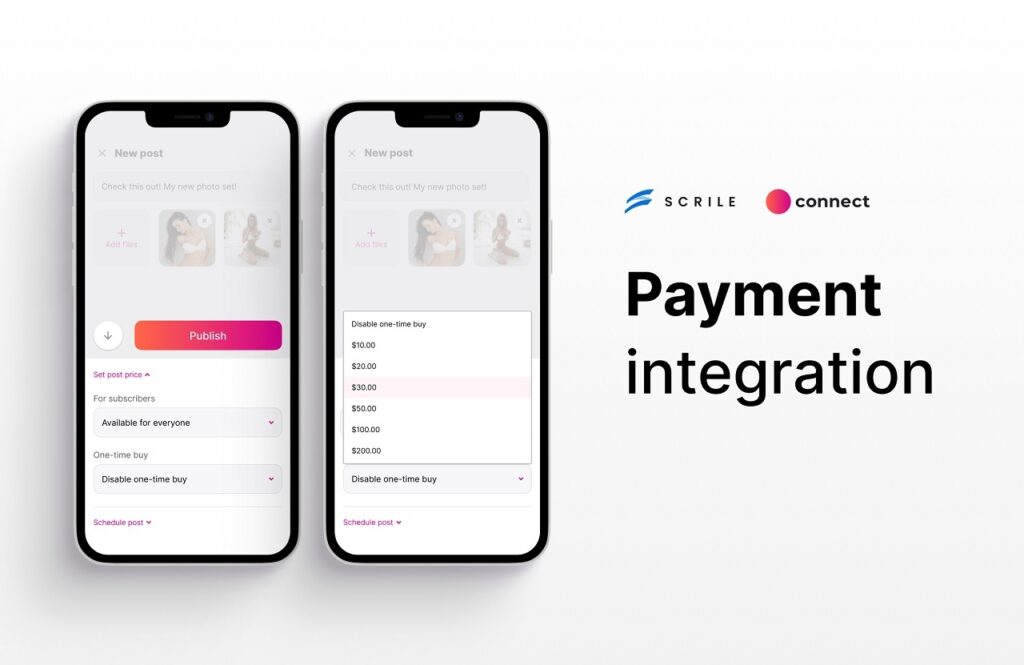
A one-size-fits-all payment gateway might be adequate for some businesses, but most businesses need a solution tailored to their operations. Scrile payment gateway integration is customization-focused, allowing businesses the freedom to create a system that is bespoke to their payment processing needs. From processing one-time payments, recurring subscriptions, or multi-vendor payments, Scrile enables seamless, secure, and scalable integration.
Custom Solutions by Scrile
- Flexible payment processes: Tailor the payment gateway to your business model, whether an online store, a subscription-based digital business, or a tiered-pricing site.
- Multi-currency support: Allow global transactions without friction, ensuring smooth payments across different regions.
- Enhanced fraud protection: Implement security features tailored to your industry to minimize risks and chargebacks.
Benefits of Choosing Scrile
- Industry expertise: Scrile has experience in payment solution integrations for social media platforms, SaaS products, online marketplaces, and high-risk industries where default gateways are unable to provide what is required.
- Streamlined transaction processing: Minimize declined payments and frictional checkout with an optimized gateway integration.
- Scalability and compliance: Get ahead of evolving regulations while having a system that grows with your business.
Long-Term Reliability and Support
- Continuous monitoring and updates: Payment gateways require adjustments over time. Scrile ensures ongoing optimization to maintain performance.
- Technical support and troubleshooting: Get expert assistance when needed, preventing disruptions in transactions.
- Adaptability to new payment technologies: As new methods emerge, Scrile helps businesses integrate them seamlessly.
With Scrile payment gateway integration, businesses gain more than just a payment processor—they get a customized, reliable system that enhances revenue, security, and user experience.
Conclusion
Professional payment gateway integration is the cornerstone of smooth transactions, security, and customer satisfaction. The right gateway enables smooth payment processing, reduces declined transactions, and enhances business trust. Every business having different requirements makes the customized approach the differentiator.
Scrile payment gateway customized solutions are designed to meet specific business needs for efficiency and security. For a hassle-free and scalable payment system, explore Scrile’s expert solutions today. Let their professionals help you design a secure, fully integrated payment gateway that optimizes your customer experience and long-term success.
Polina Yan is a Technical Writer and Product Marketing Manager, specializing in helping creators launch personalized content monetization platforms. With over five years of experience writing and promoting content, Polina covers topics such as content monetization, social media strategies, digital marketing, and online business in adult industry. Her work empowers online entrepreneurs and creators to navigate the digital world with confidence and achieve their goals.

by Polina Yan
Social media isn’t slowing down—it’s multiplying in influence, reach, and revenue. What started as a place to post photos and status updates has become a core infrastructure for communication, commerce, entertainment, and learning. From micro-communities to influencer-led businesses, the demand for specialized social platforms keeps expanding.
According to Spherical Insights, the global social media market size is projected to exceed $815 billion by 2033, with a compound annual growth rate of 14% between 2023 and 2033. At the same time, Statista reports that global social media users are expected to reach 6 billion by 2028—nearly three-quarters of the planet’s population.
That scale brings opportunity. If you’re exploring how to make a social media app, now is the time to get serious. This article will walk you through the key decisions, features, and development options required to turn a big idea into a successful social platform in 2026.
Identifying Your Niche and Target Audience

If you’re serious about learning how to make a social media app, the first step isn’t writing code—it’s figuring out who you’re building it for. With thousands of platforms already crowding app stores, the only way to stand out in 2026 is to build with purpose and specificity.
Generic platforms trying to appeal to everyone often end up serving no one particularly well. Instead, the most successful newcomers focus on a niche. That could be a community of LGBTQ+ users looking for safe, inclusive spaces. It could be designed for influencers and creators who want more control over how they engage and monetize their audience. Or maybe it’s aimed at hobbyists—gamers, gardeners, collectors—who want platforms built around their shared interests rather than algorithm-driven feeds.
Some examples of strong niche directions in 2026 include:
- LGBTQ+ communities looking for moderated, safe social spaces
- Influencers and creators wanting direct-to-audience control with monetization
- Professional consultants needing private messaging, scheduling, and video tools
- Fitness and wellness groups who want event-based and content-sharing features
- Hobbyists forming communities around shared passions like books, fashion, or gaming
Even professionals are carving out their own platforms in fields like coaching, nutrition, and finance. These users need tools that blend social interaction with content hosting, event scheduling, or private messaging. Understanding exactly what your audience needs—and what annoys them about mainstream platforms—will help you shape the right features from day one.
When you create your own social media platform, you’re not just building an app. You’re giving a community a home.
Exploring Different Types of Social Media Apps

Before diving into development, it’s important to understand what type of platform you’re aiming to build. If you’re wondering how to build a social media app in 2026, you first need to decide what kind of experience you’re creating—because “social media” now covers a wide range of formats, audiences, and goals.
Here are some of the most common categories:
1. Social Networks
These are platforms aimed at connecting individuals according to established relationships. Think Facebook or its miniature copies. They typically include elements such as timelines, friend requests, comments, likes, and individual profiles. Despite competition, social networks remain the ones to beat for general-purpose connecting, particularly among users 35 and older.
2. Content Sharing and Streaming Apps
Instagram, TikTok, and YouTube fall into this category. These platforms are built around media—photos, videos, reels—and often include live streaming, filters, or monetization tools for creators. If your audience includes influencers or visual storytellers, this is the format to consider.
3. Messaging Apps
WhatsApp, Telegram, and Signal are leading examples. These apps prioritize fast, secure, and private communication, often through end-to-end encryption. In 2026, many niche communities are adopting messaging-first platforms with added features like group channels, audio spaces, and integrated content sharing.
4. Professional Networks
LinkedIn used to have a monopoly on this space, but now it no longer has. Coaches, freelancers, and industry-specific professionals are all making the change to niche spaces that provide them with the space to network, collaborate, and even host events or sessions. This segment contains high growth opportunities for B2B apps.
5. Community-Based Apps and Forums
Reddit is the most well-known here, but dozens of smaller apps are thriving by hosting conversations around specific topics. These platforms encourage discussion, user-generated content, and sometimes anonymity—features that appeal to niche communities, hobbyists, and even support groups.
Each of these formats responds to different user needs—and in many cases, successful new platforms blend elements of two or more categories. For example, a fitness app might combine messaging, content sharing, and forums.
If you’re planning how to build a social media app, identifying the right category—or mix of categories—is one of the most important strategic decisions you’ll make. It defines your core features, monetization model, and the type of user experience you’ll be designing from day one.
Designing an Intuitive and Engaging User Interface

When considering how to create a social media app, it’s simple to become enamored of features and functionality. But no matter how strong the tool is, it will fail if users find it difficult or frustrating to use. That’s where UI/UX design enters the picture.
Design isn’t just about how your app looks—it’s also about how it feels. Your beautifully designed interface should guide users smoothly from one action to the next. Whether they’re posting content, joining a group, or updating their profile, the process should feel seamless. This is especially crucial in 2026 when users expect apps that are responsive, smooth, and mobile-first.
Some important guidelines for creating a social media app are:
- Clarity and simplicity: Prioritize clean layouts, readable fonts, and logical navigation.
- Responsiveness: Your app should function smoothly across devices and screen sizes, especially mobile.
- Accessibility: Include features like scalable fonts, color contrast, and screen reader compatibility to make your app inclusive.
- Consistent visual language: Use coherent branding, colors, and iconography across the app to establish trust and polish.
Usability testing is also a necessity. It’s not enough to design on assumptions—real users will always uncover friction points. Test early and often, with heatmaps, session recordings, or one-on-one interviews to observe how people actually use your interface.
Following on from user feedback means that your app develops with your users, not just with your team’s creativity. Having this loop as part of your design process prevents huge issues later on and makes your users feel heard and valued.
Ultimately, how to create a social media app that people love starts with empathy. Design with your user in mind, and they’re far more likely to stick around.
Choosing the Right Technology Stack

Once you’ve mapped out your features and design, it’s time to tackle the tech. Choosing the right technology stack is one of the most critical decisions you’ll make when planning to create social media app architecture that’s both reliable and scalable.
On the front end, you’ll need a framework that supports speed, responsiveness, and great user experience. React Native and Flutter are both popular cross-platform options—they let you build for iOS and Android from a single codebase. If your app will rely on complex animations or deep device integration, you might want to look into native development with Swift (for iOS) and Kotlin (for Android). Native applications tend to perform better but take longer (and more money) to build.
Back-end technologies handle everything that users don’t see—user accounts, data storage, chat logic, content feeds, etc. Node.js, Django (Python), and Ruby on Rails are all suitable choices here. When it comes to databases, MongoDB and PostgreSQL are both popular in social media app development because they are flexible and highly performing in databases.
But apart from functionality, you also need to look at long-term scalability. Your infrastructure has to support thousands—or even millions—of users down the line. That is why developers typically depend on cloud platforms like AWS, Google Cloud, or Firebase, which offer auto-scaling, robust APIs, and easy integrations.
Security is another key point. You’ll be managing user data, private messages, and possibly payment info. Encryption, secure authentication (OAuth 2.0), and compliance with regulations like GDPR should all be part of the initial architecture—not an afterthought.
The technology you choose will set the pace for your app’s performance, development speed, and flexibility for years to come. When you create social media app features that scale with user growth, you set the stage for real, long-term success.
Monetization Models That Work in 2026
If you’re thinking about how to create a social media app, revenue shouldn’t be an afterthought. With user habits evolving and ad fatigue setting in, successful platforms in 2026 are finding smarter, more user-friendly ways to make money. Here are five proven monetization strategies that go beyond traditional advertising:
- Subscriptions – Offer members exclusive content, early access to features, or a completely ad-free experience. Monthly or yearly plans provide consistent income and keep your business predictable.
- Freemium + In-App Upgrades – Enable users to utilize the basic platform free of charge but achieve additional advantages through one-time fees or tiered upgrades. Freemium is an effective model for any app type, ranging from professional networks to entertainment apps.
- Tipping & Donations – Allow users to directly support creators or community leaders. This builds loyalty and encourages content that actually serves the audience.
- Paid Groups & Private Rooms – Create walled-off areas for intense discussion, premium livestreams, or expert Q&A. These are great for business networks, coaching rooms, or intense interests.
- Marketplace Integration – Build in tools for users to buy and sell digital goods, offer online courses, or distribute downloadable content. This turns your platform into more than just a place to connect—it becomes a real economy.
When planning how to monetize your app, the best approach is a mix that aligns with your audience’s behavior. Choose what adds value without creating friction—and you’ll be set for growth.
Development Approaches: In-House vs. Outsourcing
When figuring out how do you make a social media app, one of the first logistical decisions you’ll face is who’s going to build it. You’ve got two main routes: hiring an in-house team or outsourcing development.
An internal team gives you direct control. You can sit with designers and developers, keep goals more closely aligned, and iterate quickly. It can be the ideal solution for startups with technical co-founders or companies with long-term development needs. But it is also costlier—hiring, salaries, equipment, and management all add up so fast. And finding the right talent (and holding onto it) takes time.
Outsourcing, on the other hand, can get your project up and running faster—especially if you use a team that already has experience on social media sites. You gain access to experienced developers, project managers, and UI/UX experts without needing to build an entire internal team. It’s generally cheaper in the short run and is especially appealing for those firms looking to pilot their concept without committing to a full build.
This is where Scrile Connect becomes an attractive option. It’s not just another off-the-shelf product—it’s a custom development service designed specifically for creating platforms like social networks, video-based communities, and creator marketplaces. For entrepreneurs who want flexibility, speed, and professional execution without hiring in-house, it provides a solid balance.
So, how do you make a social media app without overextending your resources? You choose the development path that aligns with your budget, timeline, and long-term goals.
Scrile Connect: Your Partner in Custom Social Media App Development
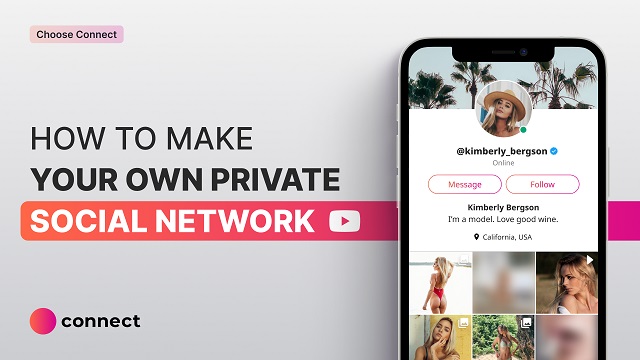
When it comes to figuring out how to make a social media app that truly stands out in 2026, off-the-shelf platforms and DIY builders often fall short. They limit your flexibility, restrict your brand identity, and rarely scale well. That’s where Scrile Connect steps in—not as a one-size-fits-all product, but as a fully customizable development service designed to bring your unique idea to life.
Scrile Connect isn’t just about building functional code. It’s about developing platforms that reflect your vision, business goals, and user expectations. Whether you’re launching a niche community app, a creator-focused network, or a new kind of content-sharing hub, Scrile Connect is designed to adapt to your needs.
Here’s what sets them apart:
- Customizable Features – You’re not locked into a template. From feed algorithms and chat systems to monetization tools and UI, everything can be tailored to your model.
- Scalable Architecture – Whether you’re launching with 100 users or planning for 1 million, the platform’s infrastructure is built to grow without sacrificing performance.
- Robust Security – With GDPR compliance, user data encryption, and fraud detection tools, your app is protected from the start.
- Ongoing Support – Development doesn’t end at launch. Scrile Connect offers continuous technical support, updates, and improvements to keep your app ahead of the curve.
Real-world case studies back it up. For example, one client partnered with Scrile Connect to create a video-based expert marketplace. With fully integrated payments, live consultations, and user subscriptions, the platform scaled to thousands of users in less than a year—all without compromising stability or user experience.
If you’ve been asking yourself how to make a social media app that’s more than a clone of what already exists, Scrile Connect may be exactly what you’re looking for. You bring the vision. They’ll bring the tech, the team, and the long-term support to help you build something exceptional.
Conclusion: Build With Purpose, Scale With Confidence
Understanding how to make a social media app goes far beyond development. It’s about building something people want to return to—something engaging, scalable, and worth sharing. The right UI, monetization strategy, and infrastructure can make or break your project.
In case you’re serious about taking your concept and transforming it into a winning platform, don’t go solo. Working with experts can spare you from costly mistakes and get you there faster.
Contact Scrile Connect team now—your vision, backed by their expertise. It’s the smartest move if you’re ready to how to create social media app that lasts.
Polina Yan is a Technical Writer and Product Marketing Manager, specializing in helping creators launch personalized content monetization platforms. With over five years of experience writing and promoting content, Polina covers topics such as content monetization, social media strategies, digital marketing, and online business in adult industry. Her work empowers online entrepreneurs and creators to navigate the digital world with confidence and achieve their goals.

by Polina Yan
Flirting has moved into the chat box. A wink emoji, a half-serious line dropped into Messenger, a long thread of late-night banter — most connections now start and grow through text. But here’s the thing: not everyone knows what to say, and even the smoothest talker runs dry sometimes. That’s where an AI flirty text generator comes in.
Think of it as backup for your brain. Fire it up, and you’ve got a tool that can suggest playful openers, craft a cheeky response, or carry on a spicy roleplay chat without running out of steam. Some people use it for dating apps, others for more explicit spaces where adult creators keep fans entertained in private messages. The draw is the same: it keeps the conversation flowing.
In the pages ahead, we’ll unpack how these generators work, where they shine, and which five stand out in 2026 — plus how Scrile Connect lets you build one of your own.
What Is an AI Flirty Text Generator?

At its core, an AI flirty text generator is software built to handle the kind of conversations that usually make people pause and overthink. Instead of staring at the blinking cursor, you can let the system throw out playful suggestions, smooth compliments, or even entire replies that keep the mood alive. The tech behind it isn’t magic — it’s natural language processing, fine-tuned conversation models, and personality presets that give the AI a certain “voice.”
In practice, this means you can set the tone. Want witty and lighthearted? It can do that. Prefer sultry or more direct? That’s just a switch of a setting. Some tools even allow you to train the model with your own chat history so the replies feel more personal, less like something borrowed from the internet.
People use these tools in different ways. A teenager might lean on one for courage when texting a crush. Long-distance couples often use them to keep the spark alive across time zones. Adult creators go a step further, turning the AI into a sexting companion that scales conversations with dozens of fans at once. In those scenarios, the software isn’t just fun — it’s part of the business.
Of course, a flirty text response generator AI isn’t flawless. Without enough context, the output can feel generic or slightly off. Sometimes the AI misses sarcasm or tone, which can create awkward moments. But when it works, it takes the pressure off and helps people focus less on typing the “perfect” line and more on enjoying the exchange.
Why Use AI for Flirting? Benefits & Use Cases

Flirting through text is fun, but also stressful. Thinking too long about a reply can kill the moment, and running out of ideas makes conversations flat. An AI flirty text generator helps keep the spark alive by throwing out playful lines, cheeky one-liners, or even handling an entire roleplay chat when you’re too tired to think.
What makes these tools popular is how many different roles they can play. People use them for fun, for business, and sometimes just for emotional support.
Key Areas Where AI Flirty Text Generators Shine:
- Entertainment and dating apps: Many singles rely on AI for flirting to avoid dry conversations. Instead of the boring “hey, what’s up,” they get smart suggestions that help them stand out.
- Long-distance relationships: When calls aren’t possible, AI for texting can help couples keep their daily chats fresh with creative prompts and playful messages.
- Adult creators and webcam performers: Handling dozens of private chats a day is exhausting. An AI assistant can cover flirty banter at scale, helping creators make fans feel noticed while focusing their real energy on the highest-value interactions.
- Companionship for lonely users: Not everyone uses these tools for dating. Some people just want to feel less isolated. A flirty text response generator AI can simulate intimacy and conversation, making late nights less quiet and giving users the sense of being cared for.
- Roleplay and fantasy: For fans of interactive storytelling, AI tools can take on different characters, moods, or tones, bringing imagination into chat form.
- Coaching and confidence building: Practicing lines in private builds social skills. Users can test humor, boldness, or timing with AI before trying the same in real life.
- Education and workshops: Some online coaches even integrate these tools into lessons on communication, showing students how different approaches change the feel of a conversation.
From casual dating to adult services, from practicing confidence to simply having someone “there,” an AI flirty text generator makes it easier to start, sustain, and enjoy conversations.
5 Best AI Flirty Text Generators in 2026
AI has crept into every corner of online life, and flirting is no exception. An AI flirty text generator can throw out witty one-liners, keep a conversation playful, or even build long-term roleplay threads. For some, it’s about spicing up dating app chats. For others, it’s companionship — a way to ease loneliness with a digital partner who never runs out of things to say. The tools on this list cover the spectrum, from lighthearted banter to fully NSFW sexting engines.
Replika

Replika is one of the best-known AI companions and remains a popular choice in 2026. It started as a general friend-bot but has grown into something closer to a customizable partner, with modes that support flirting and romance. Many people use it for emotional connection, while others enjoy it as a gentle entry point into AI-powered intimacy.
Features
- Personality that adapts over time, remembering details and building continuity.
- Flirty conversation mode that can shift tone depending on how bold you want it.
- Optional NSFW features for users who want something beyond sweet talk.
Pros
- Conversations feel personal because of memory and emotional cues.
- Easy to start — no steep learning curve.
- Works on mobile and desktop with a clean interface.
Cons
- Flirty interactions can feel soft compared to more explicit apps.
- Extra features often locked behind a paywall.
- Limited control over how far adult content can go.
Replika works best for people looking for consistency and warmth. It’s not the raciest option, but as an AI flirty text generator it delivers a sense of stability that many find comforting.
CrushOn.AI
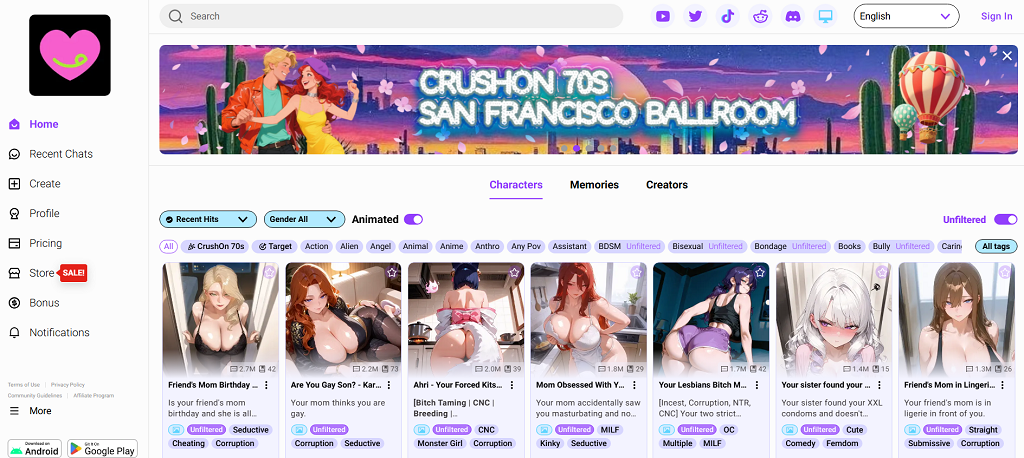
CrushOn.AI is built for people who don’t want filters holding them back. Unlike softer apps, it leans heavily into explicit conversations and roleplay. The design is simple: you pick or design a character, set their personality, and the system generates dialogue that adapts to the mood you create. It’s one of the few options where NSFW is a central selling point rather than a quiet add-on.
Features
- Custom character creation with sliders for personality, tone, and kinks.
- Fully NSFW roleplay options without strict limitations.
- Ability to save scenarios and return to them later.
Pros
- Ideal for adult users who want unfiltered, spicy chat.
- Highly customizable personalities make every experience unique.
- Strong focus on roleplay compared to casual conversation bots.
Cons
- Less emphasis on emotional bonding, more on fantasy.
- Interface can feel clunky compared to mainstream apps.
- Free tier is very restricted, pushing users toward paid plans quickly.
CrushOn.AI works well for anyone searching for an AI flirt app that’s upfront about being erotic and customizable. It’s less about companionship and more about immersive, adult scenarios.
ChatGPT (with Flirty Personality Prompts)

ChatGPT isn’t marketed as a dating or flirty tool, but creative users have been bending it into one. With the right prompts, it can shift tone toward playful, cheeky, or romantic conversation. Some people even use it to draft lines before sending them in real chats, treating it as a brainstorming partner rather than a companion.
Features
- Adaptable tone: can move from professional writing to playful banter with a simple prompt.
- Works across multiple apps and platforms thanks to integrations.
- Creative flexibility: users decide the persona, from casual flirt to fantasy roleplay.
Pros
- Extremely flexible compared to specialized tools.
- Great for drafting responses that feel natural.
- Large knowledge base makes it versatile beyond flirting.
Cons
- Doesn’t remember conversations well without extra setup.
- Not designed for intimacy, so replies can feel generic.
- Requires user effort to guide tone and avoid dullness.
ChatGPT is the Swiss Army knife of AI texting. It’s not marketed as an AI flirty text generator, but for people who like experimenting, it doubles as a powerful sandbox to shape their own playful partner.
Anima AI

Anima AI positions itself as a virtual companion first, but it has steadily gained popularity as a playful chat partner. Its main draw is the focus on roleplay and light romance. Younger users often test it out as a low-pressure way to practice flirting, while others enjoy it as a casual digital companion that’s always available.
Features
- Customizable avatars with different looks and personalities.
- Roleplay settings ranging from sweet to teasing, with mild adult elements.
- Conversation memory that helps maintain consistency across chats.
Pros
- Friendly entry point for people new to AI companionship.
- Visual avatars add to immersion, not just text.
- Offers a balance between fun and emotional support.
Cons
- NSFW capabilities are limited compared to explicit apps.
- Dialogue can repeat if you push longer conversations.
- Some features feel paywalled, especially personalization.
Anima AI isn’t the most advanced or risqué option, but it fills a niche. For users who want an approachable AI flirt app that mixes lighthearted romance with companionship, it’s a comfortable fit.
Candy.ai

Candy.AI markets itself directly as an adult-first AI companion. Unlike softer apps, it leans heavily into NSFW sexting and explicit roleplay. Personalization is a big part of the appeal: users can design their AI partner’s look, style, and conversational personality to match specific fantasies.
Features
- Explicit sexting and roleplay modes baked into the core experience.
- Detailed customization of characters, from looks to dialogue tone.
- Ongoing chat memory for more realistic interactions.
Pros
- One of the most direct adult-oriented tools available.
- Deep customization means you can build a partner tailored to your preferences.
- Strong appeal for people looking for explicit companionship rather than general conversation.
Cons
- Little focus on emotional support — fantasy comes first.
- Not as polished in design as mainstream apps.
- Subscription costs can add up quickly for heavy users.
Candy.AI makes no secret of its intent: it’s for explicit companionship. For users who want an AI flirty text generator that’s bold, customizable, and adult-only, it stands out as one of the more daring entries on the list.
Scrile Connect: Build Your Own AI Flirty Text Generator
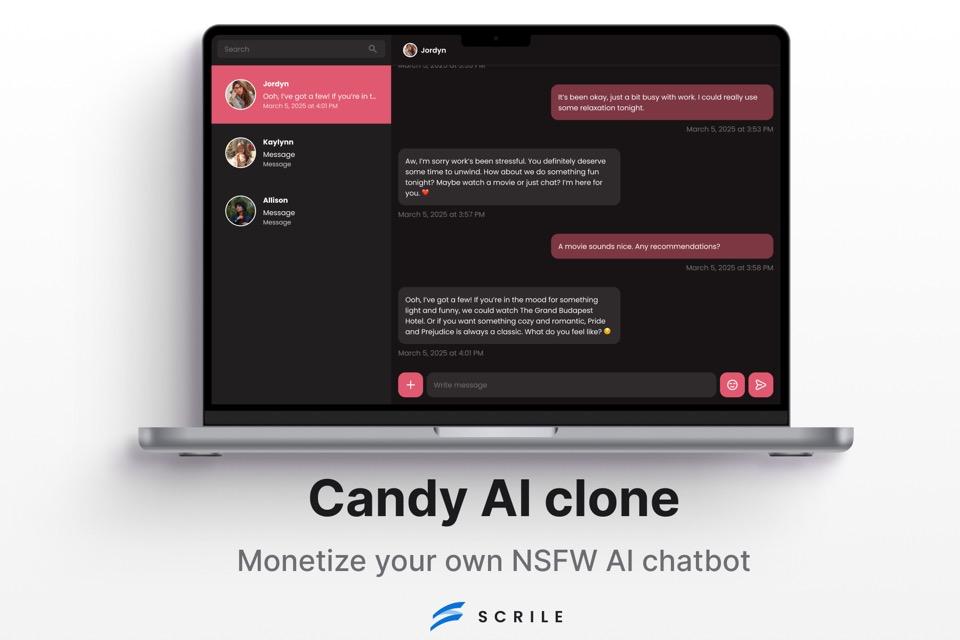
Most of the apps in this list are built for mass audiences. They’re polished, easy to download, and quick to start using — but they’re also limited. You don’t own the brand, you can’t control the roadmap, and revenue always flows through someone else’s system. Scrile Connect takes a different route. It isn’t a ready-made app at all. It’s a development service that builds a white-label solution designed around your vision.
With Scrile Connect, your AI project carries your brand, domain, and design. Want a sleek modern UI? Or a more playful, adult-friendly layout? The service adapts. Under the hood, it supports advanced features like creating your own AI girlfriend, fine-tuning personalities, selling AI art directly to fans, and managing subscriptions without middlemen. For monetization, the toolkit includes recurring subs, one-time tips, pay-per-chat access, and premium content paywalls — everything creators or businesses need to keep revenue flowing.
This isn’t just an app; it’s full AI flirting platform development. That means NSFW readiness, flexible integration with payments, and zero restrictions from third-party vendors. Instead of being stuck with what an app allows, you shape the rules and keep ownership.
Possible use cases with Scrile Connect include:
- Dating startups that want to launch their own branded AI chat service.
- Adult cam agencies scaling private chat and premium content with custom-built AI companions.
- Niche roleplay communities seeking tailored personality-driven conversation engines.
- AI art sellers combining flirty avatars with creative digital content on their own site.
Scrile Connect stands out because it hands control back to the business. No revenue cuts, no platform branding, no ceiling on creativity — just a custom build that reflects exactly what you want to offer.
Conclusion
AI flirty text tools have become more than novelties — they’re playful, practical, and in many cases, profitable. The five apps highlighted here each cater to different needs, from gentle companionship to bold, explicit roleplay. But all of them share the same limitation: they’re closed systems.
Scrile Connect breaks that mold. As a development service, it lets you create something entirely your own — branded, monetized, and flexible enough to grow with your audience. If you’re ready to take control, explore Scrile Connect and build an AI flirty text generator that’s truly yours.
Polina Yan is a Technical Writer and Product Marketing Manager, specializing in helping creators launch personalized content monetization platforms. With over five years of experience writing and promoting content, Polina covers topics such as content monetization, social media strategies, digital marketing, and online business in adult industry. Her work empowers online entrepreneurs and creators to navigate the digital world with confidence and achieve their goals.

by Polina Yan
Customer support software used to be something teams just accepted as-is. You picked a tool, trained the team once, and lived with whatever limits came with it. That’s changed. Support teams now move faster, deal with more channels, and need tools that can bend with their workflow instead of forcing a fixed structure. Search terms like Freshdesk alternatives are growing because people aren’t looking for “more features” — they’re looking for a better fit.
Many teams describe the same turning points. The interface starts to feel cluttered as the team grows. A small plan jumps to a more expensive tier once a few automation or reporting tools are enabled. Workflows begin to feel rigid, requiring workarounds just to handle everyday ticket flow. Training new team members takes longer than expected, and the tool never quite feels “native” to how the company communicates.
This review looks at what teams switch to, what the trade-offs look like, and when a standard SaaS helpdesk isn’t enough — especially if what you need is something shaped around your own support process.
Why Teams Look for a Replacement
Most teams don’t wake up one morning and suddenly decide to move away from a support tool. It usually comes from weeks or months of subtle friction — small inefficiencies that stack until they start slowing down the work. Freshdesk works well for many companies early on, but as ticket volume grows or workflows get more specific, certain limitations become harder to ignore.
Some of the most common breaking points:
- Workflow complexity increases and the built-in automation tools don’t provide enough control or visibility.
- Costs rise faster than expected, especially when adding more agents, add-on modules, or advanced reporting features.
- Onboarding takes longer, especially for support agents who switch between channels or handle deeper customer scenarios.
- Industry-specific processes are difficult to replicate, such as multi-step approval flows in healthcare, internal escalations in finance, or blended support + coaching workflows in education and creator communities.
These issues don’t mean Freshdesk is a bad product. It’s solid and familiar. But support systems are personal — they shape how teams collaborate. And when the system starts feeling like something the team works around instead of something that supports the work, teams begin to explore a Freshdesk alternative that aligns more closely with their support style, growth pace, and internal structure. The search is rarely about adding more features — it’s about finding a tool that matches how the team actually works every day.
Top Freshdesk Alternatives
Teams comparing Freshdesk alternatives aren’t usually hunting for “the most features.” They want the setup that fits how their support actually operates. Different teams value different things: clean UI, faster onboarding, deeper automation, or smooth upgrades as they scale. Below are options teams commonly evaluate when deciding on Freshdesk alternatives, presented by how they feel to use, not just what their feature page lists.
Zendesk
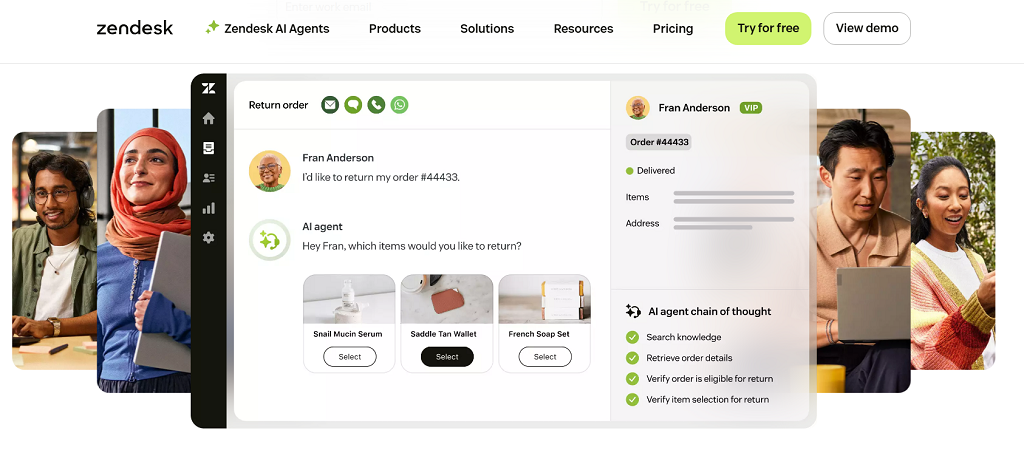
Zendesk is one of the oldest and most established players in the support software space. It has a large ecosystem, a marketplace of extensions, and support for complex case routing. Many mid-sized and enterprise companies use it long-term because it scales reliably and plays well with internal systems.
But the learning curve is heavier. Support agents take longer to feel comfortable, and customizing workflows sometimes means diving deeper than expected. Pricing steps up sharply as teams add agent seats and advanced analytics. Zendesk works best for organizations with dedicated operations or support enablement roles — teams that can manage setup and maintain structure over time.
It sits in the same category as other Zendesk competitors, but usually wins on stability and loses on simplicity.
Help Scout
Help Scout focuses on the human side of support — messages feel like emails, not tickets. The interface is clean, straightforward, and easier for new agents to learn quickly. That makes it a strong fit for small to mid-sized teams that care about tone, relationship-building, and conversational support.
Its strengths show up fast: faster onboarding, shared inbox visibility, and less clutter. But automation depth is lighter. If a team needs complex triage logic, SLA triggers, and multi-step routing, they may outgrow it sooner. Help Scout works particularly well for SaaS startups, educators, and community-based businesses that prefer simplicity over configuration power.
Zoho Desk
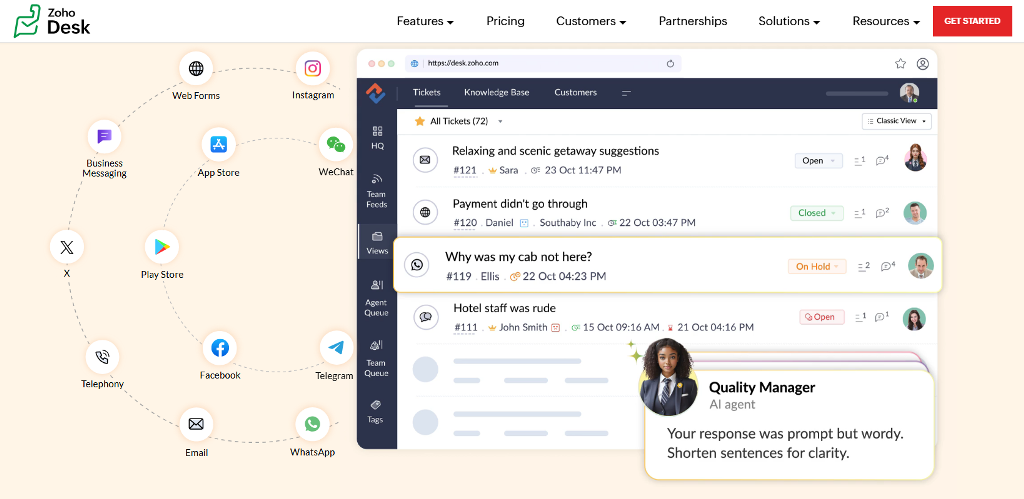
Zoho Desk is often considered one of the most practical choices among Freshdesk alternatives because it fits naturally into the wider Zoho ecosystem. Teams already using Zoho CRM, Zoho Projects, or Zoho Books usually find the connection smooth, almost seamless. The interface is familiar, workflows feel predictable, and cross-app data sharing removes a lot of repetitive admin work.
Pricing is one of the stronger points here. Zoho Desk keeps costs stable across growth stages and avoids the “jump” effect that happens when adding features in other tools. However, teams not already inside the Zoho ecosystem may feel the UI is busier than necessary. It works best when the company is already committed to Zoho products and wants a helpdesk that slots into that stack without disruption.
BoldDesk
BoldDesk offers itself as an alternative to Freshdesk with sleekness and flexibility to beat the competition. The customers appreciate the fact that branding, customers portal pages, and knowledge bases can be designed without making use of plug-ins. They feel that every piece has been designed to look customized.
The pricing tiers are more predictable and easy to budget; that’s particularly important if there are plans to scale support staff or hire part-time reps. The ecosystem and community are still somewhat smaller compared to more mature platforms, but that entry process has gotten more seamless. It’s another excellent choice if simplicity and flexibility are key without necessarily requiring full-blown enterprise features.
LiveChatAI
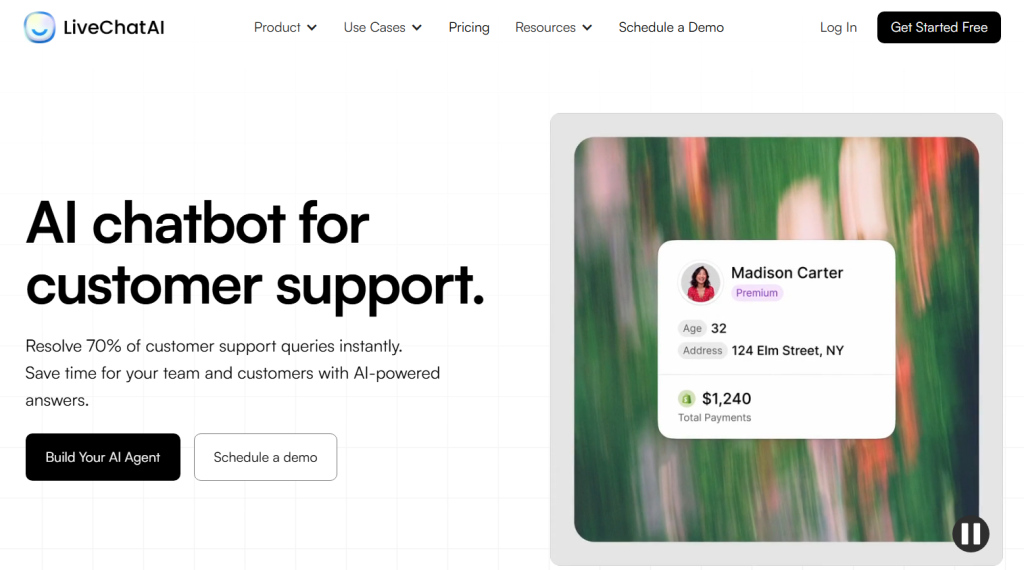
LiveChatAI focuses on adding AI-assisted responses to everyday support workflows. It doesn’t try to replace support agents — it gives them faster suggested replies, context lookups, and conversation summaries. This is particularly useful for teams handling repetitive questions or large inbound chat volume.
It works best in mixed automation + human support setups, where AI handles FAQs and humans handle judgment-based conversations. Teams choose LiveChatAI when they want to speed up response time without rewriting their entire support strategy.
Comparison Table
| Tool | Best For | Pricing (per agent) | Strengths | Limitations |
| Zendesk | Enterprise / complex workflows | Support Team: $19/month (annually) Suite Enterprise: $169/month (annually) | Extensive ecosystem, large-scale support | Higher cost + steeper learning curve |
| Help Scout | Small-to-mid support teams | Standard: $25/month (annually) Pro: $75/month (annually) | Very user-friendly, fast onboarding | Less advanced automation |
| Zoho Desk | Teams using Zoho stack | Express: $7/user/month (annually) Professional: $23/user/month (annually) Enterprise: $40/user/month (annually) | Tight integration with Zoho products | UI can be dense for non-Zoho users |
| BoldDesk | Businesses seeking flexible options | Scale: $12/agent/month (annually) Momentum: $25/agent/month (annually) Enterprise: $39/agent/month (annually) | Predictable pricing, modern branding | Smaller ecosystem |
| LiveChatAI | Chat-heavy, AI-augmented support | Basic: $32/month (annually) Pro: $74/month (annually) Advanced/Expert: up to $324/month (annually) | Strong chat + AI capabilities | Not a full traditional helpdesk stack |
When a Standard Platform Is Not Enough
Then there comes a stage after which switching from one support application to another will no longer solve the problem. The problem does not lie with the application but with the fit. The team might be expanding, and processes might be transforming; then a solution with a wide application area begins to feel like it’s inhibiting you. It’s here that people look for Freshdesk alternatives on the basis of control rather than features.
Signs that you’ve outgrown the one-size-fits-all:
- Your workflows don’t match the software’s logic.
When daily support involves workarounds, custom forms, or manual tagging just to make reports usable, the foundation is misaligned. - You need the support layer to live inside your product, not beside it.
A completely separate ticket portal can feel disconnected — users feel like they are being pushed somewhere else instead of being supported where they already are. - Branding, user roles, or billing need more freedom than SaaS templates allow.
Standard permission sets only go so far. Industry-specific support often demands structures these tools just weren’t built for.
If these feel familiar, the search for an alternative to Freshdesk becomes less about switching vendors and more about shaping something built around how your team actually works.
Build Your Own Helpdesk with Scrile Connect
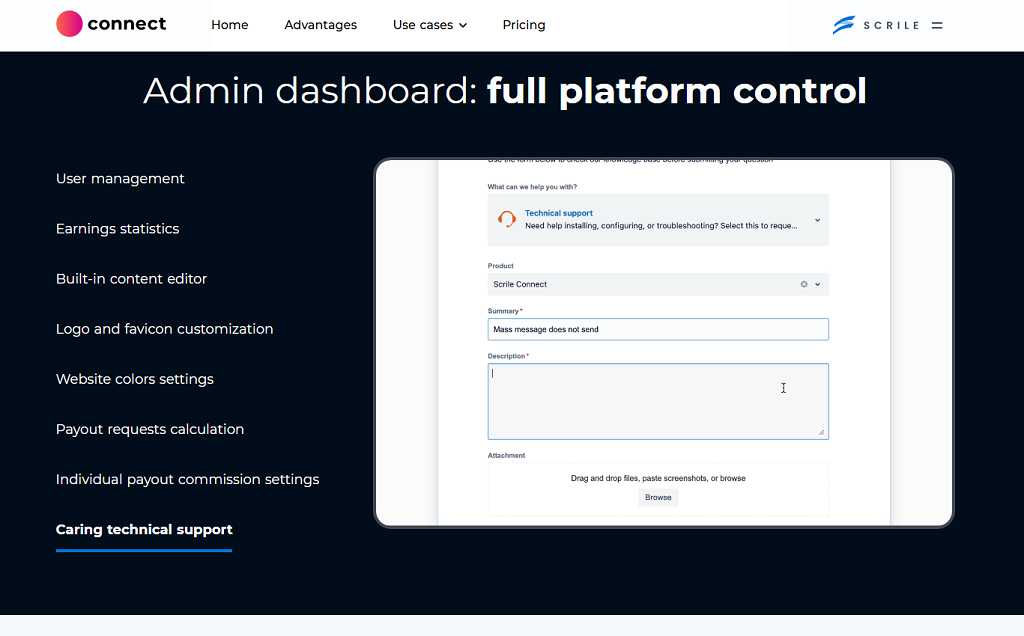
Scrile Connect enters the conversation at a different level. This isn’t a “pick a plan and adjust your workflow to fit” kind of tool. Scrile Connect is not a ready-made helpdesk platform — it is a custom development service that builds your support system around how your team already works. That matters when every workaround in your current software is costing time, clarity, or customer trust.
The approach is simple: we start from the workflows, not from a template. If your team liked certain parts of Freshdesk — structured ticket views, shared inbox handling, internal notes — those elements can be kept. But the frustrating parts? The rigid routing rules, limited role structures, or disconnected customer portal? Those can be re-designed, extended, or replaced completely.
Examples of what Scrile Connect can tailor:
- Multi-level moderation or approval workflows.
- Branded customer portals and clean internal dashboards that feel like part of your product.
- Private community spaces integrated with support and live chats — not siloed away.
- Custom billing flows, SLA timers, and ticket logic based on your rules.
- Multi-role access systems that match your organization, not a generic hierarchy.
You aren’t choosing between Freshdesk competitors here — you’re defining what your support environment needs to look like. Instead of swapping one limitation for another, you shape a helpdesk that grows with your operations, your audience, and your product.
Conclusion
Switching support tools doesn’t have to feel like a reset. It’s about choosing something that fits the way your team already works. Many companies look for Freshdesk alternatives once workflows become more specific than what standard templates can handle. When the goal isn’t just replacing one SaaS tool with another, but building a support system that grows with your business, Scrile Connect is the logical step forward. Explore Scrile Connect solutions today and build a helpdesk shaped around your operations—not constrained by them.
Polina Yan is a Technical Writer and Product Marketing Manager, specializing in helping creators launch personalized content monetization platforms. With over five years of experience writing and promoting content, Polina covers topics such as content monetization, social media strategies, digital marketing, and online business in adult industry. Her work empowers online entrepreneurs and creators to navigate the digital world with confidence and achieve their goals.

by Polina Yan
Getting approved for standard payment processing isn’t always straightforward. Some businesses face higher risks due to industry regulations, increased chargeback rates, or fraud concerns. Traditional payment processors often refuse to work with these businesses, leaving them with limited options for accepting online transactions. This is where high-risk payment processors come into play, offering specialized solutions that cater to industries with higher financial and regulatory complexities.
A high-risk payment processor is a provider that works with businesses considered too risky for traditional banks and merchant service providers. These processors ensure that companies in industries such as adult entertainment, gambling, CBD, forex trading, and subscription-based services can securely accept payments. They offer tailored fraud prevention, chargeback management, and compliance tools, allowing businesses to operate smoothly despite their classification.
For businesses operating in the mentioned industries, high-risk payment processing is not merely a choice but the obligatory requirement. Otherwise, the company will risk losing clients, sales, and reputation. Choosing the right high-risk payment gateway is the solution to secure transactions, compliance with the law, and the convenience of the payment process. Here is the review of the best high risk payment processors, what they are, and what to pay attention to while choosing the provider.
What Are High-Risk Payment Processors?
A high-risk processor is a merchant services company that deals in transaction processing services to merchants that banks and general merchant account providers will not service. These merchants are high risk due to the incidence of higher chargebacks, government regulation, or operating within a merchant category that is more vulnerable to fraud than others. As opposed to the usual merchant account that handles low-risk merchants with established transaction histories, high-risk processors are designed to handle unknown patterns of finance as well as increase security and anti-fraud protection.
| Processor | Best For / Industries Served | Key Strengths | Potential Limitations |
|---|
| PayKings | Adult, CBD, iGaming, international merchants | Customized accounts, fraud & chargeback protection, global reach | Higher fees for very high-risk industries |
| Durango Merchant Services | Tech support, subscriptions, debt collection | Customized risk-mitigation strategies, multi-currency support, fraud filtering | Longer approval times |
| Soar Payments | Tech support, e-commerce, travel, subscription models | Integrated fraud protection, recurring billing support, flexible payment models | Industry restrictions in some regions |
| Authorize.Net | High-risk e-commerce, businesses needing fraud tools | Advanced fraud protection (AVS, CVV), reliable gateway, trusted provider | Less flexible for newer high-risk sectors |
| NMI Payment Gateway | Businesses needing multi-platform support | Multi-merchant processing, 150+ shopping cart integrations, advanced reporting | Requires technical setup for customization |
| eMerchantBroker (EMB) | CBD, adult, online casinos, crypto merchants | Global presence, chargeback reduction, crypto support | Higher per-transaction fees |
| Scrile | Adult entertainment, coaching, subscription platforms, marketplaces | Fully custom integrations, multi-gateway support, PCI DSS compliance, fraud/chargeback management | Requires development partnership (not plug-and-play) |
Industries Considered High Risk

Certain sectors are automatically flagged as high risk due to their transaction patterns, regulatory challenges, or industry reputation. Some of the most common high-risk industries include:
- Adult entertainment – Subscription-based and pay-per-view adult content platforms often experience high refund and chargeback rates.
- CBD and cannabis – Despite legalization in many regions, CBD transactions remain highly regulated, making it difficult to find mainstream payment solutions.
- Gambling and online gaming – High transaction volumes and potential fraud risks make online casinos and sports betting platforms a challenge for traditional processors.
- Forex trading and cryptocurrency exchanges – These industries deal with volatile markets, high-value transactions, and strict financial regulations.
- Subscription services and recurring billing models – Businesses that rely on automatic renewals often face higher chargeback rates due to customers disputing charges they forgot about or didn’t authorize.
Why Businesses Need High-Risk Payment Processing
For high-risk businesses, it is important to identify a reliable high-risk payment processor. One of the most significant issues is chargeback management—when the customers dispute transactions, excessive chargebacks can lead to the cancellation of accounts. A high-risk processing expert offers solutions to prevent, track, and dispute chargebacks before they disrupt business operations.
Another priority is security. There are higher levels of fraudulent charges in high-risk industries and therefore high-risk processors will need to implement advanced fraud detection systems and encryption methods to protect businesses and their customers. Compliance with industry regulations—such as anti-money laundering law and finance report mandates—requires the services of a high-risk payment processing provider that is experienced in navigating intricate legal systems and offers compliance-oriented services.
Without an appropriate high-risk payment processor, businesses are unable to process payments, leading to missed sales and frustrated customers. An appropriate provider ensures secure transactions, regulatory compliance, and financial viability in the long term.
How High-Risk Payment Processing Works

Businesses categorized as high risk require specialized high-risk payment processing to handle transactions securely. Unlike standard merchant accounts, these businesses need solutions that account for chargeback risks, fraud prevention, and industry-specific regulations. A high-risk payment gateway plays a crucial role in ensuring smooth transactions while minimizing potential financial threats.
Merchant Account Setup
To be able to make the payments, high-risk businesses need to set up a high-risk merchant account. The high-risk merchant account is set up to accommodate businesses that have a higher rate of chargebacks, including adult entertainment, subscription-based services, and internet gambling. The merchant account serves as the intermediary between the bank, payment gateway, and the business to process the transaction approval and settlement in the correct manner.
High-risk accounts differ from regular merchant accounts in that they usually have higher processing rates because of the greater risk banks and payment processors take on. But they provide greater flexibility in that businesses can process payments that would be denied by ordinary providers.
Approval Process for High-Risk Businesses
Getting approved for a high-risk payment gateway involves a more extensive review than a standard merchant account. Payment processors evaluate several factors before approving a business, including:
- Industry type – Businesses in sectors prone to fraud or regulation-heavy industries face stricter scrutiny.
- Transaction history – A company with a history of excessive chargebacks may struggle to find a suitable processor.
- Financial stability – Payment processors assess a company’s financial health, ensuring it can manage refunds, chargebacks, and fees.
- Compliance and security measures – Businesses must demonstrate adherence to legal requirements, such as PCI DSS compliance.
Risk Mitigation in High-Risk Payment Processing
Since high-risk industries have more fraud and disputes, high-risk payment options include more advanced fraud detection, encryption, and chargeback protection. The majority of the payment processors use AI-based fraud prevention tools to detect unusual transaction behavior and mark it as suspicious. The chargeback protection services also make it possible to lower losses since it allows businesses to dispute false claims and catch repeated transaction issues.
A high-risk gateway offers the facility to make secure payments while protecting the businesses from risks to their finances, the law, and continuity of business.
Best High-Risk Payment Processors in 2026
Finding the right high-risk merchant processor is essential for businesses facing payment restrictions due to industry classification. Some providers specialize in handling businesses with frequent chargebacks, regulatory concerns, and fraud risks. Below, we break down some of the best high-risk payment processors and gateways that offer secure and reliable transaction solutions.
PayKings
PayKings is a highly reputable high-risk merchant processor that provides customized merchant accounts to adult entertainment, CBD, and iGaming businesses and other industries. It offers fraud protection services, chargeback protection features, and seamless integration with numerous gateways of payment. The company also supports business entities from restricted regions, making it the best choice for international high-risk merchants.
Durango Merchant Services
Durango deals with high-risk businesses that have high probability of chargebacks, like tech support businesses, subscription-based companies, and debt collection agencies. Durango’s unique selling point is that it is able to offer customized account management so that businesses are able to create risk-mitigation strategies. Its high-risk payment processing services encompass multi-currency processing and fraud filtering to enable secure transactions in high-risk businesses.
Soar Payments

Soar Payments is the perfect choice for tech support, e-commerce, and travel businesses that experience numerous chargebacks. With the firm’s full-integrated fraud protection features, the company is able to process payments while minimizing risks. With its support of numerous models of payments like one-time buy and recurring billing, Soar Payments is perfect for businesses that sell subscription models.
Authorize.Net
Authorize.Net is one of the trusted and veteran players in the payment processing business that targets businesses that need advanced fraud protection. As a high-risk gateway payment processor, it offers secure transaction processing and services such as address verification services (AVS) and card code verification (CVV). Mostly, businesses that experience multiple fraudulent transactions utilize its advanced protection features to process secure payments over the internet.
NMI Payment Gateway
NMI is a highly flexible high-risk processing solution that allows businesses to customize their payment integration. With features like multi-merchant processing, advanced reporting, and compatibility with over 150 shopping carts, NMI offers a scalable gateway that adapts to unique business needs. It is particularly useful for businesses with complex payment structures or those needing multi-platform support.
eMerchantBroker (EMB)
EMB is also an international high-risk merchant processor that provides solutions to CBD, adult, and online casino businesses. It provides tailored fraud protection, chargeback reduction programs, and other payment solutions, including support for cryptocurrency. Due to EMB’s global presence, it is ideal for companies that must go global while providing secure transactions.
Factors to Consider When Choosing a High-Risk Processor
Choosing the correct high-risk processor involves a very close examination of some very key factors. High-risk payment processors differ from standard payment providers because they have higher fees and provide specialized services for fraud, chargeback, and compliance.
Some of the largest issues are transaction fees and rates. Due to the higher risk of fraud and chargebacks, higher-risk processors generally cost more, in the range of 3% to 10% per transaction. Companies will then have to weigh up the benefits of the specialist provider against the cost.
High-risk processors also vary widely in chargeback policies. Some include chargeback prevention features, while others offer dispute assistance. A good chargeback management is what the ideal high-risk processor should possess to minimize the loss of finance.
For companies operating internationally, global payment support is essential. The ability to accept multiple currencies and process payments across different regions ensures scalability and market expansion.
Lastly, integration and security should not be overlooked. The best high-risk payment solutions provide robust API support, end-to-end encryption, and fraud detection to keep transactions secure while ensuring a seamless user experience.
Why Scrile is the Best Choice for High-Risk Payment Processing
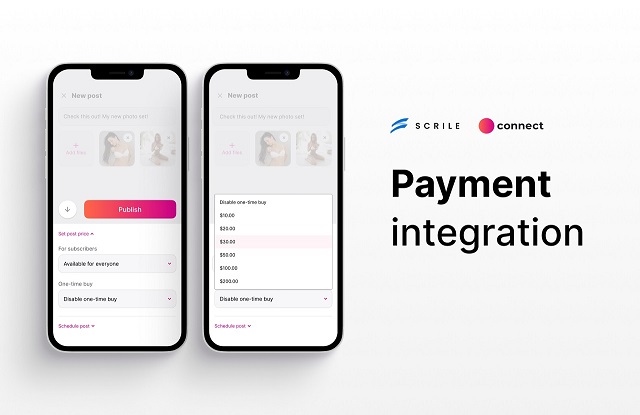
Finding the right high-risk payment solutions can be challenging, especially for businesses operating in restricted industries. Unlike generic providers, Scrile high risk payment processors offer tailored integrations designed to meet the specific needs of high-risk businesses.
Custom Solutions for High-Risk Industries
Scrile understands that every business has unique payment processing requirements. Instead of offering a one-size-fits-all approach, it provides custom high-risk payment processing integrations that align with different business models. Whether a company operates a subscription-based service, an online marketplace, or an adult entertainment platform, Scrile develops solutions that ensure seamless transactions and long-term reliability.
Industry-Specific Expertise
Many payment processors avoid working with businesses in industries like gaming, adult services, and high-risk e-commerce. Scrile specializes in these sectors, offering payment gateway integrations that support multi-currency transactions, fraud detection, and chargeback management. This expertise helps businesses avoid sudden account freezes or rejected payments, ensuring smooth financial operations.
Scalability and Compliance
Growing businesses need a payment solution that can scale with them. Scrile integrates PCI DSS-compliant security measures, advanced fraud prevention tools, and compliance support for international payments. This ensures that businesses can expand into new markets without facing regulatory roadblocks.
Seamless Integration with Multiple Payment Gateways
Unlike many high-risk payment processors that offer limited integration options, Scrile works with multiple high-risk payment solutions to provide businesses with flexibility. Whether using Stripe, PayKings, or custom-built payment systems, Scrile ensures full compatibility with existing platforms, making transactions more secure and efficient.
Conclusion
Selecting the right high-risk payment processors is essential for security, compliance, and smooth financial operations. Businesses in high-risk industries need reliable solutions that prevent fraud, reduce chargebacks, and ensure seamless transactions. Explore Scrile’s custom payment integration services to build a secure, scalable system tailored to your business needs. Strengthen your payment processing today with a trusted partner.
Polina Yan is a Technical Writer and Product Marketing Manager, specializing in helping creators launch personalized content monetization platforms. With over five years of experience writing and promoting content, Polina covers topics such as content monetization, social media strategies, digital marketing, and online business in adult industry. Her work empowers online entrepreneurs and creators to navigate the digital world with confidence and achieve their goals.

by Polina Yan
Scan a T-shirt. Watch it move. Trigger a sound. Unlock a message. Augmented reality is already sewn into fabric, printed on hoodies, embedded in patches. It’s not hype. It’s already out there — and it works.
The question now is simple: how to make augmented reality clothing that doesn’t feel like a cheap trick. Something that sticks. Something people want to wear, share, and come back to.
Designers are experimenting with motion graphics on sleeves. Educators use AR shirts to show anatomy in real time. Streetwear drops go viral because a camera reveals something the naked eye can’t. These aren’t concepts. They’re products in the wild.
This article breaks it down. The gear you need. The process, step by step. How brands are doing it. What’s actually worth building. And how anyone with a strong idea — not just major labels — can start putting interactive clothing into the world.
What Is Augmented Reality Clothing?
Augmented reality clothing refers to garments that trigger digital visuals or interactions when viewed through a phone or AR glasses. It could be an animation mapped to a printed design, a video layered on a logo, or 3D content that appears to hover just above the fabric.
The experience depends on how the garment is designed. Some respond to image markers or patterns, others use QR codes or embedded chips. Once scanned, they activate extra content: moving graphics, audio, virtual buttons, or full-screen scenes. It’s a way to add motion and story to physical products without screens.
Augmented reality try on clothes refers to digital fitting tools that let users preview how a garment might look, often using a mobile camera or smart mirror. Meanwhile, augmented reality clothing fitting uses body tracking and virtual overlays to simulate real-time fit, helping shoppers make better decisions without needing a physical fitting room.
This technology blends novelty with function. It helps brands turn clothing into interactive media. Artists use it to create immersive installations. Educators apply it to visualize anatomy, geography, or science in classrooms. For independent creators, it opens a way to sell not just fabric, but digital storytelling through clothing.
Real-World Use
Fashion retailers are already testing and deploying AR at scale. H&M launched AR try-ons through Snapchat, allowing users to select and preview outfits directly through their phones.
Other examples include:
- Music merch that unlocks unreleased tracks
- Event tees that act as digital passes or memory vaults
- Kids’ clothing that tells interactive stories
- Collectible drops tied to NFTs or limited-edition content
AR adds a second layer to clothing. It gives people a reason to look again — not just wear it once and forget.
The Tech Behind AR Clothing

Before anything looks cool through a camera, it has to be built right. How to make augmented reality clothing depends on a few moving parts: visuals, markers, motion tracking, and the software that ties it all together.
Start with design. Most creators use 3D modeling tools like Blender or Marvelous Designer to shape digital garments or visual elements. These can range from simple pop-up text to full characters animated over the shirt.
Then comes delivery. There are two main approaches:
- Marker-based AR: A printed image or logo on the garment triggers the digital layer. This is the most common approach for T-shirts and jackets.
- Markerless AR: The app tracks the body or clothing without needing a printed reference. It’s trickier to build but creates a smoother experience.
To keep the visual stable while the person moves, the system uses AI tracking. That includes face and body detection, pose estimation, and sometimes depth mapping. These tools help the content stay “stuck” to the right part of the garment.
Apps come in two formats:
- WebAR: Runs directly in the browser. No download needed. Easier to access, but with some performance limits.
- Native mobile apps: More powerful and smoother but require users to install something.
Platforms like Unity, 8thWall, Vuforia, and Spark AR handle the development layer. Each has different strengths. For example, Spark is popular for filters, while Unity gives full control over interaction and animation. This is where your augmented reality clothing app takes shape.
From Fabric to Framework
To connect real garments with digital content, creators use:
- QR codes stitched into tags or labels
- Printed markers blended into the graphic design
- Image recognition that links a shirt’s design to a hidden animation
- Digital twins, where each physical item has a virtual copy
These methods are what turn regular AR clothes into experiences. Whether you’re building immersive merch, educational tools, or virtual reality clothing, everything starts with a decision: what does the shirt unlock, and how does it know when to do it?
Step-by-Step: How to Make Augmented Reality Clothing

Creating an interactive garment looks complex from the outside, but the workflow becomes clear once you break it into stages. Anyone exploring how to make augmented reality clothing will follow a path that moves from concept to design and then into development, testing, and launch. Each step shapes the final feel of the product.
Step 1 — Define Your Concept
Start with a simple question: what should the clothing activate? Some creators build story-driven animations. Others focus on music, product information, or collectibles. The concept guides the style of the artwork, the type of animation, and the platform you will use. It also helps identify the audience. Kids, festival-goers, sports fans, or educators respond to very different visual cues. A clear direction keeps the project from drifting.
Step 2 — Design the Garment
The physical item needs to work with the digital layer. Choose a spot for the trigger image that stays visible when the garment is worn. That spot might be the chest, sleeve, or back panel. A detailed illustration, logo, or symbol often works best because it gives the tracking system enough information to lock onto. Think of the design as a stage: clean shapes help the camera recognize the target quickly.
Step 3 — Choose the Platform
The engine you select shapes the development process. Unity is popular for animated scenes with movement and depth. WebAR tools allow users to scan garments without installing an app. Meta Spark works well for camera-first experiences shared on social networks. Each option has its own workflow, so it’s best to match the tool to your idea rather than forcing the idea into the tool.
Step 4 — Build the Digital Layer
This is where the visual content takes form. It can be a short animation, a looping 3D object, a sound-reactive graphic, or a simple text reveal. The digital layer should enhance the design rather than overwhelm it. Clear timing, readable motion, and smooth interaction give the effect depth without confusing the user.
Step 5 — Link the Content
After the animation is ready, connect it to the chosen marker. Platforms offer tools that map digital visuals onto an image so the scene appears in the right place every time. Good alignment is essential. Poor mapping makes the AR look shaky.
Step 6 — Test Across Devices
Phones differ in camera quality and performance. Test on as many devices as possible. Check tracking stability, lighting conditions, and how the AR reacts when the person moves or turns.
Step 7 — Launch and Promote
Once everything feels solid, release the product. Share demos, record try-on clips, create hashtags, and encourage your community to post their reactions. AR clothing spreads fast because people enjoy showing it off.
AR Clothing Brand Examples and Ideas
There’s no shortage of real brands proving that AR clothing isn’t a gimmick — it’s a tool that gets attention, tells stories, and drives engagement. If you’re serious about how to make augmented reality clothing, it helps to study what others have already done and why it worked.
Here are a few standout examples from both big players and smaller experiments:
- H&M ran AR try-ons through Snapchat. Pick an outfit, open your camera, see it mapped on your body. It worked inside the app and on the H&M website. No extra hardware. No separate app. Just scroll, scan, and try.
- Red Bull dropped shirts that launch interactive games. You scan the chest print, it opens a branded AR scene with characters, effects, movement — all tied into their “Wiiings” campaign. Merch became the controller.
- Pepsi used AR on bottles and apparel. Some shirts unlocked video messages. Others worked as part of limited-edition drops tied to music events.
- Zalando took the sizing headache and turned it into an AR preview. You could stand in front of your phone and check how a jacket fits. It didn’t just show the product — it helped you decide.
- IKEA went heavy on product AR, then let that same idea spill into branded clothing and displays. The logic was the same: place the thing in your space. Let people imagine owning it before they buy.
- Artists are doing this too. Shirts that show moving sculptures. Logos that turn into faces. Generative graphics triggered by your camera.
- Some creators are pairing this with NFTs. The shirt is real, but the AR layer is a digital twin with unlockable perks.
If you’re thinking about how to make augmented reality clothing, don’t just chase effects. Figure out what the shirt gives people once they scan it.
Build Your Own AR Fashion Brand

The tech matters, but the branding decides whether anyone cares. A clean marker won’t save a weak idea. People remember how something looks, feels, and moves — both in their hands and through their camera.
Start with your visual identity. Your logo, colors, graphic style — all of it has to read clearly in print and on screen. Some designs break apart once scanned. Fine lines blur. Busy backgrounds confuse trackers. Design with contrast. Test at different sizes. Hold the shirt up to a camera and move it around. If the AR effect only works when the shirt is perfectly still, fix it.
The user experience goes beyond what the app shows. Think about lighting. Think about front-facing vs. rear cameras. Make sure your content works on both high-end and older phones. Not everyone scans your work with a brand-new iPhone. The real world is messy. Build for it.
Now: how do you sell it?
You don’t need to launch with 30 pieces. A single strong design, dropped in a small run, can do more than a full collection. Start with a theme. Tie it to a moment, a message, or a story. Offer it in a limited batch. Set up a basic online store or collaborate with a brand that already has reach.
AR gives you room to do things printed clothing can’t. That’s your edge. Don’t waste it with empty effects. Let the shirt unlock something worth coming back for. A visual. A sound. A memory. A reason to care.
Develop Your Own AR Product with Scrile Custom Development Services

Building something that actually works takes more than a template. You need a team that understands how to turn your concept into a full product — not just an effect. That’s where Scrile comes in.
Scrile isn’t a platform. It’s a custom development service. That means you don’t adapt your idea to a preset tool. We build the tool around your idea.
If you’re serious about how to make augmented reality clothing, and you’re ready to move from a test file to a live product, this is the stage to get in touch.
Here’s what Scrile can develop for you:
- Virtual try-on apps that simulate fit and style using body tracking
- Marker-based AR clothing systems that trigger animations, games, or product info
- Backends for AR commerce, including user analytics, content control, product syncing, and real-time data
- Admin tools for managing drops, updating designs, and tracking campaign performance
- Custom viewer interfaces — browser-based, app-integrated, or branded standalone
You bring the visual direction, the brand story, or even just a rough sketch. Scrile handles the architecture, the integrations, and the features needed to bring it to life.
We don’t offer one-size-fits-all packages. Every build is shaped around your goals, your stack, and your users. Whether you need a lightweight demo or a full ecosystem ready to scale, we work with you to make it happen.
Interactive clothing deserves interactive thinking. If the idea is ready, Scrile’s the partner that knows how to build it right.
Conclusion
AR clothing is functional design with digital depth. It’s built to be scanned, moved through space, and talked about. Every piece becomes more than its print. It becomes part of the story you’re telling.
Anyone with a clear vision can start building. The tools are out there. The workflow is manageable. What matters is choosing the right team to put the parts together and make sure it works where it counts — in someone’s hands, through their lens, on their screen.
Scrile builds full custom systems for interactive products like AR clothing. From visual triggers to app frameworks, from backend logic to user experience — everything is built to match your idea, not restrict it.
You can launch a working product, bring it to market, and grow it into something bigger. Start by exploring how Scrile Custom Development Services can help you build a real AR product from the ground up.
FAQ
How do you make an AR T-shirt?
Start with a clear idea. Decide what the shirt should trigger — animation, sound, video, or something else. Design the graphic so it works as a visual marker. Tools like Unity or WebAR platforms let you build the digital content and link it to the image. Test it on multiple devices. Once everything tracks smoothly, publish it and share your launch with the audience you’re building for.
Does H&M use AR in their clothing?
Yes. H&M partnered with Snap to create AR try-on experiences. Users can select clothes, see how they fit, and share the look, all through their phone’s camera. It works in both the Snapchat app and the H&M mobile app.
What companies are using AR for branding or clothing?
Brands like Red Bull, Pepsi, IKEA, Zalando, Philips, Walmart, and even Arsenal FC use AR in different ways — from merch drops and product previews to interactive ads and digital collectibles.
Polina Yan is a Technical Writer and Product Marketing Manager, specializing in helping creators launch personalized content monetization platforms. With over five years of experience writing and promoting content, Polina covers topics such as content monetization, social media strategies, digital marketing, and online business in adult industry. Her work empowers online entrepreneurs and creators to navigate the digital world with confidence and achieve their goals.

by Polina Yan
Scheduling tools run half the modern service economy. Coaches, small clinics, tutors, wellness studios, and consultants rely on booking software to keep their calendars from collapsing. Acuity built a strong early lead, but 2026 looks different. The user base expanded, demands changed, and patience shrank. Across Reddit threads and review platforms, people describe the same friction: slow loading during busy hours, limited customization, and the sense that Acuity works best only if you stay inside the Squarespace ecosystem. That shift is why more teams compare Acuity alternatives before committing to another year.
Some want easier integrations. Others want better branding, smarter automation, or a tool that fits how they actually deliver services. This guide walks through the reasons users move on, the criteria that matter when choosing a replacement, the strongest options available, and what a custom-built solution can offer when ready-made tools can’t keep up.
Why Users Replace Acuity Scheduling
Acuity Scheduling has been around long enough to become the default choice for many small operations. The entry plan usually falls somewhere around $16 per month, with higher tiers reaching roughly $49 as more calendars and features get added. For a solo consultant, that’s manageable. Trouble appears once a business tries to scale or needs a workflow outside Acuity’s narrow lane.
A second piece of context matters here: Acuity became a Squarespace product after the 2019 acquisition. That shift worked well for users already building their websites on Squarespace, but it also created a wave of confusion. Some people search Squarespace Scheduling vs Acuity as if they were unrelated tools. Others ask is Acuity and Squarespace the same thing, trying to understand how tightly the two products overlap. The simplest way to describe it is this: Acuity lives in the Squarespace family, but it still behaves like its own standalone scheduler — with its own advantages and its own ceilings.
Once people look past the branding link, the same pressure points surface again and again:
- Automation runs out of room. Reminders and basic follow-ups exist, but anything beyond simple sequences requires workarounds.
- Branding tools feel thin. Businesses want booking pages that match their identity, not generic forms with basic color swaps.
- Team scheduling becomes pricey. As more calendars get added, the overall subscription jumps fast, pushing people toward tools listed as Acuity Scheduling Competitors.
- Multi-location logic is limited. Clinics, salons, and coaching groups often need resource rules, roles, and complex timetable management. Acuity doesn’t stretch far.
- Squarespace users feel boxed in. Some stay only because it’s bundled. When they try to migrate, the ecosystem makes it harder than expected.
User Pain Points Surfaced Across
The finer details matter even more. Many reviews mention lag during peak usage, confusing time-zone conversions for international clients, and shallow intake form controls. Those issues sound small until they hit real business scenarios.
A yoga studio needs strict class-size limits and waitlists. A consultant juggling different services wants separate intake steps for each. A clinic needs layered permissions so staff only see their own schedules. When these needs collide with Acuity’s ceiling, the workflow breaks. That is the moment people start looking for Acuity alternatives that match the complexity of their daily work instead of forcing them into rigid templates.
How to Evaluate the Right Alternative
Once a team decides to move on, comparing tools becomes overwhelming. Websites pitch similar features, and marketing copy hides the details that matter. These points help filter the noise when reviewing Alternatives to Acuity Scheduling.
Pricing logic defines long-term cost. Some tools charge per staff member. Others price by feature tier. A business with ten calendars will feel a per-seat plan immediately, while a solo operator won’t.
Integration depth shapes workflow. Strong options sync cleanly with Google Calendar, Outlook, Stripe, PayPal, or CRMs. Teams using Zoom or Microsoft Teams need native video integrations, not meeting links pasted manually.
Automation determines how much the tool actually saves time. Good alternatives can handle follow-ups, reminders, cancellations, and sequences that change depending on the service.
Branding and white-labeling influence client perception. Some businesses need a booking page that looks like part of their site—not an embedded widget with limited styling.
Data ownership and export rules matter more than people expect. Vendors that lock down exports create headaches later. Good platforms let teams back up client lists, booking records, and financial reports without obstacles.
Vendor lock-in is a real risk. Some tools work beautifully until a team needs something slightly unusual. If the platform can’t bend, the business ends up switching again.
With these factors in mind, evaluating Acuity alternatives becomes far more honest and less about shiny features.
The Top Acuity Alternatives for 2026
Choosing between the many Acuity Alternatives can feel messy until you compare them in a structured way. Different tools work better for different rhythms: some are built for speed, some for teams, some for people who need fine-tuned branding. Below are five options worth looking at in 2026, each with a clear purpose and transparent pricing so you can decide which one genuinely fits your workflow.
Calendly
Best for: professionals and teams who want quick scheduling with minimal setup.
Calendly built its reputation on simplicity. You pick your availability, share a link, and clients book without friction. It supports Google and Outlook calendars, plugs into Zoom and Teams, and includes automatic reminders. The tool works especially well for consultants, recruiters, and sales teams that rely on fast back-and-forth scheduling.
Pros:
- Very fast initial setup.
- Large integration library.
- Clean booking pages with predictable behavior.
Cons:
- Branding options feel limited.
- Not ideal for service providers who need intake steps or questionnaires.
Pricing: starts with a free plan; paid seats typically fall into the $10–$16 range.
One of the clearer Acuity scheduling alternative options for straightforward workflows.
Microsoft Bookings
Best for: teams inside Microsoft 365, HR departments, clinics, and corporate training operations.
Bookings works well because it fits naturally into the Microsoft ecosystem. If a team already uses Outlook, Teams, OneDrive, or SharePoint, setup feels almost seamless. Admins can manage staff calendars, service types, and permissions from one interface. Video calls integrate directly into Teams without extra work.
Pros:
- Strong fit for enterprises and corporate teams.
- Deep integration with Outlook and Teams.
- Useful for multi-staff environments that require internal permissions.
Cons:
- Confusing for freelancers or small service providers.
- Customization is limited compared to more flexible tools.
Pricing: included in many Microsoft 365 Business subscriptions; some plans cost $6–$22 per user depending on region and licensing.
Great option for organizations already anchored in Microsoft workflows.
Zoho Bookings
Best for: service teams, coaches, educators, and growing businesses that want automation depth without enterprise pricing.
Zoho Bookings benefits from living inside the broader Zoho suite. Teams can link scheduling with CRM, invoicing, campaigns, and helpdesk tools. Workflows support conditional logic, customized intake, and reminders tied to different service categories.
Pros:
- Automation that adapts to varied appointment types.
- Strong connections to Zoho CRM and external calendars.
- Affordable for multi-staff setups.
Cons:
- UI takes time to master.
- Branding tools are solid but not limitless.
- Sync delays occasionally appear when using many Zoho apps at once.
Pricing: plans range from $6 to $9 per user/month.
Zoho is a strong choice for teams that want deeper workflows without jumping into more expensive enterprise platforms.
Setmore
Best for: barbers, fitness coaches, massage therapists, and other small operations that want simple booking with a professional touch.
Setmore is known for its generous free tier and easy learning curve. It connects with Facebook and Instagram, letting clients book directly through social profiles—useful for small businesses that don’t rely on heavy websites. Its appointment pages feel clean and mobile-ready.
Pros:
- One of the best free plans in the category.
- Social media booking tools built in.
- Simple interface that doesn’t overwhelm new users.
Cons:
- Reporting and analytics stay fairly light.
- Limited customization for advanced workflows.
Pricing: free tier available; paid plan lands around $5–$12 per user/month depending on the billing cycle.
Among the most straightforward Acuity alternatives for small, fast-moving service providers.
YouCanBookMe
Best for: educators, consultants, freelancers, and teams that want calendar-driven booking with strong personalization.
YouCanBookMe focuses on customization inside a simple framework. Users can adjust text, layout, email templates, and time-slot rules without touching code. It shines in environments where tight syncing with Google or Outlook matters more than complex automation.
Pros:
- Excellent email and template personalization.
- Intuitive time-slot control.
- Reliable calendar syncing.
Cons:
- Not built for complex multi-location scheduling.
- Limited workflow automation.
Pricing: typically $7–$14 per calendar/month, depending on billing cycle; free plan is available.
A strong pick for teams reviewing Acuity Scheduling Alternatives that emphasize communication over heavy operational structure.
Create a Turnkey Online Booking System With Scrile Connect
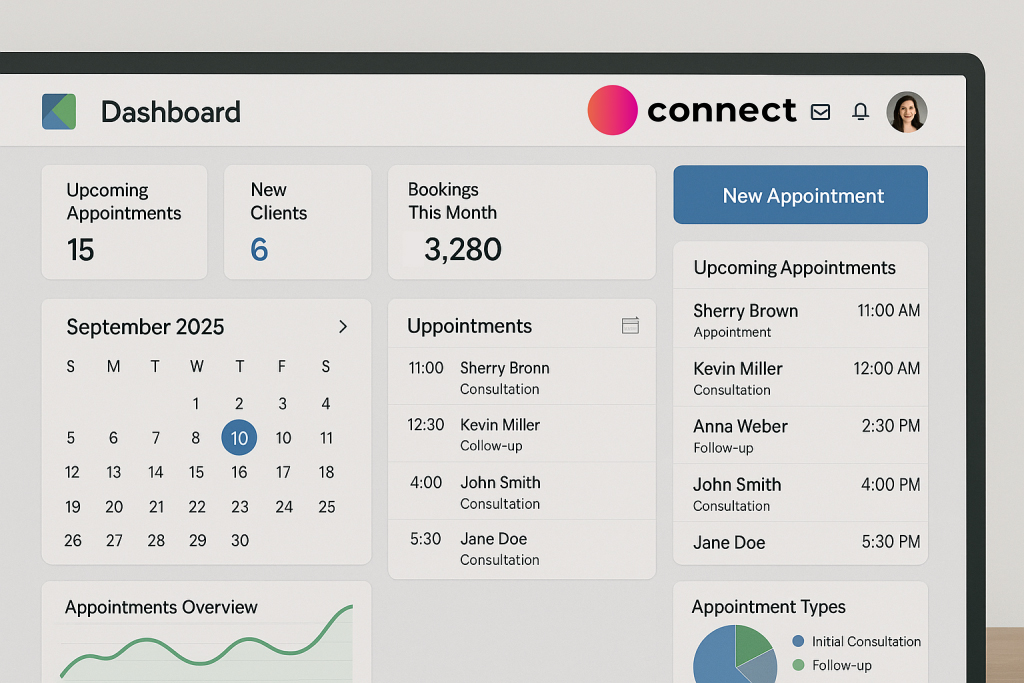
All the tools above solve scheduling in their own way. They work best when a business fits the mold they were built for. But many teams don’t. They run unusual appointment types, manage multiple service layers, or need a branded client experience that prebuilt software can’t offer. That’s where Scrile Connect comes in—not as another booking app, but as a custom-built system shaped around the business itself.
Scrile Connect is a development service, not a SaaS subscription. The team builds a private scheduling platform with the exact features a business needs: unique intake flows, multi-role dashboards, resource-based scheduling, class and group booking logic, membership areas, integrated payments, messaging, or anything else required. Because everything is custom, there are no constraints on layout, branding, automation, or workflows.
Key advantages:
- Custom UI and branding that match the business perfectly.
- Scheduling flows built from scratch for the service type.
- Payment logic, subscriptions, bundles, or credit systems.
- Multi-staff permissions, internal notes, and audit tools.
- API-based structure for future integrations and expansion.
- Full data ownership with no platform lock-in.
For businesses that outgrow Acuity—or any replacement—Scrile Connect offers a way to build an alternative to Acuity Scheduling that truly fits how the team works.
Conclusion
The market for scheduling tools is broader than ever, with Acuity Alternatives available for nearly every business stage and need. From simple booking apps to robust client management systems, the right solution depends on your goals and workflow. When out-of-the-box tools no longer fit, custom development becomes the smartest next step. Scrile Connect offers tailored platforms designed to scale with your business.
Explore what Scrile Connect can build for you — and move beyond limitations.
FAQ
What’s better than Acuity Scheduling?
Different tools excel in different areas. Calendly handles quick booking; Microsoft Bookings works well inside corporate Microsoft 365 setups; Zoho Bookings adds automation and CRM links; YouCanBookMe focuses on personalization; Setmore gives small businesses an easy free option. These are the main competitors among modern Acuity alternatives, and the right choice depends on the workflow.
Is there a free version of Acuity Scheduling?
Acuity doesn’t offer a permanent free plan, but new users get a free trial. It’s enough to test basic booking, reminders, and calendar syncing before committing to a paid tier.
Is Calendly or Acuity better?
Calendly fits teams that want fast, simple scheduling with clean integrations and minimal setup. Acuity suits people who need packages, memberships, or deeper client management.
Polina Yan is a Technical Writer and Product Marketing Manager, specializing in helping creators launch personalized content monetization platforms. With over five years of experience writing and promoting content, Polina covers topics such as content monetization, social media strategies, digital marketing, and online business in adult industry. Her work empowers online entrepreneurs and creators to navigate the digital world with confidence and achieve their goals.

by Polina Yan
Live streaming isn’t limited to one industry or audience anymore. It’s used by everyone — from teachers running virtual classrooms, influencers hosting fan events, and content creators launching pay-per-minute shows, to large-scale streaming services and global tech companies powering massive live broadcasts. The demand for real-time connection is universal, and behind many of these experiences, one protocol quietly continues to do the work: RTMP.
So, what is RTMP protocol, and why is it still trusted in 2026?
Despite its age, RTMP remains a go-to method for getting video from source to server — fast, stable, and widely supported. In this guide, we’ll unpack how it works, where it fits in today’s tech landscape, and how you can use it to build your own streaming platform — whether you’re launching a niche startup or architecting a large-scale service.
RTMP Demystified: What It Does and How It Works
RTMP stands for Real-Time Messaging Protocol, and while it’s an oldie, it remains one of the most reliable building blocks in live video workflows. Macromedia developed RTMP in the early 2000s to stream audio, video, and data over the internet, and Adobe later adopted it. The protocol primarily served Flash-based playback. While Flash itself is no more, the protocol it used isn’t.
What keeps RTMP relevant in 2026 isn’t nostalgia. It’s usefulness. RTMP creates a long-duration TCP connection between the source (usually a live encoder) and the server. That is, rather than pushing bits of data, as more modern HTTP-based protocols do, RTMP has a steady, low-latency stream of information. It’s a continuous feed that works particularly well when timing matters — like live events, real-time interaction, or performance-based content.
RTMP’s Role in the Contribution Workflow
Most of the time, platforms used RTMP at the contribution stage to transfer content from the broadcaster to an RTMP streaming server.From there, other technologies (like HLS or WebRTC) typically take over to deliver the content to end viewers. RTMP still dominates this ingest phase because it’s fast, reliable, and widely supported across encoders like OBS, vMix, Wirecast, and even hardware streaming tools.
Here’s how a simple RTMP stream setup looks:
- A live camera feed is captured through an encoder
- The encoder pushes that stream using RTMP to a streaming server
- The server then handles playback distribution using HLS, WebRTC, or both
Another reason RTMP persists is how well it performs under poor network conditions. It’s not the most modern option, but it’s incredibly stable and easy to deploy — two traits that matter a lot when you’re dealing with unpredictable connections or limited budgets.
Of course, not everything about the original protocol fits today’s standards. That’s where RTMPS comes in. If you’re wondering what is RTMPS, it’s simply RTMP secured through SSL/TLS encryption. The encrypted variant is especially useful for platforms handling sensitive data, adult content, or private pay-per-view events. It ensures your stream can’t be easily intercepted or hijacked mid-transmission.
Maybe it’s no longer the technology powering your playback, but it’s still the protocol quietly handling the heavy lifting when your content first leaves the source — and for many streamers, that’s the most critical moment.
RTMP in 2026: Still Relevant or Outdated?

Developers designed RTMP long before smartphones and 5G entered the picture, but it’s still widely used. While it might seem outdated compared to newer streaming protocols, the RTMP protocol continues to play a vital role in modern live video workflows. It remains especially popular for getting a live video feed from the source — your encoder — to the server before it’s sent to the audience.
One reason it’s still around is that it just works. RTMP has stood the test of time because it’s:
- Easy to implement and well-documented
- Low-latency, with faster delivery than chunk-based protocols
- Supported by nearly every software and hardware encoder on the market
These strengths make RTMP the go-to solution for the “contribution” part of streaming — that is, the link between your broadcasting software and the server. From there, many setups now use a second protocol like HLS or WebRTC to handle playback, especially for mobile and browser-based viewers. This hybrid setup — RTMP in, modern protocol out — has become standard practice.
In 2026, streamers and developers still choose RTMP because it’s stable, flexible, and proven. It’s widely used in live cam platforms, coaching businesses, private membership-based streaming services, and even large-scale commercial platforms that want fast deployment and full control.
At the same time, infrastructure around RTMP is still evolving. Services like RTMP.pro now offer cloud-based RTMP ingestion, making it easier to build a modern workflow without sacrificing speed or reliability.
RTMP might not be the headline tech anymore, but it hasn’t gone away. For many use cases, it’s still the simplest and most dependable way to deliver real-time video from source to server — and that’s exactly what most streaming businesses need.
RTMP VS Other Protocols: Picking the Right Tool

When it comes to live streaming protocols, there’s no one-size-fits-all solution. Each has strengths and trade-offs, and choosing the right one depends on how you’re using it — whether you’re delivering to a global audience, operating a pay-per-minute cam site, or building a high-interaction virtual event platform.
Let’s break down how the RTMP protocol compares to three other common options: HLS, RTSP, and WebRTC.
RTMP VS HLS
This is one of the most common comparisons, especially for developers working on full-scale streaming platforms. The key difference? Many streaming workflows rely on RTMP for contribution, while HLS handles playback
RTMP sends video from the encoder to the media server. It keeps a persistent connection, which means low latency — often under 5 seconds, and in ideal setups, even lower. It is therefore an excellent choice for anything that involves real-time interaction, like live auctions, adult content streaming, or live chat-supported coach sites.
However, Apple developed HLS (HTTP Live Streaming) specifically to support scalable video delivery. It breaks up video into tiny pieces and sends them as HTTP, allowing for easy caching, worldwide distribution, and playing on nearly any device or browser. But it costs more in terms of latency: delays of 15–30 seconds are typical.
So comparing RTMP vs HLS, the rule is simple: utilize RTMP to feed content into the system in a hurry; utilize HLS to publish it in scale. Both are utilized by a lot of current streaming setups, which blend RTMP ingest with HLS delivery to strike a balance between real-time creation and level delivery.
RTMP VS RTSP
Another common comparison is RTMP vs RTSP. While they might sound similar, they’re built for very different things.
RTSP (Real Time Streaming Protocol) is often used in closed environments, like security camera systems, IP surveillance setups, or internal network video feeds. It supports real-time control — play, pause, record — which makes it great for video-on-demand or camera monitoring systems.
RTMP, in contrast, is more focused on delivering live video for web applications. It works better in browsers, integrates more easily with common encoders and CDNs, and is widely supported by public-facing streaming services. It’s also better suited to interactive live content, like virtual performances or monetized live chats.
So if you’re building a consumer-facing streaming site, RTMP protocol is generally the better choice. RTSP is fine for internal systems, but it’s rarely used in public streaming environments without complex configuration and support layers.
RTMP VS WebRTC.
WebRTC is the newest of the major streaming protocols and was designed for true real-time communication. It’s peer-to-peer, supports two-way audio and video, and delivers sub-second latency. On paper, it sounds like the perfect solution for any kind of live interaction.
But it comes with its own set of challenges. WebRTC is far more complex to implement and harder to scale without dedicated media servers. It also requires more resources from both the server and the viewer’s device. This makes it ideal for video conferencing or one-on-one chat, but not always the best choice for large public broadcasts.
RTMP, on the other hand, is easy to configure, works well with existing encoders, and can be scaled up using traditional media server setups. That’s why many developers don’t pick one — they combine both. RTMP handles content ingestion, and WebRTC delivers the final stream to users where latency needs to be as close to real-time as possible.
So RTMP is stable and easy to use. WebRTC is faster, but harder to manage. Use them together when your platform needs both simplicity and speed.
Who’s Still Using RTMP?

Despite being more than two decades old, the RTMP protocol continues to be part of the modern streaming stack — especially when it comes to contribution workflows. While newer protocols like HLS and WebRTC have taken over playback, RTMP still plays a critical role in getting content from creators to servers efficiently and reliably.
It’s not just legacy broadcasters keeping it alive. A wide range of industries and businesses continue to rely on RTMP in 2026 — from small startups to global-scale streaming platforms.
Most common use cases:
- Virtual event platforms. Companies hosting conferences, expos, or panel-style events often use RTMP for stable, scalable stream contribution before handing off to a CDN for global playback
- E-learning platforms. Schools, tutors, and educational creators use RTMP to feed live classroom sessions into learning management systems or interactive content portals
- Live music and entertainment. Small to mid-sized artists stream performances to fans via RTMP workflows, sometimes blending with HLS or WebRTC depending on viewer needs
- Gaming and esports. Niche platforms outside of Twitch often build on RTMP for broadcasting and commentary streaming setups
- Fitness and wellness sessions. Real-time yoga, personal training, or guided meditation classes often rely on RTMP to push high-quality video to their branded websites
- Corporate communications. Internal all-hands meetings or product launches can stream through private RTMP-based networks, bypassing public platforms for security
- Faith-based streaming. Churches, mosques, and spiritual communities use RTMP to broadcast services reliably without relying on external streaming apps
- Niche media hubs. Independent film festivals, regional news outlets, or cultural broadcasts often need fast, cost-effective streaming infrastructure
- Adult webcam sites. These platforms prioritize low latency and performance consistency, especially for private and group video chats. RTMP remains the protocol of choice for many cam businesses because it integrates smoothly with real-time chat and monetization features, without the overhead of more complex options.
For many of these use cases, understanding what is RTMP protocol helps explain why it remains the preferred choice when setting up stable, scalable live video systems. Whether you’re working with a global audience or a private subscriber base, RTMP offers the kind of stability and ease that still makes sense in 2026.
How to Set Up a Streaming Site with RTMP
If you’re planning to build your own streaming site — whether for gaming, coaching, events, or adult content — understanding how RTMP fits into the setup is essential. Even with all the newer protocols on the market, RTMP remains the fastest and most reliable way to get live video from your source to your server.
At a basic level, every RTMP-powered stream follows this path: Encoder → RTMP server → Viewer. The encoder captures and compresses your video. The RTMP server receives and distributes it. And the viewer accesses the stream through a compatible player — often using another protocol like HLS or WebRTC for playback.
To get started, you’ll need three core components:
- A live encoder (OBS Studio is the most popular RTMP streaming software and it’s free)
- A media server that supports RTMP (you can build one using the NGINX RTMP module or go with a hosted solution like Wowza or Nimble)
- A frontend player for your users, often embedded on your site via HTML5 with protocol fallback support
Setting up
When you understand what is rtmp protocol, setting up that flow becomes far less intimidating — it’s all about pushing content in and letting other tools handle the output. For site owners and creators, this setup is a smart entry point. It’s relatively inexpensive, the tech is mature and stable, and there’s a massive ecosystem of plugins, tutorials, and open-source tools to help you launch faster. Unlike more complex real-time protocols, RTMP doesn’t require specialized hardware or deep networking knowledge to configure.
Some tips for getting started:
- Start with a test stream using OBS to a local or cloud-based RTMP streaming server
- Use a player that supports multiple protocols so you can serve viewers using HLS or WebRTC while still relying on RTMP for contribution
- Monitor stream quality closely — especially audio sync and latency — during early tests
- Keep bandwidth and server specs in mind; your ingest server needs enough resources to handle incoming video without lag
RTMP might not be your end-to-end solution, but as the core of your live video pipeline, it remains a powerful and proven way to get a streaming platform up and running.
Why Scrile Stream Is Ideal for RTMP-Based Streaming Sites
When building a live streaming business, the biggest challenge isn’t just getting video online — it’s creating a platform that reflects your goals, brand, and audience. That’s exactly where Scrile Stream stands out. It’s not a generic SaaS product or limited turnkey platform. Scrile Stream is a custom development service built to help you launch a fully branded, fully owned live streaming site — with RTMP integration at its core.
Unlike pre-packaged tools that box you into templates, Scrile Stream gives you complete flexibility. Whether you’re planning a pay-per-view concert site, a high-end private coaching platform, or a full-featured adult cam business, it’s built around your specific needs.
Scrile Stream includes:
- Live video functionality with support for RTMP streaming server input
- Real-time chat systems for audience interaction and private messaging
- Flexible monetization features: tips, subscriptions, pay-per-minute video, and premium galleries
- Full white-label branding, from logo and colors to custom domain integration
- An admin dashboard for managing users, content, and revenue in one place
RTMP remains one of the best options for ingesting live content — and Scrile Stream is built to support that. You can use any RTMP streaming software to send your stream to the platform. From there, Scrile Stream handles everything else: content delivery, viewer access, payments, and real-time features.
You also get the freedom to scale. Start lean, then add custom features or integrations as your business grows — payment gateways, affiliate systems, mobile optimization, or anything else your audience needs.
If you’re serious about building a professional streaming site from scratch — with full control over how it looks, works, and earns — Scrile Stream gives you the foundation, tools, and development muscle to make it real. RTMP gets the content in; Scrile Stream helps turn that content into a business.
Conclusion
RTMP remains a reliable backbone for streaming input — fast, stable, and widely supported. It’s still the go-to for creators who want to build and own their platform. Ready to turn live video into a real business? If you’re still asking what is RTMP protocol and whether it belongs in your stack, the answer is yes — especially if you’re planning to own your platform end-to-end. Contact the Scrile Stream team and start building something that goes beyond just broadcasting.
Polina Yan is a Technical Writer and Product Marketing Manager, specializing in helping creators launch personalized content monetization platforms. With over five years of experience writing and promoting content, Polina covers topics such as content monetization, social media strategies, digital marketing, and online business in adult industry. Her work empowers online entrepreneurs and creators to navigate the digital world with confidence and achieve their goals.

by Polina Yan
The online coaching market is estimated at $7.3 billion in 2026 and is expected to surge to nearly $26 billion by 2032, making it one of the fastest-growing sectors in the digital economy. People now turn to digital coaches for everything: fitness plans, business growth, career changes, language learning, even adult guidance.
If you’ve been thinking about how to start an online coaching business, the conditions are finally lined up. Remote work made video calls second nature. Payment systems are simple enough that clients from any country can subscribe in minutes. And audiences are more willing than ever to invest in expertise that feels personal.
In this article, we’ll map out the essentials: how to choose a niche, set up the business side, build a digital presence, deliver value online, and scale when the first clients come in. By the end, you’ll know what it takes to launch in 2026.
Why Coaching Thrives in 2026

Look around and it’s clear: people are spending more money on guidance than ever. Market research puts coaching in the multi-billion range, and the curve is still climbing. The interesting part is how wide the field has become. Ten years ago, most people thought of coaching as either business or fitness. Now, it stretches across dozens of professions, with real clients paying for one-on-one time online.
Some of the strongest niches right now are:
- Tutors and teachers supporting students after school or preparing for exams.
- Wellness and nutrition consultants building structured meal and lifestyle plans.
- Astrology and spiritual mentors giving personalized readings and advice.
- Life coaches helping with career moves or building confidence.
- Fitness trainers running workouts over video with tracking and accountability.
For anyone asking how to start online coaching, this diversity is the real gift. You don’t have to chase the same crowded categories as everyone else. The market rewards specialists, people who bring expertise and package it in a way that feels personal and practical.
Defining Your Niche and Value

Specialization isn’t about boxing yourself in — it’s about making it clear why someone should hire you instead of scrolling past. The online coaching space is crowded, and the easiest way to stand out is by carving a narrow lane that highlights both your skills and your personality.
Start by asking yourself two questions: What do I know well enough to teach or guide? and Who actually needs this right now? The sweet spot is where those answers overlap. For example, a certified nutritionist might narrow down to busy professionals who struggle with meal planning. A lawyer might focus on helping small businesses draft their first contracts. A yoga teacher might turn her weekend classes into a stress-relief program for remote workers.
Testing demand doesn’t require big budgets. Run a poll in your existing network, offer a short free session, or post sample tips on social media and see who responds. If the engagement is there, you’ve got proof that people care about the problem you’re solving.
Value comes from clarity. When a potential client lands on your page, they should immediately know what problem you solve and how you deliver it. Broad promises like “I’ll help you live your best life” don’t move the needle. Clear, specific offers — “I’ll help first-time managers lead their teams with confidence” — are what turn curiosity into paying clients. Your niche is the hook, and your value is how you prove it.
Setting Up Your Coaching Business Basics

Before you go live with your first client, it helps to treat your coaching idea like a real business from day one. That means putting some structure in place — nothing fancy, just enough to protect you and make payments smooth. Anyone exploring how to start a coaching business online will find these basics make the difference between a side hustle and something sustainable.
Things worth setting up early:
- Registering a business entity and opening a dedicated bank account so client payments don’t mix with your personal finances, and you can present invoices under an official name.
- Sorting out taxes and basic bookkeeping from the start so you know what percentage of your income to set aside each month instead of scrambling when deadlines arrive.
- Drafting simple coaching agreements or contracts that outline session length, cancellation rules, payment terms, and confidentiality. Clients respect clarity, and it saves headaches later.
Pricing models that work for coaches:
- Hourly sessions are straightforward but make scaling harder since your income is tied to time.
- Packages or bundles of sessions give stability, reduce cancellations, and create momentum for your clients.
- Subscriptions or retainers turn coaching into recurring revenue, rewarding consistency and freeing you from constantly chasing new clients.
These basics don’t take long to set up but will give your coaching work a professional backbone from the beginning.
Building Your Digital Presence

Once the paperwork is done, the real challenge starts: showing up online in a way that feels trustworthy. Anyone asking how to start an online coaching business needs more than a LinkedIn profile or a random Instagram account. You need a digital footprint that tells potential clients, “this is someone worth paying.”
That usually begins with a website. Keep it simple but professional — a homepage that explains what you do, a clear call to book a session, and a way to collect emails. From there, layer in branding: colors, photos, tone of voice. Consistency across your site and socials makes you look reliable, even if you’re just starting out.
Content is what drives people into your orbit. Blogs, short videos, or free webinars act as funnels, giving value upfront and pulling curious followers toward your paid offers. An email list turns those casual followers into a community you can reach without worrying about algorithm changes.
Tools worth focusing on:
- A clean website with booking and payment options.
- Social channels where your audience already hangs out, not where you feel you “should” be.
- Regular content — posts, videos, or podcasts — that teach something useful and hint at your paid services.
- An email list, even if it’s small, because subscribers are more likely to convert than casual followers.
Why Brand Matters More Than Reach
It’s easy to get obsessed with follower counts, but numbers don’t pay bills. A coach with 500 loyal subscribers and a clear brand can earn more than someone with 50,000 unengaged followers. People don’t buy coaching because you’re popular; they buy because you look credible, consistent, and aligned with what they need.
Choosing the Right Tech Stack

You don’t need to reinvent the wheel to coach online. At the simplest level, plenty of people run sessions on Zoom or Google Meet, take payments through PayPal, and schedule with Calendly. That setup can work fine for your first handful of clients. But if your goal is how to become an online business coach with a long-term brand, you’ll quickly notice the gaps.
The essentials are always the same:
- Video software that supports stable one-to-one or group sessions.
- Scheduling tools so clients can book without back-and-forth emails.
- Payment processing that works globally, including cards, wallets, or even subscriptions.
- Chat and messaging to keep communication alive between sessions.
SaaS platforms bundle many of these features, and they’re tempting because they let you start quickly. The trade-off is lack of control — you’re tied to their branding, their fees, and their feature set. A personal website stitched together with third-party tools gives you more flexibility but can feel clunky for clients if the systems don’t integrate smoothly.
Custom builds sit at the other end of the spectrum. They take longer to set up, but they give you complete ownership: your name on the interface, your payment flow, your rules. For some coaches, that level of control is what makes the difference between a side gig and a business that grows steadily year after year. The tech is there — the choice is about how far you want to take it.
Delivering Coaching Online
Once you’ve got clients through the door, delivery is where you prove your value. Online coaching isn’t one-size-fits-all — the best format depends on your style and what your audience expects. Some coaches thrive in one-on-one sessions, giving clients deep personal attention. Others prefer group programs, which create peer support and let you scale faster. Many blend both with hybrid models, combining live coaching with recorded lessons or worksheets.
Retention is just as important as the first sale. Clients stay when they feel supported and see progress. That requires structure, not just casual chats.
Engagement tactics that work well:
- Clear session roadmaps so clients know what’s coming next.
- Homework or follow-up tasks to keep progress moving between calls.
- Recorded replays for people who miss live sessions.
- Chat groups for accountability and peer interaction.
- Regular check-ins outside scheduled sessions, even short messages.
Clients who feel momentum are less likely to cancel. When they can see tangible outcomes — a new skill, a fitness milestone, a confident career shift — they tell others. Word-of-mouth is still one of the strongest growth drivers in coaching, and that starts with how you deliver.
Scaling Beyond the First Clients
The early months often feel like freelancing: hustling for clients, juggling calls, sending invoices. But once you’ve proven your model works, it’s time to think bigger. Learning how to start an online coaching business doesn’t end with your first paying clients — it’s about creating something that runs beyond you.
The next step is building community. A group space where members interact gives more value than one-on-one calls alone. Partnerships help too: teaming up with other coaches, influencers, or local businesses expands your reach without doubling your workload.
Revenue expansion comes naturally once the base is solid. Some coaches add subscription tiers, others launch digital products like courses or workbooks. A few move into retreats or high-ticket programs. Each step pushes you further from being a solo freelancer toward owning a coaching business that scales.
And it all ties back to that first question: how to start an online coaching business in a way that grows with you.
Scrile Meet: Built for Coaching Growth
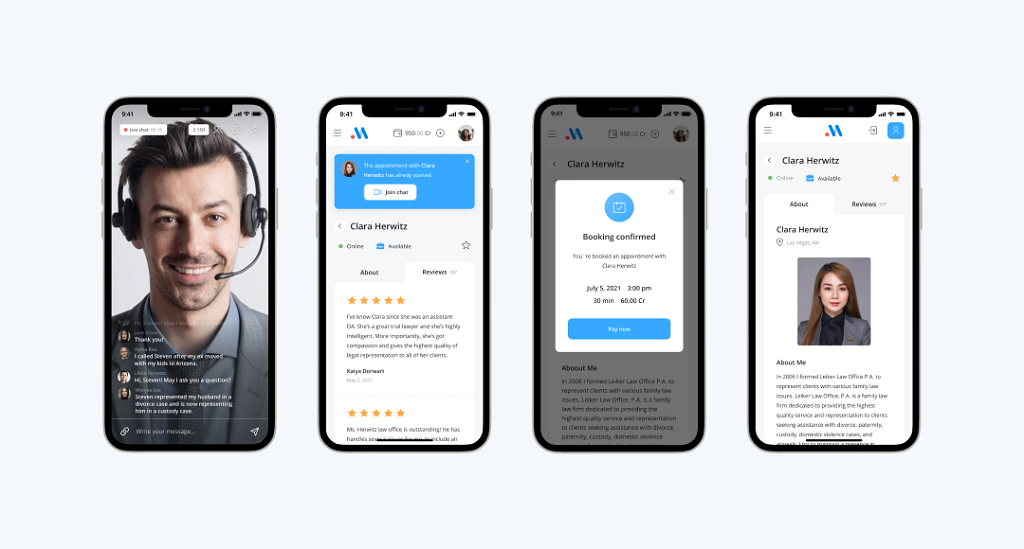
There comes a point where juggling Zoom, PayPal, and scheduling links starts to feel like patchwork. That setup works for a few clients, but once you begin to grow, the cracks show: missed bookings, clients confused about payment, and branding that feels like it belongs to someone else. This is where coaches discover that off-the-shelf tools are built for convenience, not for scale. If you want your coaching business to look professional, stay organized, and actually earn like a business, you need infrastructure that bends around your needs — not the other way around.
That’s where Scrile Meet comes in. Unlike pre-packaged platforms that force you into their templates and take a cut of your income, Scrile Meet is a custom development service. It’s designed to give coaches ownership, flexibility, and the chance to grow their work into a recognizable brand.
What Scrile Meet brings to the table:
- Full white-label branding with custom design so your clients only see your logo, your colors, and your name — no third-party banners reminding them they’re renting someone else’s system.
- Live video features for both one-on-one sessions and group calls, letting you choose the right delivery style without bolting on separate tools.
- Integrated booking and scheduling that syncs with your calendar, making it easy for clients to choose a time and reducing the endless back-and-forth emails.
- Direct payments wired straight to your account without middlemen fees, giving you predictable cash flow and full control over pricing.
- Flexible monetization models, from monthly subscriptions to pay-per-view access and premium content libraries, so you can experiment with different revenue streams under one roof.
- An admin dashboard with reporting and analytics that tracks revenue, client activity, and engagement — so you’re not guessing which part of your business works.
Why Scrile Meet Helps Scale Coaching
For anyone serious about how to start an online coaching business and move beyond freelancing, Scrile Meet acts like a foundation, not a patch. You’re not stuck with clumsy workarounds or losing money to transaction cuts. Instead, you’re building a branded coaching hub that’s flexible enough to grow and strong enough to last. This is the difference between coaching as a side hustle and coaching as a sustainable company.
Conclusion
Starting an online coaching journey in 2026 isn’t about luck — it’s about making deliberate choices. Pick a niche you can own, set up the business foundations early, build a digital presence that feels professional, and deliver coaching in formats that keep clients engaged. From there, scaling comes naturally through communities, partnerships, and additional revenue streams.
The one factor that separates short-lived projects from lasting businesses is the infrastructure behind them. Free tools are fine to test ideas, but sustainable coaching requires systems built for growth.
If you’ve been asking yourself how to start an online coaching business, the path is clear: strategy plus the right technology. Explore Scrile Meet service today to shape your coaching into a branded, scalable business without relying on clunky third-party platforms. It’s the step that transforms coaching from a side project into a sustainable company.
Polina Yan is a Technical Writer and Product Marketing Manager, specializing in helping creators launch personalized content monetization platforms. With over five years of experience writing and promoting content, Polina covers topics such as content monetization, social media strategies, digital marketing, and online business in adult industry. Her work empowers online entrepreneurs and creators to navigate the digital world with confidence and achieve their goals.
by Polina Yan
Scroll through any app store today and it’s impossible to miss the dominance of video. From Netflix binges to Twitch streams to short TikTok clips, audiences now expect content to be available live or on demand, anytime, anywhere. This shift has turned video streaming app development into one of the most active fields in tech.
The numbers are staggering. Analysts estimate that the global video streaming market has already crossed $230 billion in annual revenue in 2024 and is still climbing, with growth fueled by mobile devices, remote work, and the explosion of creator-driven platforms. Businesses from media giants to fitness coaches are investing in custom apps to control their own distribution, monetize audiences directly, and avoid being trapped by the limits of third-party platforms.
This guide breaks down everything you need to know: how the streaming services market works, what features define a strong app, examples of the biggest players, what development actually costs, and the exact steps to follow if you want to launch your own service. Toward the end, we’ll also explore how Scrile Stream helps companies and creators build fully branded apps that don’t compromise on ownership or scalability.
The Streaming Services Market

Video is no longer just another type of content — it’s the default format for entertainment, news, and even day-to-day communication. From billion-dollar OTT giants like Netflix and YouTube Live to niche platforms dedicated to yoga, language learning, or gaming, streaming has carved out space in every corner of the internet. Industry reports put growth in double digits year over year, and while the headlines usually focus on Hollywood, the most interesting momentum often comes from much smaller players.
One big reason for this surge is the shift to mobile. The phone has become the first screen for younger audiences, which is why video streaming mobile app development has become a core priority for companies trying to capture attention. A polished mobile app is often the difference between a service people try once and one that becomes part of their daily routine.
At the same time, niches are thriving. You don’t need a library of ten thousand titles if you can deliver the right kind of community. A streaming app built for Spanish-language films, for live music sessions, or for regional sports can grow faster than yet another generic “all-you-can-watch” catalog.
Streaming Trends to Watch in 2026

The way people watch video is evolving quickly. Developers and businesses moving into streaming this year are paying attention to a few standout directions:
- Live commerce — Imagine QVC, but rebuilt for the digital age. Influencers and retailers now host live shows where viewers can ask questions and purchase products instantly without leaving the stream.
- Fitness platforms — From Peloton to small trainers running live Zoom-style workouts, exercise has become one of the strongest niches in streaming. Apps that add features like leaderboards or real-time encouragement see higher retention.
- Education hubs — Video is now central to how we learn. Universities broadcast lectures, startups sell micro-courses, and even schools rely on video libraries. The mix of live sessions and on-demand access has become standard.
- Regional streaming apps — In markets like India, Nigeria, and Latin America, services built around local languages and culture are outperforming some global competitors. Localization isn’t just a feature — it’s the business model.
- Creator-owned platforms — Tired of algorithms and ad revenue swings, many creators are building their own branded apps. It gives them direct control over their audience and revenue streams.
- Adult video streaming apps — The adult industry has always been an early adopter of streaming technology. Platforms that combine pay-per-view, subscriptions, and live interaction continue to generate billions annually. These services rely heavily on privacy tools, secure billing, and moderation features to maintain user trust while handling massive volumes of traffic.
Key Features Every Streaming App Needs
Building a streaming service isn’t just about uploading videos. The app has to deliver a smooth experience, keep users engaged, and give businesses room to grow. Successful video and streaming app development always starts with a clear set of core features that can later be expanded.
Core essentials:
- Reliable video player — fast load times, adaptive quality, and full-screen support are non-negotiable. The player is the heart of the service, and even minor glitches can push viewers away.
- Subscriptions and paywalls — recurring memberships, one-time purchases, or hybrid plans give creators flexible monetization options.
- Chat functions — live chat during events or comment threads under VOD content build a sense of community.
Engagement tools:
- Reactions and polls — viewers like having quick ways to interact without breaking focus. Polls are especially effective during live sessions.
- Community features — groups, forums, or even watch parties keep people returning long after the stream ends.
Advanced functions:
- AI recommendations — personalized content suggestions improve watch time and reduce churn.
- Multi-device synchronization — users expect to start watching on a laptop and finish on a phone without losing progress.
These features form the foundation of any modern streaming app. Adding them early makes the difference between a product people test once and a platform that becomes part of their daily habits.
Examples of Popular Solutions

When people talk about streaming, a few names come up immediately. Netflix dominates on-demand viewing with a library that seems endless, but its real strength is how it guides you to the next show before you even think about closing the app. Disney+ didn’t try to compete on volume. Instead, it built its service around a handful of massive franchises, and that gamble worked. Families know exactly what they’re paying for.
In the live streaming world, Twitch set the standard. It isn’t just video; it’s the constant scroll of chat, the streamers reacting in real time, and the feeling that you’re part of a crowd. YouTube Live leans on Google’s infrastructure to handle anything from a wedding streamed to a few dozen relatives to a global press conference with millions watching at once.
And then there are sectors outside of mainstream entertainment. Adult platforms account for some of the highest web traffic anywhere online, and they’ve pushed technical innovation for years — payment models, adaptive video, even early mobile streaming. Fitness services turn workouts into interactive classes with live feedback and leaderboards. Religious organizations have created streaming hubs to keep congregations connected, especially for those who can’t attend in person.
The examples are different, but the point is clear: successful platforms understand their audience and design around those needs, whether that’s blockbuster films, social interaction, or community-driven content.
Step-by-Step Development Guide
Building a streaming service isn’t guesswork. The projects that succeed usually follow a clear process. Skipping steps almost always leads to higher costs later, broken features, or an app that people abandon after the first try. This section lays out the stages of video streaming app development, from the first brainstorm to launching a live product.
Step 1: Define Your Audience & Choose a Hosting Platform
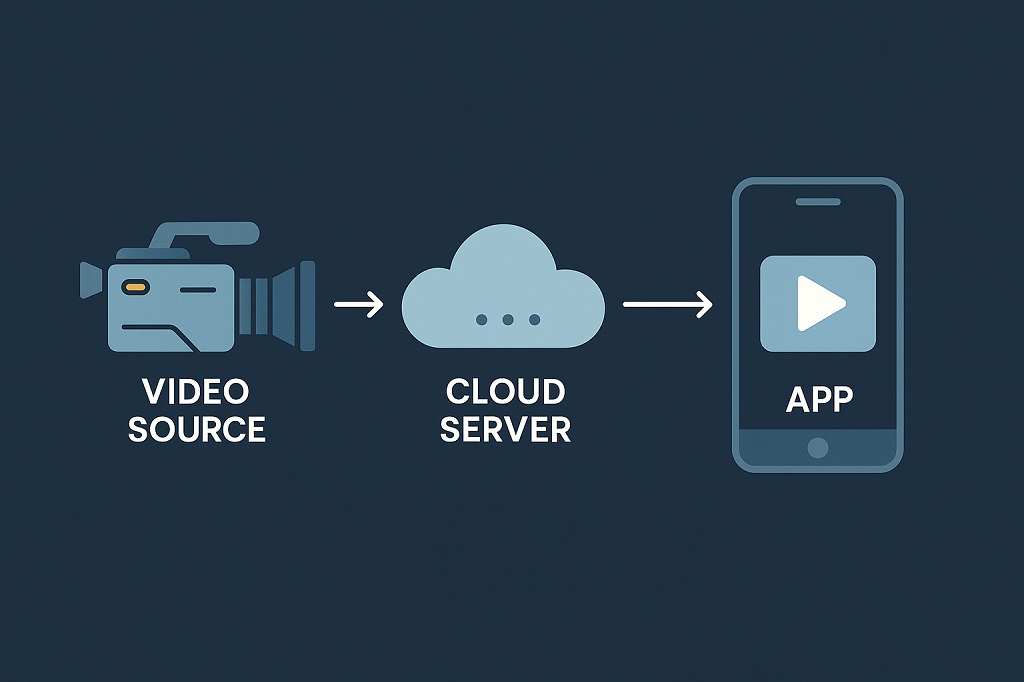
Any serious attempt at video streaming app development begins with a clear picture of the audience. Who do you want to serve? A fitness startup has different needs than an esports community, just as a classroom app is structured differently from an adult-oriented platform. Audience profiles determine design, features, and even how strict your moderation will be.
Alongside this, you need to lock in a hosting platform. Streaming eats bandwidth, and the wrong choice here can lead to buffering, crashes, or sky-high bills. Founders typically evaluate three main routes:
- Cloud hosting (AWS, Google Cloud, Azure): Great for scaling quickly, paying only for what you use, and tapping into global data centers.
- Dedicated servers: Higher upfront costs, but more predictable performance and control — often chosen by apps with steady, heavy traffic.
- Hybrid hosting: A mix of both. Start small in the cloud, then move heavy operations onto dedicated machines once traffic stabilizes.
Getting these two elements right from the beginning saves money and avoids painful migrations later. It also frames the rest of your development roadmap, since your infrastructure limits what you can build on top.
Step 2: Design UI/UX
After sorting out your hosting and audience, the next challenge is the interface. People don’t download a streaming app because it’s “innovative.” They download it because it’s easy, fast, and feels natural from the first tap.
Start with the basics: the player. If users have to search for the play button, you’ve already lost them. Menus should be obvious, subscriptions simple to manage, and search powerful enough to actually find things. Think Netflix simplicity, not a maze of hidden options.
A few design decisions that usually separate winners from throwaways:
- Personalization that suggests shows or streams without being creepy.
- Subscription buttons that are impossible to miss and easy to cancel.
- Lightweight interaction — chats, likes, reactions — so people feel connected instead of isolated.
This stage of video streaming app development often gets underestimated. Yet design is what most users will judge first. The smoother the flow, the more likely they’ll stay for a second show or a longer session.
Step 3: Develop Core Features

Now comes the heavy lifting — the features that actually make your app worth using. A streaming service is more than a video player wrapped in an app shell. It’s the ecosystem around that player.
At the center sits the video player itself. It has to handle different formats, adjust quality on the fly when bandwidth dips, and keep latency low enough for live sessions. From there, you add the tools that define how people interact and pay:
- Subscriptions and paywalls that are flexible enough for monthly plans, bundles, or even one-off passes.
- Community features such as chat, comments, or polls, because watching alone doesn’t keep users engaged for long.
- Cross-device syncing, so a movie started on a laptop continues seamlessly on a phone or smart TV.
Each of these touches plays into retention. Core features are not about stacking extras — they’re about building a product people trust to work every time they press play. And in streaming, reliability is everything.
Step 4: Integrate Payments, Security & Launch
The last phase ties everything together. Once features are running smoothly, you need to make sure people can pay, their data is safe, and the system can handle real-world pressure. This is the stage where many projects stumble — skipping details that later cause chaos.
Payments come first. Viewers expect familiar names like Stripe or PayPal, but in global markets, you’ll also want credit card processors, crypto gateways, or services like CCBill for adult content. The more options you give, the easier it is to convert free users into paying subscribers.
Security is next. Streaming isn’t just about delivering video; it’s about protecting it. Content leaks, stolen logins, or hacked databases can ruin trust overnight. Adding DRM, encrypted streams, and fraud detection early is far cheaper than fixing problems later.
Finally, launch. Don’t throw it open to the world right away. Run a closed beta, stress-test the servers, and watch how the app behaves under real use. That’s when you’ll find the weak spots. Only after this cycle should you roll out to a bigger audience.
Handled well, this last step transforms a working prototype into a real business.
How Much Does Development Cost?

Budgets for streaming apps vary widely, and the gap between a simple test product and a full commercial platform is enormous. What drives the cost most is the feature list. A barebones app that only plays videos and charges a subscription has a very different price tag from one with live chat, recommendation engines, and support for thousands of concurrent users.
The technology stack adds another layer. Using cloud infrastructure with built-in streaming tools can lower some costs, but fees build up quickly as traffic grows. Choosing the right protocol matters too. RTMP is cheap to start with but needs conversion for broad delivery. HLS works almost everywhere but adds latency. WebRTC gives low delay but requires more engineering. Each option carries its own price implications.
Location of the team is another factor. Developers in North America or Western Europe are expensive, while teams in Eastern Europe or South Asia usually quote less for the same workload. That doesn’t always mean lower quality, but it does change the overall budget planning.
Then come the costs that people often underestimate. Content delivery networks (CDNs) charge per gigabyte, which means a viral event can multiply monthly bills overnight. Security licenses, DRM, and payment integrations all add line items. And beyond tech, there’s the ongoing cost of people: moderators, support staff, and engineers who keep the service stable.
For a rough frame: an MVP with limited features can sit between $30,000 and $70,000. Adding interactivity and global reliability easily moves the figure past $100,000. Large-scale platforms can cost several times more. What matters is aligning ambitions with resources before development starts.
Launch a Turnkey Streaming Service
The quickest way to enter the streaming market is to use a SaaS platform. It gets you online fast, with hosting, billing, and a basic video player already set up. That’s why many creators and small businesses choose this path first. But convenience comes at a price. Features are limited, customization is shallow, and revenue shares or monthly fees keep eating into profits.
Over time, these limits push businesses to look for more control. That’s where white-label and custom builds become attractive. Instead of renting someone else’s platform, companies work with a video streaming app development company or a dedicated dev team to create software that reflects their brand, supports unique features, and scales without hidden restrictions.
SaaS vs Custom Build Comparison Table:
| Approach | Pros | Cons | Best For |
| SaaS turnkey | Fast launch, lower upfront cost | Limited features, revenue share, weak branding | Small creators, early pilots |
| Custom build | Full ownership, scalable, no hidden fees | Higher upfront cost, longer delivery time | Businesses, startups, enterprises |
Scrile Stream: Custom Video Streaming Development
Most companies begin with templates or SaaS platforms, but sooner or later the limits show up. Branding looks generic, revenue is shared with the provider, and scaling costs more than expected. Scrile Stream exists to solve those problems. It’s not a one-size-fits-all product. It’s a development service that builds streaming apps from the ground up, giving businesses full ownership.
The difference shows in the details. Every app is designed around the client’s brand identity and audience needs. That includes the interface, the monetization logic, and even the security stack. Companies that work with Scrile avoid the problem of patching together plugins or settling for half-finished features.
What You Actually Get
Scrile Stream delivers more than a video player. Teams building with it get access to:
- Monetization freedom — subscriptions, tips, pay-per-view, all without platform commissions.
- White-label branding — design reflects your brand, not someone else’s.
- Secure payment options — Stripe, crypto, and CCBill integration ready for global markets.
- AI and chat integrations — keep viewers engaged with smart recommendations and real-time interaction.
- Scalable architecture — a setup that works for both startups and enterprises.
- Adult-content-friendly features — designed to support teams building in the adult industry alongside mainstream use cases.
Support is part of the package too. Scrile assigns a project manager to every build, provides 24/7 technical help after launch, and even includes referral systems to help drive organic growth.
Working with Scrile Stream means treating video streaming app development as a long-term asset instead of a rented service. For businesses serious about owning their platform, it offers a clear path: from idea, to design, to a functioning app that’s built to last.
Conclusion
Video has become the backbone of digital media, and the appetite for streaming apps shows no sign of slowing down. From global giants like Netflix and Twitch to niche services built around fitness, education, or adult content, the market keeps expanding and fragmenting at the same time. That growth creates opportunity, but it also makes the bar for success higher. Users expect smooth playback, polished design, and a sense of community from day one.
Successful are those who think of streaming as a product they own, not a borrowed element of yet another platform. Off-the-shelf software is good for piloting a concept, but scaling a service, securing revenue, and standing apart demand being in complete control of design, functionality, and infrastructure.
That’s where Scrile Stream comes in. It provides businesses with fully customized development, white-label branding, secure payments, and round-the-clock support. If you’re ready to take streaming seriously, reach out to the Scrile Stream team today and start building a platform that’s entirely yours.
FAQ
How long does video streaming app development take?
A basic MVP may be finished in 3–4 months. Complex builds with live chat, payments, and global scaling often need 6 months or more.
What’s the average cost of a video streaming app?
Budgets usually start at $30,000–$70,000 for simple apps and exceed $100,000 for advanced platforms. Ongoing expenses for hosting, content delivery, and moderation must also be planned. Smart video streaming app development keeps these costs under control.
Can small businesses launch their own streaming service?
Yes. Niche apps in fitness, education, and entertainment show that smaller teams can thrive if they focus on a clear audience and choose flexible custom builds.
Polina Yan is a Technical Writer and Product Marketing Manager, specializing in helping creators launch personalized content monetization platforms. With over five years of experience writing and promoting content, Polina covers topics such as content monetization, social media strategies, digital marketing, and online business in adult industry. Her work empowers online entrepreneurs and creators to navigate the digital world with confidence and achieve their goals.