

Quick answer
Paid messaging for creator platforms should be designed as a transaction system with a conversation attached, not as an ordinary inbox with payment buttons. Define what the fan buys, when access unlocks, when creator earnings become payable, what evidence the platform records, and which exceptions trigger review or refund. Start with message requests, pay-per-view attachments, and voluntary tips; add paid replies only when response scope and expectations can be stated clearly.
When paid messaging for creator platforms is the right model
Use paid messaging when fans are buying access, exclusive media, or a clearly bounded interaction. Do not charge merely for placing text in an inbox; the paid event must deliver an understandable benefit.
The expensive mistake is treating every message as the same product. A message request asks a creator to consider a conversation. A pay-per-view attachment sells access to specific media. A tip transfers value without promising a reply. A paid reply sells attention and therefore creates the hardest expectation to control. Each needs its own label, price rule, receipt, delivery state, and exception path. If the interface collapses them into one “paid message,” support staff will later have to guess what was promised. That is an accounting policy disguised as a chat feature.
- Message request: payment may improve access to the inbox, but acceptance must not imply unlimited conversation.
- PPV attachment: payment unlocks identified content; the surrounding chat can remain free.
- Tip: voluntary support with no guaranteed response, stated before confirmation.
- Paid reply: a defined response type or scope, with an explicit rule for expiry or non-delivery.
This architecture should follow the platform’s broader creator platform pricing models and membership platform content access models. A subscription can open the conversation channel while individual attachments remain paid, but the boundary must be visible before purchase. The practical implication is simple: name the unit being sold before choosing the button that sells it.

Build the paid-conversation state map before the inbox
A paid conversation needs separate states for the message, payment, access, earnings, and safety review. One status field cannot represent all five without creating contradictory records.
| Event | Fan sees | Platform records | Creator earnings | Exception rule |
|---|---|---|---|---|
| Request submitted | Pending or payment required | Sender, recipient, terms version, price snapshot | None until the defined earning event | Cancel or expire under the displayed rule |
| Payment authorized | Processing | Payment reference and amount | Not yet payable | Retry safely; never create a duplicate unlock |
| Content unlocked | Available | Unlock timestamp and asset identifier | Earned but subject to payout policy | Preserve access evidence if delivery is disputed |
| Message delivered | Delivered | Delivery timestamp and recipient account | Depends on the product promise | Do not confuse delivery with reading or replying |
| Case opened | Under review | Reports, relevant records, and staff actions | Hold only the affected amount when policy permits | Restrict evidence access by staff role |
| Resolved | Refunded, released, or denied | Reason code and decision record | Reverse, release, or retain consistently | Notify both parties without exposing private notes |
Keep content access separate from creator payout. A fan may unlock an attachment immediately while funds remain unavailable for payout under the platform’s normal settlement and dispute rules. Likewise, a delivered message is not proof of a promised reply. Store immutable price and terms snapshots with the transaction, because a creator may change future pricing without changing yesterday’s contract. Align these records with payment processing for creator platforms and creator payout reconciliation. The useful implication: design the ledger and evidence model before polishing typing indicators.

Price the promise, then test the unit economics
Set prices by interaction type and calculate platform revenue, creator earnings, refunds, and processing costs separately. Gross message sales are not the amount available to either party.
Assume a monthly test produces 400 PPV attachment purchases at $10 each and 120 paid reply purchases at $20 each. Gross sales are $6,400: 400 × $10 plus 120 × $20. If the assumed creator share is 80% of gross sales, creator earnings before adjustments are $5,120. If 10 paid replies are refunded at $20, refunds total $200. Under the simplifying assumption that refunded sales reverse the same 80% creator share, the creator adjustment is $160. Processing fees, taxes, chargebacks, reserves, and any fixed charges are deliberately excluded; they must be modeled from the selected provider and jurisdictions rather than smuggled into a cheerful spreadsheet.
The operational question is whether the paid reply can be fulfilled consistently. Track purchases, accepted requests, delivered responses, expiries, refunds, disputes, and moderation cases by product type. Do not blend tips into response performance because tips promise no response. Compare this design with your paywall strategy for creator platforms so one purchase does not accidentally cross two access rules. The next action is to run the calculation with your own promised service and exception policy, not borrowed marketplace pricing.

Now change one assumption: the paid reply promises a personalized video rather than a short text response. The sticker price alone no longer describes the cost; creator capacity, review requirements, upload failures, and promised scope become material. A high-selling offer can still be a poor product if unfulfilled requests accumulate. Create a separate SKU and policy for each meaningfully different promise, even if both arrive through the same conversation. This lets operations pause one product without disabling tips or PPV attachments, and it makes refunds attributable to the offer that caused them.
Set consent, refund, and moderation boundaries
Monetization must never weaken communication controls. Fans and creators need blocking, reporting, consent boundaries, purchase clarity, and predictable review procedures whether a message is free or paid.
Require affirmative confirmation before a charge, show what unlocks, and state whether a response is promised. A recipient should be able to reject new requests, limit who can contact them, mute notifications, block an account, and report a specific message or asset. Payment must not buy the right to bypass a block. For moderation, retain the records needed to examine a reported transaction, but grant staff access by role, record access actions, and avoid treating every private conversation as casually browsable office material.
Refund rules should map to product failure. Duplicate charge, failed unlock, removed-before-access content, unfulfilled paid reply, and buyer regret are different cases. Define the evidence and outcome for each, including what happens to creator earnings. Tips usually should not imply a reply, yet fraud, duplicate-payment, and legal obligations still require handling. Adult, dating, coaching, and health-adjacent platforms also need policies suited to their content and jurisdictions. Paid messaging is a poor fit when promises cannot be bounded, moderation cannot review incidents safely, or the business cannot support disputes.

Write an exception matrix that support can actually use. Rows should cover duplicate payment, unlock failure, creator cancellation, expired request, content removal, account suspension, suspected fraud, and safety report. Columns should identify the fan-facing status, evidence source, refund authority, earnings treatment, notification, and escalation owner. Legal counsel and payment providers may alter the final policy, especially across jurisdictions, but engineering still needs deterministic outcomes. “Contact support” is not a state; it is where undocumented states go to reproduce.
Implement a testable paid-messaging flow
Launch the smallest set of paid interactions that your team can describe, reconcile, moderate, and support end to end. Add complexity only after exception handling works.
- Define the product catalog: message request, PPV attachment, tip, or paid reply, with one explicit promise for each.
- Document consent, eligibility, pricing authority, expiry, refund, moderation, and earnings rules.
- Model independent payment, unlock, delivery, earnings, dispute, and enforcement states with immutable event records.
- Prototype fan and creator journeys, including rejection, blocking, payment retry, removed content, and account suspension.
- Integrate payments through server-confirmed events; make purchase and unlock operations idempotent.
- Give support and moderation role-based tools, reason codes, evidence views, and logged actions.
- Test reconciliation against payment records and creator balances before enabling real transactions.
- Pilot selected interaction types, review exceptions by product, and expand only when ownership is clear.
Vendor selection should follow this operating model. Ask whether the platform supports separate monetization types, configurable payment flows, moderation, reporting, payout administration, and custom policies—not merely whether it has chat. The white label vs custom vs no code creator platform decision then becomes concrete: choose according to the rules you must control and the integrations you must own. Verify the result with scripted tests and ledger reconciliation. A polished inbox is useful; a purchase that survives retries, reports, refunds, and payout review is a business.
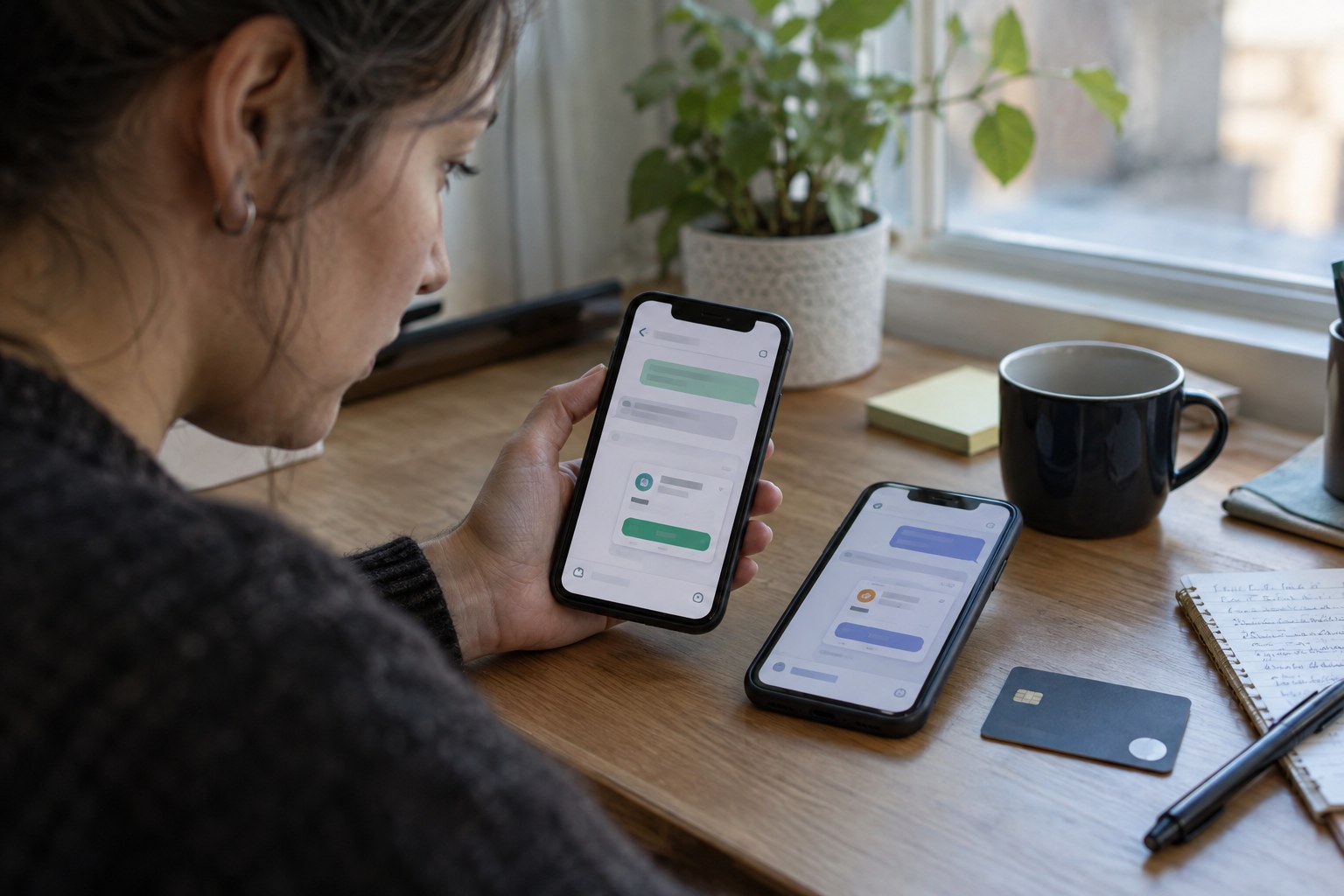
Turn the eight steps into acceptance tests rather than a launch checklist that everyone admires and nobody executes. One test should authorize payment, interrupt the client, retry, and confirm one charge and one unlock. Another should block the sender after purchase and verify that access, messaging permission, earnings, and refund rules follow policy independently. A third should open a report and confirm that only assigned roles can inspect the relevant evidence. The verifiable next action is a signed state map with a named owner for every exception before development estimates are approved.
Launch paid interactions on infrastructure built for monetization
Once the product promises and state map are defined, implementation should not begin from an empty chat window. Scrile Connect is a white-label platform for branded fan and subscription sites with private messages, tips, pay-per-view content, subscriptions, payment options, payout administration, analytics, moderation support, and customizable integrations.
It suits founders who need to validate a monetization-first platform while retaining control over branding, pricing, policies, and payment flows. Review the underlying platform approach and the core decisions involved in onlyfans clone app development before choosing how much to configure and how much to build.
Frequently asked questions
What is paid messaging for creator platforms?
It is a monetization system in which a fan pays for a defined conversation-related product, such as a message request, premium reply, PPV attachment, or voluntary tip.
Should creators charge per message or per conversation?
Charge for the clearest bounded unit. Per-message pricing suits specific replies or attachments; conversation pricing requires explicit scope, duration, completion, and expiry rules.
What is the difference between a paid message and a PPV message?
A paid message usually charges for access to an interaction or response. A PPV message charges to unlock identified content attached to or delivered through the conversation.
Does a tip require the creator to reply?
Not unless the platform explicitly sells it that way. Label a tip as voluntary support with no guaranteed response before the fan confirms payment.
When should creator earnings be released?
Release timing should follow the platform’s documented payout, settlement, reserve, refund, and dispute policy. Content unlock and earnings availability should remain separate states.
What evidence should a paid-message transaction retain?
Retain the parties, product type, price and terms snapshot, payment reference, timestamps, unlock and delivery events, relevant reports, refunds, and authorized staff actions.
Can a paying fan bypass a creator’s block?
No. Payment must not override blocking, consent, eligibility, or safety restrictions. The platform should apply its documented access and refund rules instead.
Should paid messaging be included in an MVP?
Include it only if it is central to the business and the MVP can support payment retries, unlock evidence, refunds, moderation, reconciliation, and clear user expectations.

Builds SaaS platforms for content creators, agencies, and entrepreneurs. Writes about the business mechanics behind creator-economy products and how custom software actually ships.