by Polina Yan
Chatbots aren’t a gimmick anymore. They’ve become the invisible workforce behind millions of daily conversations — answering customer questions, helping users place orders, even flirting with lonely fans in late-night chats. Businesses, creators, and solo entrepreneurs are all looking at the same thing: how to make your own chatbot that does the job exactly the way you need.
Some want a simple support bot that cuts down on emails. Others dream of an AI companion, a tutor, or even an NSFW chatbot that can generate income around the clock. The use cases are endless, but the building blocks are surprisingly similar.
This guide walks through seven clear steps anyone can follow, from sketching your idea to testing and scaling. And if you’re ready for a solution that’s branded, monetized, and fully under your control, Scrile AI can help you skip the limits of cookie-cutter tools and launch something truly yours.
Step 1 — Define Purpose and Use Case

Before you rush into tools, code, or fancy AI models, stop and answer the most important question: what do you actually want the bot to do? Without a clear purpose, you’ll end up with something that looks cool but fails to deliver. When you make your own chatbot, this clarity up front saves hours of development and avoids building features nobody needs.
Think about it in terms of roles. A chatbot can act as:
- Customer support agent — answering FAQs, guiding users through troubleshooting.
- Sales assistant — recommending products, upselling, tracking orders.
- Booking manager — handling appointments for a clinic, gym, or salon.
- AI companion — entertaining users, offering coaching, or even working as an adult chatbot for NSFW audiences.
- Productivity helper — organizing reminders, managing calendars, giving quick answers.
Each of these roles requires a different personality, knowledge base, and technical setup. An e-commerce FAQ bot has to integrate with product databases and answer shipping questions in seconds. A personal productivity bot needs access to calendars and natural dialogue skills. An NSFW chatbot must prioritize realism and privacy, while still giving the creator room to monetize it.
According to industry research, chatbots can handle around 70% of routine questions without human help. That statistic alone shows how much time and money you can save by defining your bot’s scope correctly.
So, before diving deeper, map out the use case. Write down your must-have features and your “nice-to-haves.” This first step transforms the vague idea of wanting to create own chatbot into a practical plan that can actually work.
Step 2 — Choose Your Approach: DIY or Development Service
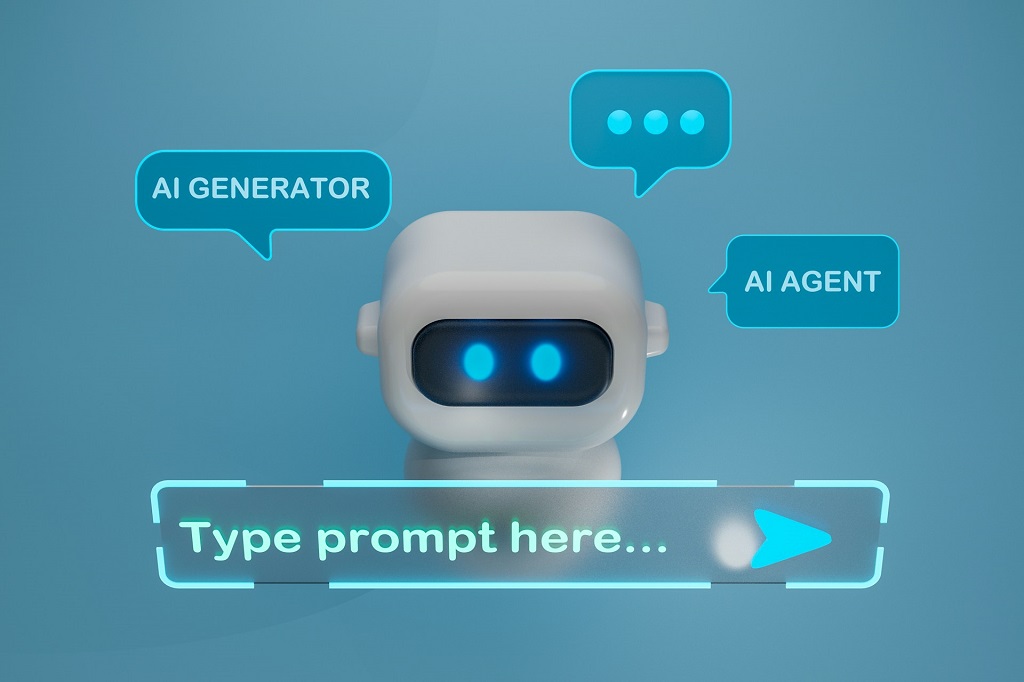
After you’ve figured out what your bot should actually do, the next decision is pretty practical: do you want to build it yourself with a no-code tool, or have a team craft something that’s entirely yours? Both roads exist, but they lead to very different places.
The DIY chatbot route is what most people try first. Tools like Tidio or ChatBot.com give you a visual builder — drag, drop, connect a few blocks, and you’ve got a bot answering questions on your website within a day. It feels almost like playing with Lego. If you’re a small online shop or a freelancer just wanting a digital helper, this is often enough.
But the cracks appear once you start asking for more. Maybe you want the bot to push upsells, handle payments, or speak in a very specific tone. At that point, you realize you’re working inside someone else’s box. The platform decides what’s possible, not you.
That’s where a custom build comes in. A development service like Scrile AI doesn’t hand you a box — it helps you design your own. You’re not limited to a template; the team can connect the bot with your payment systems, add NSFW features if that’s your market, or give it a personality that feels like a real extension of your brand.
A small bakery might get by on a DIY chatbot that lists today’s specials. But if that bakery grows into a chain with delivery, loyalty programs, and custom upsell logic, a one-size-fits-all tool quickly feels like a toy. Sometimes speed is enough. Sometimes you need something that lasts.
Step 3 — Design the Conversation Flow
After you decide on the purpose and approach, the real work begins: shaping how your chatbot actually talks. If you want to make your own chatbot that doesn’t frustrate users, you need more than canned replies. A good bot has structure, but it also feels like a conversation.
At the core, every flow revolves around a few building blocks:
- Intents — the goals people bring into a chat. Someone might want to check delivery status, cancel a booking, or simply ask about pricing. Each of those needs its own path.
- Entities — the small details buried in the request. An order number, a date, or the name of a product all help the bot deliver a relevant answer instead of a generic one.
- Decision trees — the “choose your own adventure” backbone. Based on the user’s response, the bot knows which branch to follow next and where to end the conversation.
Designing these pieces is only half the job. The harder part is keeping the dialogue natural. People type in fragments, throw in emojis, or change their mind mid-sentence. If you’re serious about how to build a chatbot from scratch, your design has to account for that chaos. That means adding fallbacks (“Sorry, I didn’t catch that — do you mean tracking or returns?”) and giving the bot memory. If someone already entered their city, don’t ask for it again.
You can create flows visually in drag-and-drop builders like ChatBot.com, or go deeper with code using Node.js or Python. Either way, think of it like writing dialogue for a script: short lines, clear intent, and enough personality to keep people talking.
Step 4 — Select the Tech Stack and Integrations

Choosing the right engine for your chatbot is like picking the motor for a car. If you want to make your own chatbot that actually works under pressure, you have to match the tech to your goals. There are three common approaches:
- Rule-based bots follow scripts. They’re reliable for simple Q&A or yes/no trees but break down fast once users go off script.
- NLP-based bots (natural language processing) understand free text, handle slang, and feel more conversational. They’re ideal for support or companion chatbots.
- Hybrid bots combine both: rules for structure and NLP for flexibility. This is where most modern projects land.
But tech on its own isn’t enough. A useful bot plugs into the rest of your systems. Imagine connecting directly to:
- CRM tools like HubSpot or Salesforce, so the bot can pull customer history on the fly.
- Live chat systems, handing conversations to humans when things get too complex.
- Payment gateways such as Stripe or PayPal, letting customers buy products or renew subscriptions without leaving the chat window.
That’s also where Scrile AI stands out. As a development service, it doesn’t limit you to pre-set integrations. Their team can tie your bot into custom APIs, add monetization layers, or even enable NSFW features if that’s your niche. In other words, if you’ve been wondering how to create your own AI bot that doesn’t just chat but also earns, integrations are the piece that make it possible.
Step 5 — Train with Content and Data

Here’s the part where your chatbot starts to sound alive. Building the frame is one thing, but if you don’t feed it the right material, it ends up mumbling nonsense. Training is all about giving the bot access to the information it needs and shaping how it delivers that information.
Most people begin with the basics: an FAQ page, product descriptions, or existing support emails. That data becomes the first layer of knowledge. From there, you can pull in content scraped from your website, add documentation, or connect the bot to a live database so answers stay current.
Tone matters just as much as facts. If you want a friendly bot, write answers that feel conversational. If the brand is more formal, keep the language tight and professional. For an AI companion — or even an NSFW chatbot — tone is the entire product. Scripts, roleplay prompts, and carefully curated dialogue give it personality instead of leaving it flat.
Numbers prove why training pays off. Tidio’s research shows that its Lyro AI, once trained on FAQs, can handle about 70% of customer questions instantly. That’s fewer support tickets, less wasted time, and more satisfied users.
So when you’re thinking about how to create your own AI chatbot, don’t stop at building the shell. The content you put inside it — and the way you tune its voice — is what makes people come back to talk again.
Step 6 — Test, Refine, and Add Personality
You can’t just launch a bot and assume it works. If you want to make your own chatbot that people actually enjoy, you need to run it through real conversations, gather feedback, and polish the weak spots.
The easiest way is to recruit a handful of beta testers. Let them throw questions at the bot the same way a real customer or fan would. Don’t coach them, just watch how the dialogue plays out. Where do they get stuck? Which answers feel awkward? That’s where you focus your fixes.
Here’s a checklist that usually helps during refinement:
- Track failed conversations in detail: note when users type “talk to a human,” abandon the chat, or repeat the same question. These signals show where your bot isn’t clear enough.
- Expand intents with real wording: people rarely phrase things the way you expect. Add slang, shorthand, and typos to your training data so the bot understands natural input.
- Tighten answers with personality: avoid long robotic blocks of text. Instead, write short lines that sound like a person — even in corporate contexts.
- Test edge cases on purpose: ask the bot absurd or irrelevant things. See if it crashes or handles them gracefully with a polite fallback.
- Rotate testers over time: don’t rely on the same five people. Fresh users will always find new blind spots.
When you finally add personality — humor, empathy, or a brand-specific tone — the bot stops being a script and starts feeling like a real part of your business.
Step 7 — Launch, Monitor, and Scale
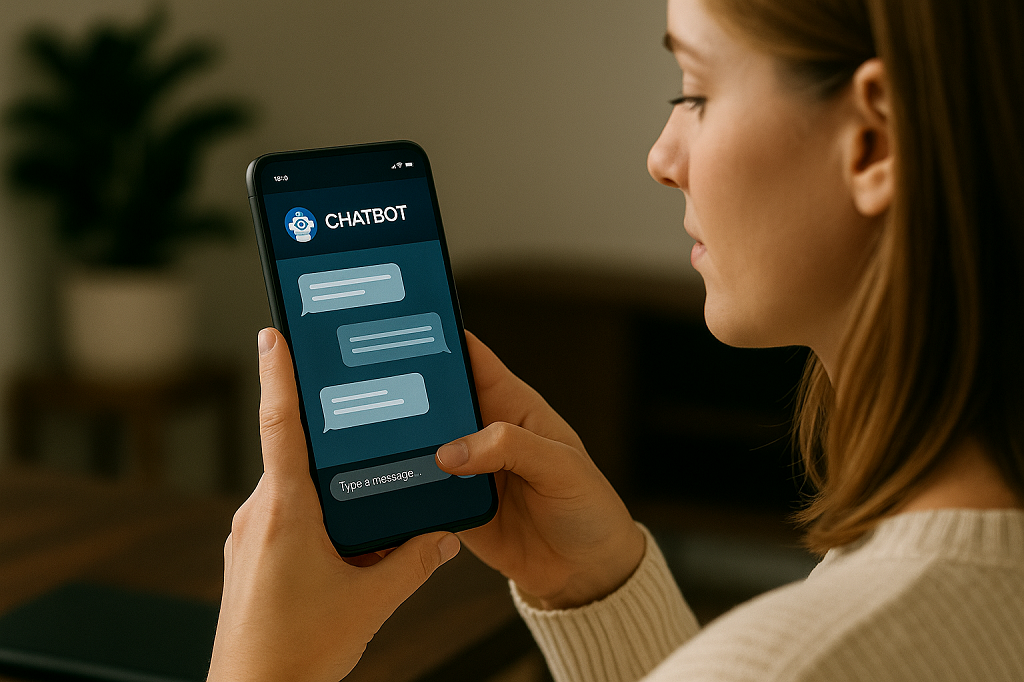
So, the bot is trained, polished, and has a voice. Now comes the part that feels both exciting and terrifying: pressing “go live.” When you make your own chatbot, the launch isn’t the end of the job — it’s just the beginning.
First, decide where it lives. A widget on your website is the classic choice, but plenty of projects start with Messenger, WhatsApp, or even a custom mobile app. Meet people where they already hang out.
After launch, don’t just let it run blind. Keep an eye on numbers that actually matter:
- Response time — how fast does it reply? Delays kill engagement.
- Satisfaction — are people leaving happy, or asking for a human right away?
- Conversions — does the bot actually help sell, book, or retain users?
Scaling is all about timing. Once the core works, add features slowly: voice input if your users like talking, image generation for creative bots, or multi-language support for global audiences.
The trick is simple — launch lean, learn from data, then grow. That’s how you keep the bot relevant long after the first wave of users shows up.
Why Scrile AI is the Best Way to Make Your Own Chatbot
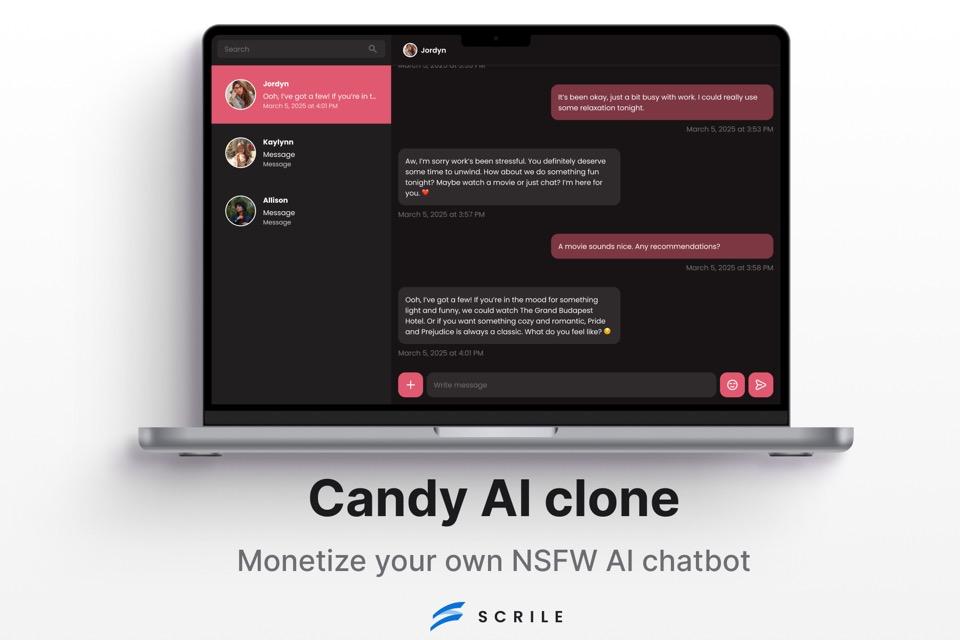
Each step in building a chatbot takes effort — shaping conversations, training data, testing, and scaling. Doing it alone with a DIY tool works for small projects, but if you want to make your own chatbot that feels polished, monetized, and truly yours, Scrile AI covers those bases in one package.
Here’s what sets it apart:
- White-label development — the chatbot lives under your brand with your domain and interface. No “powered by” tags or cookie-cutter layouts.
- Monetization built in — subscriptions, pay-per-chat, and token systems ready to deploy, so revenue streams are part of the design from day one.
- Support for NSFW and adult chatbots — something mainstream platforms avoid. Scrile AI enables projects in niches that others simply don’t allow.
- Zero commission model — unlike platforms that take a cut, Scrile AI leaves 100% of revenue and all customer data in your hands.
- Custom integrations — APIs, payment gateways, or unique workflows adapted to your business instead of forcing you to adapt to theirs.
Most chatbot builders stop at templates and drag-and-drop flows. Scrile AI acts more like a development partner, tailoring the solution to fit your vision. For creators, educators, startups, and even adult content entrepreneurs, it’s the difference between renting space on someone else’s system and owning the whole building.
With Scrile AI, you don’t just launch a chatbot — you launch a business asset that scales with you.
Conclusion
Making your own chatbot isn’t reserved for tech giants anymore — it’s something anyone can tackle by following a clear process. Seven steps are all it takes: define the purpose, pick your approach, design the flow, choose the tech, train with real content, test thoroughly, and scale with data. Each step builds on the last, and before long, you’ve got a bot that can answer questions, book appointments, or even entertain users.
DIY tools are a good launchpad, especially for small shops and side projects. But serious creators and businesses eventually need more control — branding, monetization, integrations, and features that free templates can’t offer.
That’s exactly where Scrile AI shines. Explore their service and contact the Scrile AI team to turn your idea into a chatbot that grows with your business, not against it.
Polina Yan is a Technical Writer and Product Marketing Manager, specializing in helping creators launch personalized content monetization platforms. With over five years of experience writing and promoting content, Polina covers topics such as content monetization, social media strategies, digital marketing, and online business in adult industry. Her work empowers online entrepreneurs and creators to navigate the digital world with confidence and achieve their goals.
by Polina Yan
Knowing how to make an AI chatbot in 2026 is less about coding and more about clarity — because AI bots aren’t just hype anymore. They’re running help desks, chatting up customers, selling subscriptions, and even simulating intimacy through NSFW chat experiences like Candy AI.
Whether you’re a solo founder building a niche app or a business owner automating support, chatbots have become essential tools. Some answer FAQs. Others act like personal assistants. A growing number? They’re designed for companionship, education, or paid fan interactions — and users expect them to sound human, remember things, and work across platforms.
You don’t need to be a developer to build one. But you do need to understand how they work, what options exist, and what makes a chatbot actually useful (and not just noisy). This guide breaks it all down — from quick-build tools to custom AI platforms with monetization built in.
Why Chatbots Still Work in 2026
If you’re wondering how to make an AI chatbot that people actually want to use, start with this: the market is thriving. According to Grand View Research In 2026, the global chatbot market is projected to exceed $27 billion, driven by demand across ecommerce, health, entertainment, and adult industries. Bots aren’t replacing humans — they’re augmenting them, doing the repetitive stuff faster and around the clock.
And they work. Studies show that AI-powered chat outperforms static FAQ pages and clunky help forms. Why scroll through a support database when you can just ask a bot?
Here’s where people are using them:
- Ecommerce brands use them as product recommenders and upsell engines.
- Mental health startups are building bots as virtual therapists or check-in partners.
- Hotels and clinics rely on chatbots for bookings and reminders.
- Fan sites and creators use chat to build loyalty through personalized interaction.
- And yes, NSFW AI bots — inspired by services like Candy AI — are becoming a mainstream monetization channel for adult content creators.
People are getting more comfortable chatting with bots, especially when the bot remembers things, responds with nuance, and sounds like an actual personality — not just a script.
If you’re considering creating an AI chatbot for your business or platform, the use cases are wider (and more profitable) than ever. It’s all about building something that feels human — without needing a human on the other end.
Pick Your Bot Type First
Before you even ask how to make an AI chatbot, you need to know what kind of chatbot you’re building — because not all bots are designed to do the same job.
Some bots are built to handle support tickets and help customers navigate FAQs. Others are made to capture leads, qualify prospects, or drive product sales. And increasingly, chatbots are being used for creative and highly personalized experiences — from writing assistants to NSFW AI bots and even fan roleplay companions.
Here are just a few types you might consider:
- Support bots for troubleshooting and onboarding
- Lead capture bots that gather emails and segment traffic
- Writing or knowledge bots to help brainstorm, draft, or summarize
- NSFW-style AI companions for entertainment or monetization
- Character bots or fiction-based personas for fandom interaction
- Booking bots for scheduling and reminders
Every chatbot solves a different problem. And if you’re creating an AI chatbot for a specific use case, getting clear on that problem first will shape every decision: the tone of voice, the backend logic, and the tools you’ll need.
No-Code and Low-Code Options

Not everyone building a chatbot in 2026 is a developer — and the rise of no-code and low-code tools proves that. Platforms like ChatBot.com, Tidio, and Landbot have made it possible for almost anyone to launch a functioning AI assistant in less than a day. These tools offer visual builders, simple logic flows, and pre-built conversation templates, so even someone without a tech background can piece together a working bot.
If you’re running a small business or need a basic virtual assistant, these platforms can do a lot. You might want a chatbot on your Shopify store to handle product questions, process simple returns, or guide customers to the right category. Or maybe you need something that helps book appointments, answers FAQs, or directs visitors to the right department. These tools are ideal for those kinds of jobs.
The biggest benefit of going the no-code route is speed. It’s fast to launch, affordable to test, and easy to manage without a dedicated dev team. You can tweak flows, add messages, and adjust triggers in a visual dashboard with little effort. But with that simplicity comes limitations. These tools aren’t built for deep customization. You can’t always control tone or personality, and memory is often limited to a single session — which can be a dealbreaker for more interactive or emotionally intelligent bots.
For many, though, that trade-off is fine. If your needs are straightforward and your brand doesn’t rely on advanced logic or tone-sensitive replies, these platforms offer a great entry point. Still, if you’re thinking long-term — or want your bot to actually sound human, remember context, or monetize — no-code tools might feel like a short-term fix.
Understanding how to create an AI chatbot is as much about knowing your options as it is about knowing your limits.
Building Your Own: Custom Chatbot Architecture
If you want total control over how your bot looks, talks, and behaves, then you’re probably thinking about going custom. Learning how to make an AI bot from scratch gives you flexibility that no template-based builder can match. This is where things get technical — but it’s also where they get powerful.
The Anatomy of a Custom AI Chatbot
A solid architecture starts with three essential components: the user interface (chat screen or voice interaction), the AI engine, and the logic layer that holds it all together. For the UI, you might use a web or mobile front-end designed in React, Vue, or Flutter. It’s the part the user sees and interacts with. Behind the scenes, the real work happens.
Most modern bots hook into powerful APIs like OpenAI (GPT-4), Claude, or Mistral for generating responses. These engines don’t “understand” in a human sense, but they’re excellent at language prediction, tone matching, and context generation — especially when guided by well-structured prompts.
That’s where prompt engineering comes in. A strong prompt is more than “talk like a pirate.” It’s a carefully crafted instruction set that sets tone, role, memory behavior, and guardrails. You can also integrate LangChain for building logic flows or multi-turn conversations, and tools like Pinecone or Weaviate to manage vector-based memory — so your bot can “remember” things users said days or weeks ago.
You’ll also need a backend — Firebase is a popular choice — to store user data, authentication, and interaction history. Combine this with analytics and optional payment integration, and you’ve got the bones of a real product.
Use cases are only growing. Some developers build bots that write poetry in the user’s tone. Others create Candy AI-style NSFW companions, trained on romantic or explicit fiction and designed for real-time, emotionally adaptive responses.
If you’re considering custom AI chatbot development, this is the route that lets you build exactly what you want. But it also means thinking like a product owner, not just a builder. That’s the trade — freedom for complexity.
What a Good AI Bot Needs in 2026
Building a chatbot is one thing. Building a good one — the kind users actually enjoy talking to — is something else entirely. Whether you’re creating an AI chatbot for a business, a creative project, or something more personal, the difference between “meh” and “wow” usually comes down to a few key features.
Memory is at the forefront. The very best 2026 bots don’t just react in the moment – they remember context. This may involve tracking a user’s name and tastes or reading a series of conversations over several months. Without memory, exchanges become shallow, mechanical, and unmemorable.
There’s also tone. Your bot may not have to feel, at least not in an emotional way, but it will need to respond in ways that will feel empathetic or energetic when required by circumstance. Insert some safety rails and moderation filters, particularly if your bot is dealing with sensitive subjects or NSFW material, and you’ve got something that will feel complete and credible.
Smart bots also connect to other tools. Want to process payments? Integrate with Stripe. Want to notify users or sync to groups? Plug into Telegram or Discord. APIs are your best friend here.
Privacy is another deal-breaker. If your chatbot handles personal or adult interactions, strong privacy controls and user filters are essential. Clear terms, encryption, and opt-in systems go a long way toward building user trust.
Finally, language flexibility is key. A growing number of bots are expected to handle multiple languages or offer seamless translation on the fly — especially when used in global communities.
These aren’t just features. They’re expectations. The bar is higher now, and the bots that stand out are the ones that feel less like widgets — and more like something real.
Scrile AI: Building Custom Chatbots that Work — and Sell
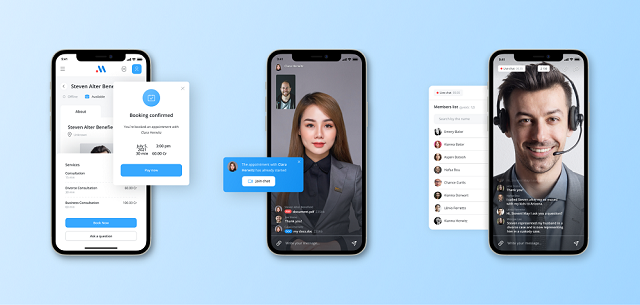
Once you’ve explored prebuilt tools and basic frameworks, one thing becomes clear: real success with chatbots doesn’t come from off-the-shelf options. If you want full creative control, long-term ownership, and real monetization potential, it’s time to think about how to make an ai chatbot with a custom approach.
That’s where Scrile AI stands out. It’s not a plug-and-play chatbot builder or a SaaS subscription with rigid limitations. Scrile AI is a custom development service — a technical team that helps founders, startups, and creators launch their own branded, scalable AI chatbot platforms from scratch.
The difference? You don’t just get a bot — you get an entire product.
Scrile AI specializes in custom chatbot solutions designed for business models where personalization and revenue matter. That includes NSFW platforms, fitness coaching, fan communities, subscription services, and interactive education tools. These aren’t bots bolted onto an existing website — they’re full ecosystems built around user interaction, automation, and monetization.
Some of the use cases Scrile AI delivers:
- Subscription-based customer service bots for SaaS platforms
- Adult AI chatbots like Candy AI — private, monetizable, with built-in pay-per-message models
- Fitness and wellness coaches using chat-based programs, journaling, or daily feedback
- Dating site bots that simulate human conversation with realistic pacing, tone, and memory
- Fan hubs and roleplay platforms where characters interact in real time
And it’s not just about chat. Scrile builds systems that include:
- Custom-designed UIs tailored to your brand
- Full payment integration: Stripe, crypto, PPV, or affiliate models
- Scalable backend infrastructure and long-term chat memory
- Admin dashboards with user analytics and content moderation
- NSFW-friendly setup with privacy layers and content filters
- Voice, avatar, or live cam modules (optional)
Why choose Scrile?
Because launching from scratch doesn’t mean reinventing the wheel — it means skipping generic and building what actually fits.
With Scrile, you get:
- Fast time to market with agile rollout plans
- No vendor lock-in — you own everything
- Customization at every level, from UX to AI personality
- Clear pathways to monetize without third-party rules
If you’re looking for custom chatbot solutions that actually serve your business, Scrile AI gives you the control, tools, and support to make it real — and profitable.
Conclusion
The chatbot space in 2026 is more powerful and more versatile than ever. Whether you’re building a friendly customer service assistant, a creative storytelling bot, or even a romantic AI companion inspired by platforms like Candy AI, the tech is there — and it’s surprisingly accessible.
You no longer need a massive dev team or a year-long roadmap to launch something functional. If you just want a simple bot that handles support or collects leads, no-code platforms can get you going fast. But if your goals include deeper personalization, real AI memory, monetization, or NSFW functionality, that’s where things shift. The question isn’t just how to make an AI chatbot, but how to make one that actually reflects your idea — your brand, your voice, your audience.
And that’s where custom development makes all the difference. You get total control, data ownership, and the freedom to build a product that grows with you — not within someone else’s limitations.
Scrile AI was built for that purpose. They’re not handing you a template. They’re helping you create something original, branded, and ready to launch — fast.
If you’re ready to stop renting chatbot tools and start owning your vision, talk to Scrile AI. They’ll help you build the chatbot you’ve been imagining — and make it something users will actually want to talk to.
Polina Yan is a Technical Writer and Product Marketing Manager, specializing in helping creators launch personalized content monetization platforms. With over five years of experience writing and promoting content, Polina covers topics such as content monetization, social media strategies, digital marketing, and online business in adult industry. Her work empowers online entrepreneurs and creators to navigate the digital world with confidence and achieve their goals.
by Polina Yan
Open Telegram in 2026 and it feels less like a messenger and more like a universe. You’ve got channels pumping out news, groups with thousands of members, and bots running behind the scenes doing everything from selling tickets to running customer support. They’re not a gimmick anymore — they’re the backbone of how people interact with brands, creators, and even local communities.
That’s why so many people now want to create Telegram bot of their own. Some do it to automate work, like handling FAQ messages so they don’t answer the same thing a hundred times a day. Others use bots to share exclusive content with subscribers, manage payments, or even build niche communities where the bot acts as host and organizer.
And the demand keeps rising. Telegram has passed 900 million active users worldwide, and millions of them touch a bot every single day without even thinking about it. Bots deliver reminders, process orders, send files, or connect users with AI tools.
That momentum isn’t just something marketers talk about — Telegram’s own numbers show how big the platform has become. Recent coverage of Pavel Durov’s announcement underlines just how massive the audience already is.
“Telegram now has significantly over 1 billion monthly active users, becoming the second most popular messaging app in the world (excluding the China-specific WeChat).”
— Pavel Durov, via NDTV Profit
Put that next to the 900+ million figure you see in many stats and it’s obvious why bots are exploding: even a tiny slice of that user base can sustain a serious product or side business. When you create a Telegram bot in 2026, you’re building on top of one of the largest real-time communication platforms in the world.
This guide walks through the journey — from the simple “hello world” bot to advanced setups powered by AI. By the end, you’ll see exactly how bots work, why they matter, and how you can launch one yourself.
Why Build a Telegram Bot in 2026?
Scroll through Telegram today and you’ll notice something: half the time you’re not talking to people at all. It’s bots sending updates, answering questions, or nudging you to buy something. They’ve gone from novelty to necessity. If you run a business, a community, or even a personal project, learning how to create bot Telegram is like giving yourself an extra pair of hands that never sleep.
The beauty of bots is how wide the use cases run. A restaurant can take lunch orders in chat. A shop can process payments without a website. Creators set up subscriber channels that drip out content every morning. I’ve seen fan groups use bots to manage polls and events, while one adult creator runs an OnlyFans Telegram bot that handles paid updates without lifting a finger.
Here’s what bots do best:
- Push promotions, newsletters, or personal updates straight into a user’s chat.
- Act as the first line of customer support, answering repetitive questions instantly.
- Collect payments, donations, or subscription fees with a few taps.
- Deliver content — from breaking news to private lessons — automatically.
- Moderate and organize communities so humans don’t burn out.
And the kicker? They’re cheap to run compared to human teams. A small shop can avoid hiring extra staff just by letting a bot handle bookings and questions. Big companies save millions on support calls. Communities keep members engaged without burning through volunteer time.
Telegram already has the audience — close to a billion people using it every month. Bots are the glue that keeps them connected to the services, creators, and businesses they care about. If you’ve got an idea, odds are a bot can make it easier to deliver.
The Basics: How to Create a Bot in Telegram

When people look up guides on how to create a bot in Telegram, the answer is almost always the same: start with BotFather. This official account is Telegram’s gatekeeper for new bots, and every project — from a simple helper to a full AI assistant — begins there.
Open BotFather, hit /newbot, and follow the prompts. It feels less like coding and more like filling out a short form:
- Choose a display name.
- Pick a unique username ending with “bot.”
- Receive your API token — a long string of letters and numbers that unlocks access to your bot.
That token is gold. Keep it private, just like you would a password.
First Steps With BotFather
With the token in hand, it’s time to connect code. Beginners usually reach for Python or Node.js, since both have strong libraries ready to go. Using python-Telegram-bot, you can write a few lines, run the script, and watch your new bot reply “Hello, world.” It’s basic, but seeing that first message pop up in Telegram feels like magic.
From there, most people add features step by step. Common upgrades include:
- Quick commands that return weather updates or daily tips.
- A small database to remember user info.
- Predefined responses to FAQs.
Each feature works like stacking blocks. Start with one, test it, then move to the next. The best bots are built gradually, not in a single marathon coding session.
One last thing: guard that token. Don’t paste it into public code or screenshots, and rotate it if you think it’s leaked. It’s the key to your bot, and without it, everything stops.
Creating a Telegram bot is less about memorizing every command and more about understanding the flow: BotFather issues the token, your code listens for messages, and the bot responds. Once you’ve grasped that cycle, you’re already past the hardest part.
Under the hood, that whole flow is powered by the same public interface, no matter which language or framework you choose. Telegram itself describes this layer in very simple terms in its official developer documentation.
“The Bot API is an HTTP-based interface created for developers keen on building bots for Telegram.”
— Telegram Bot API documentation
Every time your code sends or receives a message, it’s talking to this API — python-telegram-bot, Telethon, or aiogram are just friendly wrappers around it. Once you understand that, scaling from a “hello world” bot to production-ready automation feels much less mysterious.
From Simple Scripts to AI-Powered Bots
Every Telegram bot starts out plain. You write a script that spits back an answer when someone types a keyword. Ask it “/hello” and it replies “Hi there.” Useful? Barely. But it’s the first brick.
The fun begins when you connect that little script to something real. Hook it to a weather API and suddenly the bot gives tomorrow’s forecast. Point it at a news feed and you’ve got headlines on demand. Tie it to a crypto exchange and your group gets live price alerts without opening a browser.
That’s when you stop seeing bots as toys and start seeing them as tools.
Specialist app developers looking at Telegram from the outside see the same thing: bots are no longer side projects, they’re core infrastructure. One mobile studio that breaks down Telegram-style apps for clients sums it up like this.
“Telegram’s bot platform allows developers to create automated accounts to perform various tasks.”
— Nimble AppGenie
That’s exactly what you’re tapping into when you connect your bot to payments, AI, or external APIs. You’re not just adding a gimmick — you’re wiring automation directly into the same chat interface your users already open dozens of times a day.
And then comes the bigger step: adding brains. An AI bot Telegram project doesn’t just follow a script — it talks back like a person. Link it to a GPT-style model or your own ML engine and the conversations change. Users can ask open questions, and the bot doesn’t fall apart after the second reply. That’s what people mean when they talk about Telegram AI chatbot — it’s the difference between an answering machine and an assistant.
Scaling Into Advanced Features
Once you’ve got a smart bot running, the list of upgrades is endless. A few of the ones developers actually use in 2026:
- Multi-language chat so one bot serves global audiences.
- Voice recognition that lets people speak instead of type, with instant speech-to-text.
- Built-in payments for subscriptions, donations, or selling digital goods right inside Telegram.
Stack these features together and the bot stops being an experiment. It becomes part of a business. Shops use them to sell directly in chat. Teachers run tutoring sessions. Creators run entire subscription models.
It’s a slow build — script, then integrations, then AI. But that’s the path from “hello world” to a bot people actually rely on every day.
Best Tools and Frameworks for 2026
Once you’ve got the basics down, the next question is: what’s the best way to actually build? Developers in 2026 have a toolbox full of choices, from hardcore coding libraries to drag-and-drop bot builders. The right pick depends on how deep you want to go.
On the coding side, three names stand out. python-telegram-bot is the most beginner-friendly, with clear docs and a big community. Telethon digs deeper, giving you full access to Telegram’s API and letting you do advanced stuff like managing channels and accounts. aiogram sits in between — asynchronous, flexible, and perfect if you’re aiming for speed and scalability.
Not everyone wants to touch code, though. That’s where no-code and low-code platforms come in. FlowXO offers pre-built blocks, so you can drag together a working bot without typing more than a few lines. Manybot lets creators spin up bots directly inside Telegram with simple commands. Tars is aimed at businesses, helping them design conversational flows for customer support or sales.
Each tool has its trade-offs. Libraries give you maximum control but require coding chops. No-code platforms get you running fast, but you’ll hit limits if you want advanced AI features or complex integrations.
Here’s a quick look at the landscape:
| Tool / Framework | Code/No-Code | AI Support | Pricing | Best For |
| python-Telegram-bot | Code | Yes | Free | Beginners, simple bots |
| Telethon | Code | Yes | Free | Advanced devs, full API access |
| aiogram | Code | Yes | Free | Scalable, async projects |
| FlowXO | No-Code | Limited | Freemium + Paid | Quick prototypes, small teams |
| Manybot | No-Code | Limited | Free | Creators, hobby projects |
| Tars | Low-Code | Yes | Subscription | Businesses, customer support |
Real-World Examples of Telegram AI Bots
It’s one thing to talk about bots in theory, but the real proof is seeing them in action. Across industries, Telegram AI bots are now taking on jobs that used to eat up time, money, and human energy.
- E-commerce support: Consider an online shop with hundreds of daily queries on sizes, shipping, or returns. Instead of a small team handling all, a Telegram AI bot responds instantly. It solves mundane issues, guides clients through orders, and hands over only the problematic cases to human agents. The result: faster resolution and lower costs.
- Healthcare assistants: Clinics and hospitals are using an AI Telegram bot to let patients book appointments, check clinic hours, or get answers to simple medical FAQs. It doesn’t replace doctors, but it removes a mountain of admin work, cutting wait times for everyone.
- Education helpers: Schools and private tutors run Telegram AI bots that deliver quizzes, reminders, or practice tests. Some even translate lessons into multiple languages, helping teachers reach students across borders without extra prep time.
- Adult content delivery: Creators are leaning on automation too. An OnlyFans Telegram bot manages subscriptions, sends exclusive updates, and keeps track of renewals. It means less manual admin and more focus on creating content that actually sells.
The lesson here is simple: when you create Telegram bot powered by AI, you stop treating it as a novelty. It becomes part of the daily workflow, handling the repetitive jobs that burn people out. From shops to clinics, schools to creators, the applications are growing — and the bots are already proving their value.
Building a Custom Bot With Scrile

By now, you’ve seen the power of bots — from simple helpers to full AI-driven assistants. But there’s a catch. Most off-the-shelf builders lock you into their design, their limits, and their revenue cut. If you want real freedom, the answer isn’t another template app. It’s to create Telegram bot with a team that builds it around your idea from the ground up. That’s what Scrile does.
Scrile isn’t a pre-packaged bot service. It’s a full software development team that creates custom solutions — tailored for businesses, communities, or creators who want control over how their bot looks, works, and earns. Instead of squeezing your idea into someone else’s box, you get the box built for you.
Some of the key features include:
- 0% commission monetization: keep everything you earn, from subscriptions to in-chat sales.
- White-label design: your name, your colors, your identity. Users see your brand, not a third party’s.
- Secure payments: integrated checkout flows with trusted gateways to protect both you and your customers.
- AI integration: connect to advanced models so your bot goes beyond scripted replies and actually converses.
Why Choose Scrile Service
Because every idea is different. A retail brand might need e-commerce integrations. A clinic may want patient booking and privacy compliance. A creator could be looking for a bot that delivers paid content automatically. Scrile takes those requirements and turns them into reality.
You’re not just getting code. You’re getting a system that scales, adapts, and grows with your business. Professional support is part of the package, so you’re never left wondering how to fix a broken feature or roll out an update.
Conclusion
Learning to create Telegram bot in 2026 is easier than ever. You can start with BotFather and a few lines of code, add integrations for news or payments, and grow into advanced AI features that handle real conversations. Bots aren’t side projects anymore — they’re powering online shops, healthcare systems, classrooms, and even creators’ subscription models.
If you’ve got an idea that deserves more than a template solution, don’t wait. Contact Scrile team today to launch a custom Telegram bot built around your brand, your community, and your goals.
FAQ
How long does it take to create Telegram bot?
It will also depend on what exactly you want your bot for. A basic model that simply follows commands can be up and running within a few hours with the help of BotFather and a minimalist script. Bots with AI capabilities, online wallets, or custom design take longer — at least several weeks of active development and debugging.
Are AI Telegram bots expensive to run?
Not necessarily. The costs mainly come from hosting and any AI model you connect. A small AI Telegram bot that handles simple conversations can run cheaply on cloud servers. If you’re adding complex machine learning features or processing heavy data, you’ll need stronger infrastructure, which raises costs. Still, most businesses find it cheaper than hiring full support teams.
Can I monetize my Telegram bot?
Yes. Many creators and companies already do this. You can sell subscriptions, run paid content channels, process one-time purchases, or accept donations directly inside Telegram. If you plan to create Telegram bot as a business tool, Scrile software development services can even help you set up secure payments and custom monetization models with 0% commission.
Polina Yan is a Technical Writer and Product Marketing Manager, specializing in helping creators launch personalized content monetization platforms. With over five years of experience writing and promoting content, Polina covers topics such as content monetization, social media strategies, digital marketing, and online business in adult industry. Her work empowers online entrepreneurs and creators to navigate the digital world with confidence and achieve their goals.

by Polina Yan
A consultant without a strong online presence in 2026 might as well be invisible. Potential clients don’t flip through directories anymore—they type a name or a service into a search bar, click, and make judgments in seconds. The best consulting websites are built with this reality in mind. They don’t only inform, they convince.
What counts as consulting today is broader than ever. Finance advisors and IT specialists share space with nutrition coaches, HR mentors, branding experts, and even adult industry consultants who guide creators and entrepreneurs on strategy, compliance, and monetization. All of them need a site that reflects credibility, clarity, and personality.
A great consulting website doesn’t shout; it guides. It makes it easy to understand who you are, what you offer, and how to take the next step—whether that’s booking a session, joining a newsletter, or exploring case studies. The design, the copy, and the tools behind the scenes all shape the impression a visitor takes away.
In this article we’ll explore standout consulting sites, break down the design choices that make them effective, and show how you can apply those same principles to your own project.
Why Website Design Matters for Consultants

Think about the last time you searched for a professional online. You probably clicked, looked around for a few seconds, and made up your mind fast. That’s exactly how people judge consultants. A site that feels clumsy or vague sends them away. A site that feels clear and trustworthy? That’s when they stay.
For many solo consultants, the website isn’t just decoration—it’s the business itself. A wellness coach might sell sessions directly through it. An HR consultant could use it as a calendar for bookings. Someone in the adult industry might rely on it to show they’re professional, safe, and easy to reach. In all these cases, the website is part storefront, part résumé, part handshake.
The best websites for consultants all have one thing in common: they lower the barrier between curiosity and action. That doesn’t mean flashy graphics or endless text. It means a design that answers the unspoken questions a visitor always has: “Can I trust this person? Do they know their stuff? How do I talk to them?”
For consulting, coaching, and expert services, this isn’t just about “looking good.” In trust-heavy fields, your website is the first serious proof that you’re worth listening to. As one digital agency working with professional services firms puts it in a recent insight on online credibility from Itineris:
“Reputation is built on credibility, and today, credibility begins online.”
— Harry Hammett, Itineris
That’s exactly what the best consulting websites do: they turn a few seconds of browsing into a clear signal that you’re competent, serious, and ready to solve real problems.
Key Client Expectations in Consulting Websites
Here’s what clients actually notice when they land on a page:
- The site loads quickly, and it looks good on a phone.
- There’s a small lock icon in the browser—proof the connection is secure.
- Real names, faces, or testimonials show up instead of vague promises.
- There’s a button that makes it obvious how to book, call, or send a message.
None of this is glamorous, but it works. When those basics are missing, visitors feel uneasy. When they’re in place, the site fades into the background and lets the consultant’s expertise take the spotlight.
Characteristics of the Best Consulting Websites

When you start browsing consulting sites, patterns emerge. The ones that leave a strong impression usually feel personal without losing professionalism. A clean logo, a color palette that doesn’t fight with the content, and photos that actually look like the real person behind the business—these small touches make it easier to trust what’s being offered. Visitors want to see a face and a story, not just stock images and vague promises.
Another defining trait is clarity right at the top of the page. The strongest sites don’t bury their pitch halfway down. Instead, they put their value proposition “above the fold,” where anyone arriving can immediately understand the service. Think of a single line that answers: Who are you, and why should someone listen? That opening moment sets the stage for everything else.
Good design isn’t just about looking sharp—it’s about helping visitors act. Booking calendars that sync with popular tools, quick chat options, and secure payment buttons all add momentum. When a potential client feels the site guiding them step by step, the barrier between interest and commitment gets thinner.
Design choices aren’t just aesthetics; they quietly decide whether visitors see you as credible or forgettable. Recent research summarized by Midas Touch Infotech shows just how much people lean on design when judging a business.
“68% of users are judging your business based on your web design.”
— Midas Touch Infotech
When you pair that statistic with clear copy and strong calls to action, it becomes obvious why polished consulting websites outperform generic templates: they look trustworthy and make the next step effortless.
Features That Convert Visitors into Clients
Look through real consulting website examples and you’ll notice a consistent toolkit:
- Interactive elements: calculators to estimate costs, short quizzes to define a problem, or downloadable guides that prove expertise before money changes hands.
- Evidence of results: clear portfolios, project snapshots, or client success stories that don’t read like fluff but show measurable impact.
- Calls to action in the right places: instead of dumping one big “Contact me” button at the bottom, smart sites sprinkle actions where they make sense—after a case study, beside a testimonial, or within a pricing section.
- Transparency in services and pricing: not always a detailed list of numbers, but at least enough to let visitors gauge if they’re in the right ballpark.
- Accessibility across devices: not a flashy feature, but critical. If the site lags on a phone, clients won’t wait.
Together, these elements form a rhythm: credibility first, action second. The websites that master this rhythm are the ones people remember—and more importantly, the ones people contact.
That “evidence of results” is what turns a nice-looking site into a convincing one. Agencies that specialize in consulting websites consistently point to social proof—testimonials, case studies, client logos—as the strongest trust lever you can pull. As Knapsack Creative notes in their guide on consulting website social proof:
“The most powerful way to build that trust online is through social proof.”
— Knapsack Creative
This matches what you see in the best consulting websites you analyze: they don’t just say they get results—they show real clients, real outcomes, and let that proof do the heavy lifting.
Best Consulting Website Examples in 2026
Learning design principles on paper is helpful, but watching them in action in actual sites makes the lessons more memorable. The best consulting websites have in common just a few characteristics—a clear brand, compelling text, and features that push people forward toward action. Large companies employ such strategies in order to leverage their influence, and small players use them in order to hold ground against crowded spaces. Following are six sites that demonstrate how this is done, each with a distinctive style but with an alarmingly similar foundation.
McKinsey & Company
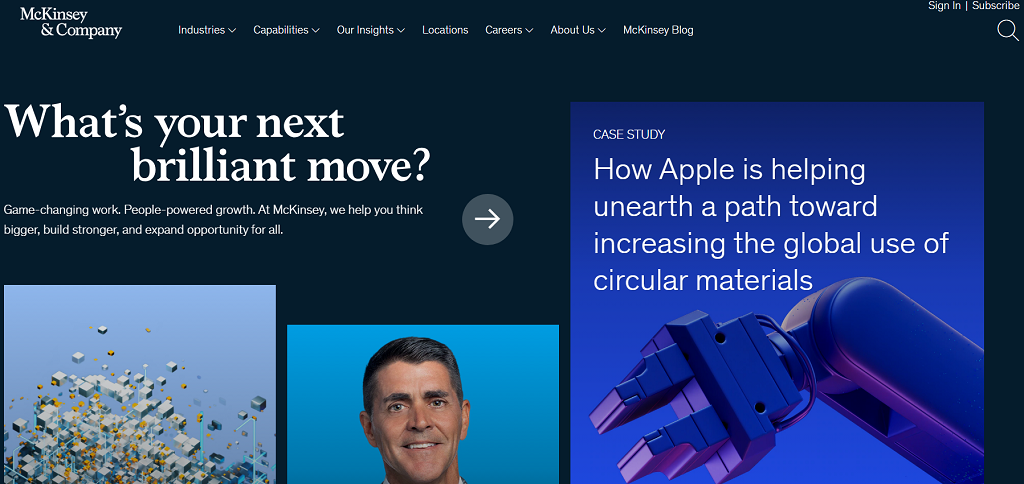
McKinsey’s website is a masterclass in authority-building. It isn’t flashy; instead, it feels like an encyclopedia of insights, filled with research reports, interactive graphics, and trend analysis. The homepage greets you with bold statements supported by numbers, while the navigation leads to deep dives on industries, case studies, and global issues.
Key Features:
- Data-driven articles and reports published regularly.
- Clear industry segmentation, making it easy for visitors to find their sector.
- Minimalist design that highlights content over decoration.
- Consistent calls to action encouraging readers to explore or subscribe.
Takeaway:
By focusing on knowledge-sharing, McKinsey builds trust long before a potential client even considers reaching out. Visitors come for insights and leave with the sense that this firm has the resources to solve large-scale problems.
Boston Consulting Group (BCG)
BCG’s site leans into visual storytelling. The homepage immediately feels dynamic, with bold typography and interactive features that highlight their focus on transformation and innovation. Scrolling through, you’ll encounter case studies packaged almost like short documentaries, balancing sharp design with digestible information.
Key Features:
- Strong visual identity reinforced through photography and motion design.
- Case studies presented with interactive graphics.
- Content grouped by themes such as sustainability, digital, or leadership.
- Prominent links to global insights and reports.
Takeaway:
BCG proves that a corporate consulting site doesn’t have to be dry. Their design choices make complex business transformation stories accessible and engaging, showing how visual presentation can turn information into inspiration.
GrowthLab by Ramit Sethi

GrowthLab isn’t a corporate giant—it’s built around Ramit Sethi’s personal brand, and that’s exactly what makes it powerful. The site feels like a conversation rather than a lecture. Bold headlines, direct copy, and clear funnels guide visitors into signing up for courses or newsletters. Every element reflects the idea that trust is earned by being upfront and personable.
Key Features:
- Prominent personal branding with photos and direct messaging.
- Lead magnets like free guides and email courses.
- Simple layouts that push attention toward calls to action.
- Stories and testimonials that emphasize transformation.
Takeaway:
GrowthLab shows how personality and expertise can carry a consulting business online. Independent consultants can study this approach and see how personal branding paired with lead capture tools creates a steady pipeline of clients.
Lisa Richey, Business Etiquette Consultant
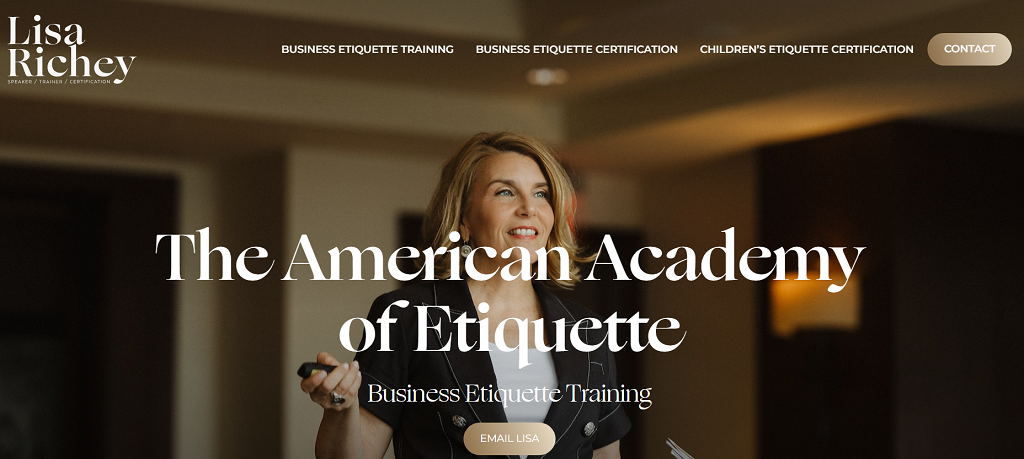
Lisa Richey’s site is an excellent demonstration of how niche consultants can shine. The site is friendly, clear, and rooted in her specialization—etiquette instruction. The homepage introduces the visitor at once as an accessible expert, and the navigation centers on in-use services such as workshops and training programs.
Key Features:
- Clear description of services with easy booking options.
- Testimonials from clients to reinforce credibility.
- Personal photos that highlight trustworthiness and relatability.
- A simple but polished design that keeps focus on the message.
Takeaway:
Her site proves that the best independent consultant websites aren’t necessarily in need of vast contents databases. A solid niche specialization, supplemented with trust indicators and friendly design, is enough to give one consultant the same sense of credibility as that of a bigger company.
Erika Heald Consulting
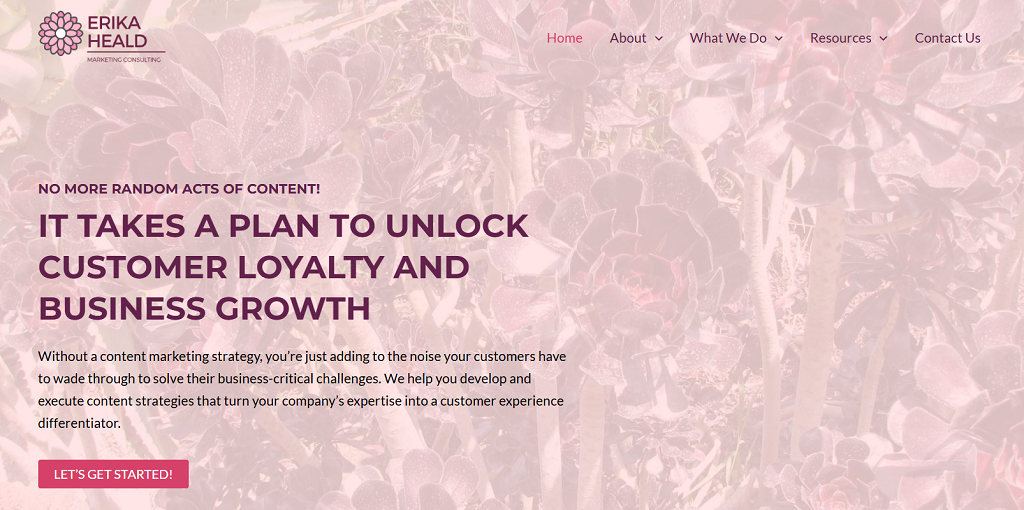
Erika Heald’s site is built around clarity. Instead of overwhelming visitors with jargon, the copy focuses on what she actually does—content strategy, community building, and consulting for businesses that want a sharper voice online. The layout is straightforward, but the simplicity works in her favor.
Key Features:
- Direct messaging that avoids buzzwords.
- Easy navigation that highlights core services.
- Blog posts and resources that display expertise.
- Clear contact paths that invite quick outreach.
Takeaway:
Erika’s website proves that consultants don’t need complexity to stand out. By putting services front and center, and avoiding distractions, she creates a frictionless experience that inspires confidence in potential clients.
Bain & Company
Bain’s website is polished in a different way from McKinsey or BCG. It feels less like an academic resource and more like a guided journey. Each section is designed to lead you somewhere—whether that’s a case study, an industry insight, or a service explanation. The storytelling approach draws you deeper with every scroll.
Key Features:
- Engaging homepage with client-centric stories.
- Intuitive navigation through industries and solutions.
- Consistent use of photography and design elements to add warmth.
- Calls to action woven naturally into each section.
Takeaway:
Bain shows how large firms can balance authority with accessibility. Instead of relying only on research-heavy content, they mix storytelling with clear service offerings, making the visitor feel like they’re part of the narrative.
Comparison of Key Elements Across Top Consulting Websites
| Website | Type | Standout Feature | Takeaway |
| McKinsey | Global firm | Research insights hub | Authority built through deep, data-driven content |
| BCG | Global firm | Interactive case studies | Visual storytelling makes complex topics engaging |
| GrowthLab | Independent | Lead magnets, courses | Personal brand paired with funnels drives sales |
| Lisa Richey | Niche | Service clarity, testimonials | Focus and approachability build strong trust |
| Erika Heald | Independent | Simple, direct messaging | Clarity and frictionless navigation win confidence |
| Bain & Company | Global firm | Client-centric stories | Guided storytelling turns visitors into prospects |
How to Build a Consulting Website That Stands Out

There’s no shortage of ways to get a site online. A solo consultant might be tempted by DIY website builders: quick, cheap, and with plenty of templates. The problem? Those templates often look the same, and when every competitor uses the same design, you fade into the background. SaaS-based solutions offer more polish but still come with limitations—branding that isn’t truly yours, features you don’t control, and subscription fees that pile up. Larger firms usually move toward custom-built solutions because they need security, scalability, and full ownership. That’s the difference between a site that blends in and one that competes with the best consulting websites.
If you want to build a consulting website that carries weight, start by planning beyond aesthetics. Design matters, but so does the flow: how someone books you, how payments are handled, and how you prove you’re worth hiring.
Practical Steps to Start Today
- Define your niche and audience – Know exactly who you want to reach and tailor your message for them.
- Choose your monetization model – Will you charge hourly, offer packaged services, or build a subscription plan?
- Prioritize branding and payments – Your logo, color scheme, and story should be consistent, while payment options need to be seamless and secure.
- Add engagement tools – Booking calendars, live chat, or gated content help turn casual visitors into paying clients.
Developing online presence is more than that initial setup—it’s iterative. The finest consulting sites grow along with the consultant, tightening up as services expand or audiences shift. What distinguishes the finest aren’t templates—it’s the judicious combination of personal branding, trust markers, and working tools that streamline business both ends.
Scrile Meet: Customizable Development for Consulting Websites
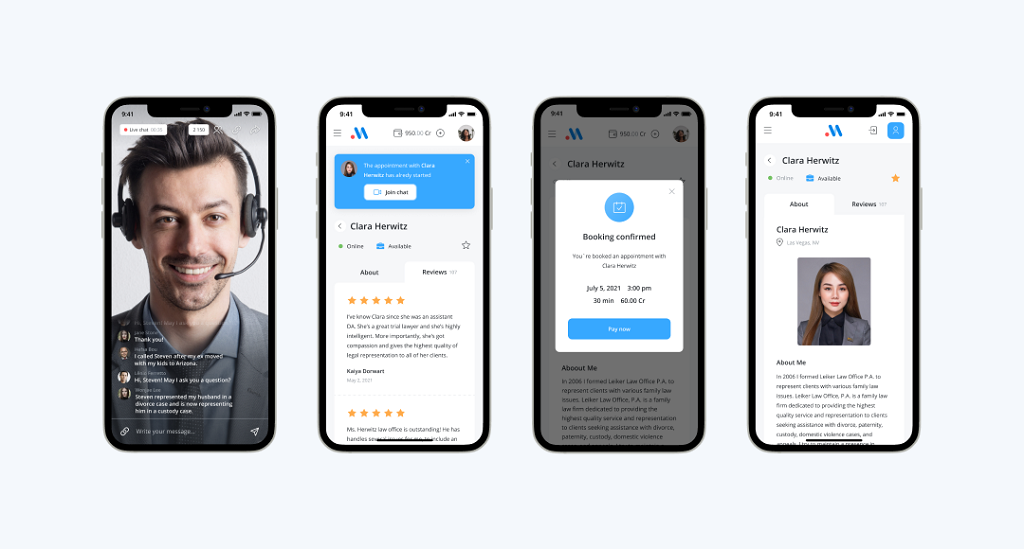
Most consultants outgrow generic templates quickly. You might start with a drag-and-drop builder, but as soon as you need secure payments, branded video sessions, or scalable tech, the cracks show. Scrile Meet fills that gap. It’s not a pre-made platform—it’s a development service that adapts to your goals, giving you the flexibility to create a consulting site that holds its own among the best consulting websites.
With years of experience across varied industries—from corporate advisory firms to adult coaching—Scrile Meet understands how consultants shape and grow their online presence. The service combines this experience with a toolkit built to support consultants who want more than surface-level design.
Key benefits include:
- Full white-label branding that puts your name, not someone else’s, front and center.
- Live video consultation features, covering both one-on-one and group sessions.
- Integrated payment systems with direct payouts for smooth transactions.
- Flexible monetization models, from subscriptions and pay-per-minute billing to premium content.
- Scalable, low-latency technology (WebRTC/RTMP) that ensures calls and streams feel seamless.
Behind these features sits a support system—project managers, custom developers, and 24/7 hosting—that ensures the site isn’t just launched but actively maintained. For consultants, that means the freedom to shape a site around your practice rather than squeezing your practice into a rigid template.
Scrile Meet positions itself as a long-term partner, making sure your consulting website can evolve alongside your business.
Conclusion
The best consulting websites all follow the same thread: they make services clear, build trust with proof, and rely on technology that makes the client’s next step effortless. From global names like McKinsey to niche professionals running solo practices, the examples show that size doesn’t matter—clarity and function do. If you’re ready to take your consulting business online or improve what you already have, the next step is simple. Define your goals, think about how you want to engage clients, and contact the Scrile Meet team today to discuss a site built exactly around your needs.
Polina Yan is a Technical Writer and Product Marketing Manager, specializing in helping creators launch personalized content monetization platforms. With over five years of experience writing and promoting content, Polina covers topics such as content monetization, social media strategies, digital marketing, and online business in adult industry. Her work empowers online entrepreneurs and creators to navigate the digital world with confidence and achieve their goals.
by Polina Yan
Imagine a voice that doesn’t just read your words but actually feels them. That’s where text to speech with emotion has taken us in 2026 — AI voices that sigh in frustration, brighten with excitement, or soften into comfort. This shift isn’t just a neat trick for tech demos. It’s changing how creators build marketing campaigns, how game developers bring NPCs to life, and how virtual assistants connect with users on a personal level.
In this article, we’ll break down five of the most impressive solutions you can use right now. Each one will get a clear, human take — strengths, drawbacks, and where it truly shines. You’ll also see a side-by-side comparison table for quick decision-making, plus a look at a fully customizable route with Scrile AI for teams who need more than off-the-shelf options. By the end, you’ll know exactly which path fits your project’s voice — and its heartbeat.
Why Emotional TTS Matters in 2026
The leap from flat, robotic narration to emotion text to speech has made AI voices far more than a convenience — they’ve become a competitive edge. In 2026, brands, educators, and creators are turning to text to speech with emotion to connect with audiences in ways that plain audio never could.
Think of accessibility tools that read aloud with empathy, helping visually impaired users feel tone and context. Or interactive games where NPCs laugh, sigh, or sound genuinely scared. In online education, emotional TTS keeps students engaged for longer sessions. And yes — even in NSFW chat environments, realistic voice tones make interactions feel far more human and personal.
The demand is backed by numbers. According to industry reports, the global TTS market is projected to surpass $7 billion by 2028, with emotional AI voices driving a significant share of that growth. The reason is simple: when speech conveys feelings, people listen longer, trust more, and engage at deeper levels.
How Emotional TTS Works
Think about the last time you heard someone fake an apology. The words were fine, but the voice gave them away. That’s exactly what most robotic voices have sounded like for years — flat, functional, and forgettable. Emotional TTS tries to fix that by making AI talk like a human who actually feels something.
The trick isn’t magic, it’s detail. Developers feed AI thousands of real voice samples — laughter, frustration, hesitation, warmth. The system learns how tiny shifts in:
- Pitch (that lift when you’re excited)
- Pace (rushed when you’re thrilled, slower when you’re serious)
- Tone (soft for comfort, sharp for authority)
- Pauses (because silence can speak louder than words)
…can completely change the meaning of the same sentence.
In 2026, this tech isn’t just reading text. It’s shaping delivery the way a skilled actor would. It can make your AI sound like a friendly tutor, a tense game narrator, or — if you want — the voice in an NSFW chat that knows exactly how to play the part. That’s the real leap: not just speaking, but speaking with intent.
5 Best Text to Speech with Emotion Solutions
If you’ve ever listened to a robotic AI voice and thought, “Yeah… that doesn’t sound human,” you already know why emotional TTS matters. The good news? In 2026, we have more options than ever that don’t just read your words — they perform them. Below are five standout tools, each with its own personality, pricing, and quirks.
Typecast — Best for Creative Media with Diverse Emotional Presets
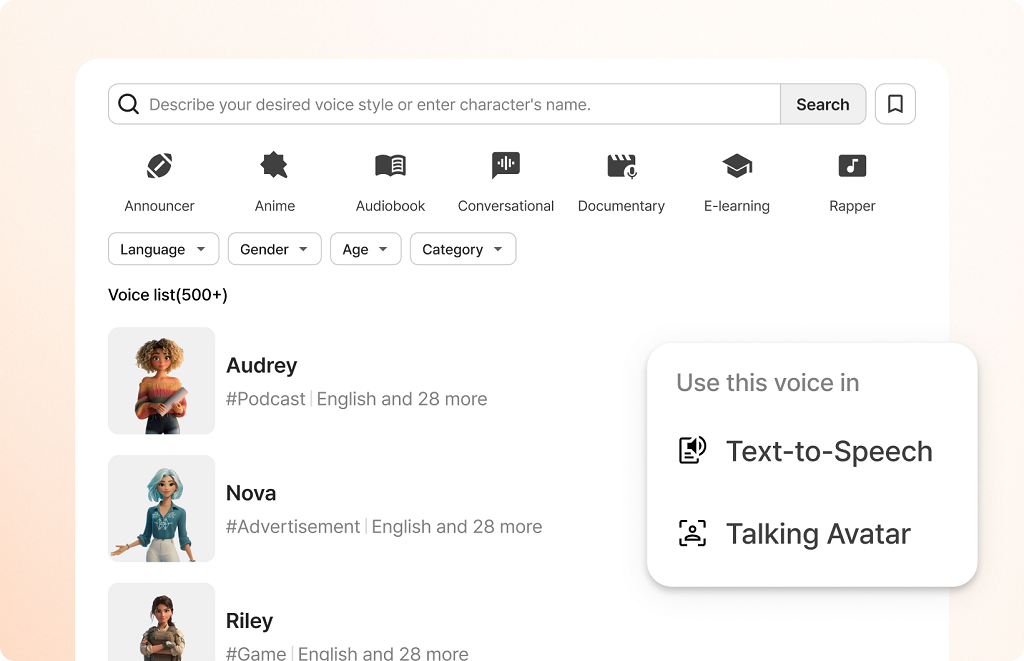
Typecast has carved a spot in the creative industry by giving content makers a toolbox that feels more like a stage than software. With 600+ voices and an advanced SSFM model, it delivers characters that laugh, whisper, or tremble just right. Whether you’re producing an indie game, an animated short, or an audiobook with drama, it’s one of the few platforms where “free text to speech with emotion” isn’t just marketing fluff — you can actually try it without paying first.
Key Features:
- 600+ voices in multiple languages
- Adjustable emotional presets like joy, fear, and sadness
- Real-time previews for instant feedback
- SSFM (Speech Synthesis Fine-tuning Model) for lifelike tone control
Pros:
- Huge library of voice options
- Strong emotional range without sounding artificial
- Works well for storytelling-heavy projects
- Generous free tier
Cons:
- Interface can feel crowded for first-time users
- Some niche languages lack emotional presets
Pricing & Free Plan: Free tier with limited exports; paid plans start around $8.99/month for more voices, faster rendering, and commercial rights.
Murf AI — Best for Professional Voiceovers & Commercial Use
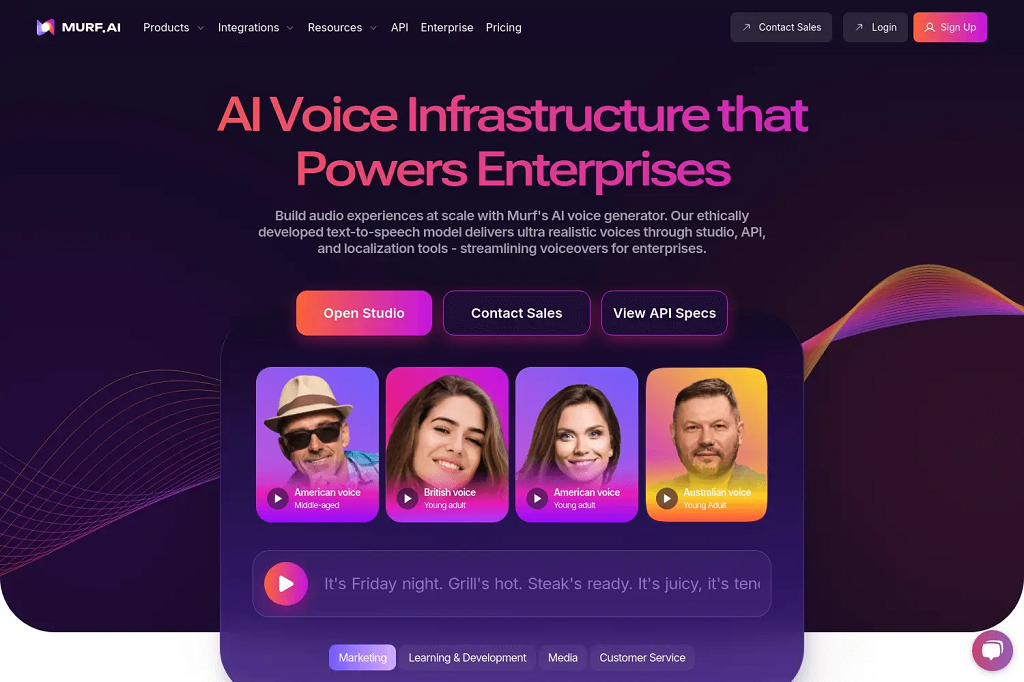
Murf AI is like the clean, polished studio of emotional TTS tools — everything about it feels geared toward serious, professional output. It’s a favorite among ad agencies, corporate trainers, and video producers who need tts with emotion that still sounds sharp and brand-safe. Their Speech Gen 2 engine nails subtle shifts in tone — think “motivated” versus “inspired” — which makes a big difference in scripted work.
Key Features:
- Speech Gen 2 for precise emotion tuning
- Over 150 voices in 20+ languages
- Timeline-based editor for syncing with visuals
- AI-driven script-to-voice matching
Pros:
- Emotion control that feels granular, not generic
- Excellent for explainer videos, ads, and training content
- Built-in tools for pacing and emphasis adjustments
- Professional-grade audio quality
Cons:
- No truly free plan (only a short trial)
- Emotional presets are less exaggerated than in entertainment-focused tools
Pricing & Free Plan: Free trial for a few minutes of voice generation; paid plans start around $19/month, with commercial usage rights included.
LOVO AI — Best for Marketing & E-learning
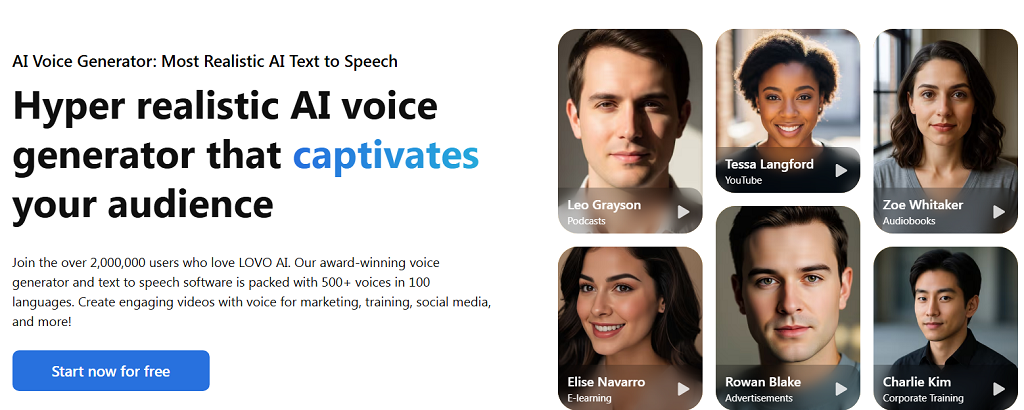
LOVO AI positions itself as the storytelling partner for brands and educators. With a multilingual voice library and expressive styles designed for teaching, brand videos, and even customer service scripts, it’s built for clarity and engagement. Its ai voice with emotions engine is strong enough to carry enthusiasm in an ad spot and warmth in an onboarding video without sounding forced.
Key Features:
- 100+ languages supported
- Expressive styles for teaching, selling, and narrating
- API access for integration into LMS or marketing platforms
- Emotion sliders to fine-tune delivery
Pros:
- Versatile — works equally well for ads and education
- Wide language support for global campaigns
- Easy integration for large-scale content production
- Offers both pre-set and customizable emotion controls
Cons:
- Some voices feel too “clean” for creative storytelling
- Lower-tier plans limit access to advanced features
Pricing & Free Plan: Free version with watermarked exports; paid plans start around $10/month for high-quality, watermark-free audio and full commercial rights.
Play.ht — Best for Podcasters & Publishers
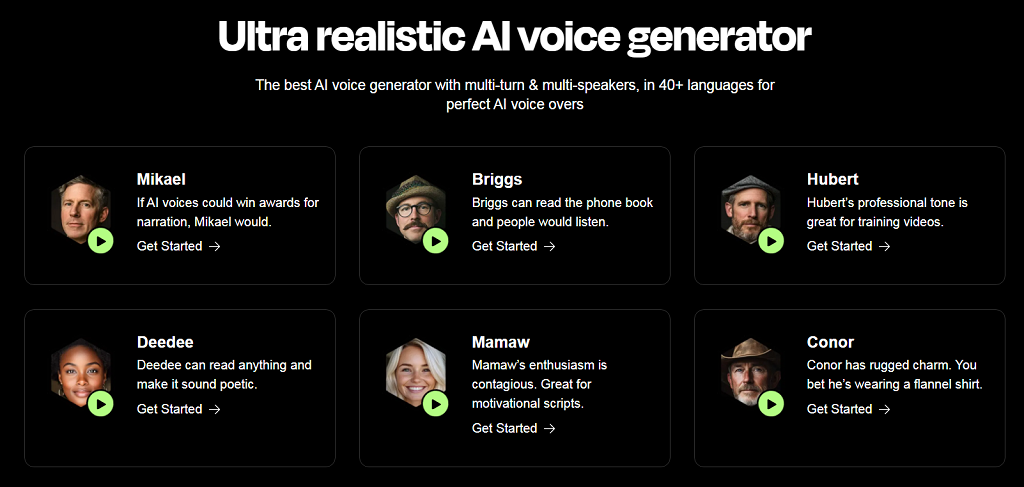
If you’ve ever tried to convert an article or script into audio and felt the result was… flat, Play.ht is the kind of upgrade you wish you’d found sooner. It’s loaded with a huge voice library and lets you mess with pitch, speed, and pauses until the delivery sounds like a real person telling a story. That’s why it’s a favorite in the podcasting and publishing world. It’s not just a text to speech emotion engine — it’s a full-on audio production sandbox.
Key Features:
- 200+ voices across 30+ languages
- Controls for pitch, speed, and pause placement
- Audio player widgets for websites and blogs
- Batch processing for multiple scripts
Pros:
- Voices that feel less “robot” and more “presenter”
- Flexible enough for news reads, narration, or casual chat tones
- Built-in player makes embedding audio dead simple
- Good for both short posts and long-form content
Cons:
- Free version limits downloads and customization
- Some voices still lean slightly toward the “AI” sound on longer passages
Pricing & Free Plan: Free tier lets you try it out but caps output; paid plans start at about $39/month, with commercial rights and more customization unlocked.
Resemble AI — Best for Voice Cloning with Emotional Nuance
Resemble AI takes the idea of emotional tts and adds a wild card: cloning your own voice, complete with emotional shading. This means you could train it to say anything in your voice — calm, angry, excited, even whispering — and it will sound disturbingly close to the real thing. The tool’s custom emotion tags give you frame-by-frame control over delivery, which is rare in this space.
Key Features:
- Real-time API for live emotion control
- Voice cloning from short audio samples
- Emotion tags for ultra-specific tone adjustments
- Support for blending synthetic and human recordings
Pros:
- Scary-good cloning accuracy
- Emotion tags make subtle delivery possible
- Works for games, interactive experiences, and custom assistants
- Real-time capabilities are a huge plus for dynamic content
Cons:
- Steeper learning curve for precise results
- Voice cloning may raise ethical or compliance questions
Pricing & Free Plan: Free plan includes basic TTS with limits; cloning and advanced emotion control start around $19/month.
Comparison Table — Quick Glance at the Top Picks
| Tool | Voices | Languages | Emotional Control | Best For | Free Plan |
| Typecast | 600+ | 60+ | Manual/presets | Creative projects | Yes |
| Murf AI | 150+ | 20+ | Precision sliders | Pro voiceovers | Yes |
| LOVO AI | 500+ | 100+ | Multiple presets | Marketing/e-learning | Yes |
| Play.ht | 200+ | 30+ | Pitch/speed control | Podcasts, publishing | No |
| Resemble AI | 100+ | 100+ | Custom emotion tags | Voice cloning | No |
Scrile AI: Build Your Own Emotional TTS
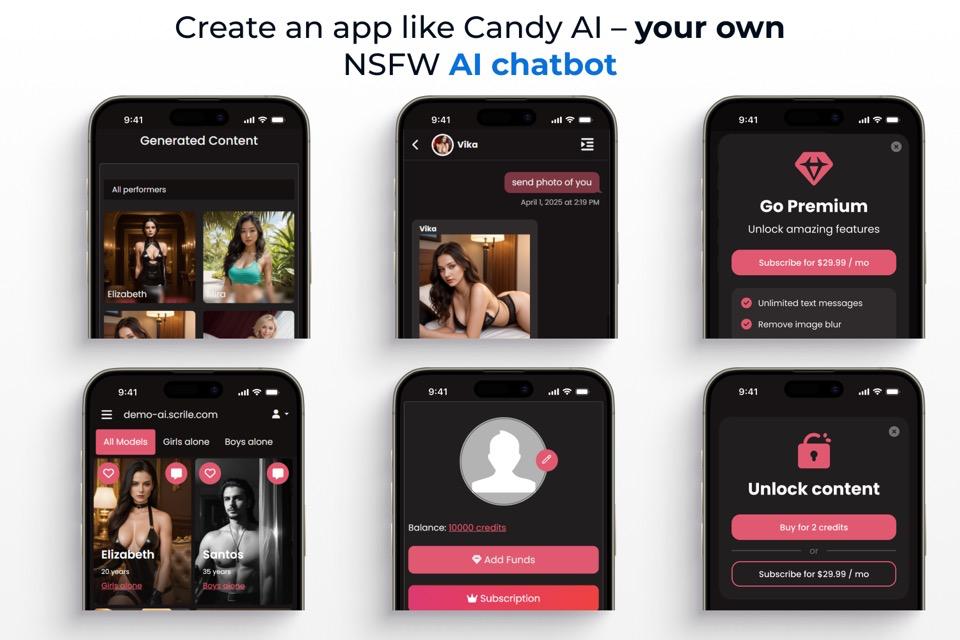
Off-the-shelf apps are fine when you just need a quick voiceover. But when you want a text to speech with emotion solution that’s truly yours — branded, monetized, and integrated with everything your business runs on — you need a custom build. That’s where Scrile AI steps in.
Scrile AI isn’t a generic SaaS subscription. It’s a custom development service that designs and delivers exactly what your use case demands. Whether you’re building a learning platform with lifelike voices, an NSFW chatbot with emotional nuance, or even a text to speech porn product that blends voice output with AI roleplay, the tools are shaped around your vision.
Here’s what you can have built:
- Real-time emotional TTS with natural tone shifts and contextual delivery
- AI character builder to give every voice a unique persona and backstory
- Group & private chat integration with instant audio generation
- AI-generated responses powered by LLMs for dynamic conversations
- Full moderation control to meet compliance and community guidelines
- Monetization options like subscriptions, pay-per-message, or premium content tiers
- Complete branding — interface, UX, and workflow logic all reflect your identity
Scrile AI also works seamlessly with existing ecosystems. You can integrate it with your CRM, analytics tools, or content library, so the voice output isn’t just realistic — it’s connected to your entire operation.
Instead of adapting your workflow to fit a fixed platform, Scrile AI builds a toolset that fits you. That’s the difference between renting features and owning the whole experience.
How to Choose the Right Emotional TTS
With so many text to speech with emotion tools on the market, picking the right one comes down to knowing what actually matters for your project. Start with variety — does the platform offer a wide range of emotional tones, or are you stuck with “happy,” “sad,” and little else? Voice quality is non-negotiable; if it sounds robotic, your audience will tune out.
Languages can be a deal-breaker if you need global reach, so check both coverage and accent authenticity. API access is another big one — without it, you’re limited to manual use instead of integrating voices into your apps or workflows. And finally, pay attention to licensing. Some services allow full commercial use; others don’t.
If a tool ticks these boxes and still fits your budget, you’re on the right track. The perfect choice should sound great, work anywhere, and fit seamlessly into your ecosystem.
⚖️ Emotional TTS Tools vs. Scrile AI
| Feature | Typecast | Murf AI | LOVO AI | Play.ht | Resemble AI | Scrile AI (Custom Build) |
|---|
| Voices | 600+ | 150+ | 500+ | 200+ | 100+ | Unlimited (custom-trained) |
| Languages | 60+ | 20+ | 100+ | 30+ | 100+ | Any (customizable) |
| Emotional Control | Presets + fine-tuning | Precision sliders | Presets + sliders | Pitch/speed control | Emotion tags | Real-time contextual + persona-driven |
| Best For | Creative projects, games | Ads, training, corporate | Marketing & e-learning | Podcasts, publishing | Voice cloning & interactivity | Branded platforms, monetization, full control |
| Free Plan | Yes | Trial only | Yes | Limited | Basic TTS only | N/A (custom dev) |
| Monetization Options | None | None | None | None | None | Subscriptions, PPV, premium voice chats |
| Branding | Vendor branding | Vendor branding | Vendor branding | Vendor branding | Vendor branding | 100% custom UI/UX, your brand only |
| Integration | Manual export | Editor-based | API | Website widgets | API | Full ecosystem: CRM, chat, analytics |
Conclusion
Text to speech with emotion surpasses machine narration. The world’s best tech puts depth, character, and realism in computer voices — and makes a great tool for content creators, tutors, marketers, game developers, and even NSFW chat. Your use may be to break the ice in a podcast introduction or to add drama to a game scenario or to liven up online lessons, but emotional TTS can radically change the way audiences respond to your content.
The five solutions we explored — Typecast, Murf AI, LOVO AI, Play.ht, and Resemble AI — each bring something unique to the table. From massive voice libraries to hyper-precise emotional control, there’s a fit for every need and budget.
For brands and projects that need more than a ready-made tool, Scrile AI delivers a fully customized, branded emotional TTS system tailored to your workflow — complete with integrations, monetization features, and total control. Contact the Scrile AI team of experts today and start building your solution.
Polina Yan is a Technical Writer and Product Marketing Manager, specializing in helping creators launch personalized content monetization platforms. With over five years of experience writing and promoting content, Polina covers topics such as content monetization, social media strategies, digital marketing, and online business in adult industry. Her work empowers online entrepreneurs and creators to navigate the digital world with confidence and achieve their goals.

by Polina Yan
The webcam chat industry has come a long way from simple one-way video streams. In 2026, platforms are expected to do more than just connect users—they need to engage, monetize, and scale. Live video alone isn’t enough. Audiences now expect private chat options, tipping systems, interactive overlays, and flawless streaming across all devices.
The webcam business is no longer a tiny niche — it’s a full-scale industry with serious money and serious competition. Studios and solo creators now fight for attention on a global level.
“Take adult web-camming, for example, a billion-dollar global industry in which content creators build up devoted followings as they stream themselves to meet endless demand.”
— Lily Hay Newman, WIRED
That level of demand is exactly why your tech stack can’t be an afterthought. If your script can’t keep streams stable and interactive, viewers will simply move to the next site.
That’s where script chat cam solutions come into play. Instead of building everything from scratch, entrepreneurs and studios can launch fully functional platforms using pre-built or custom scripts that handle video, chat, payments, moderation, and more. These tools offer the control and flexibility needed to shape a brand, while also giving creators and performers the tools to earn and interact in real time.
This article explores the top five script chat cam solutions available in 2026. Whether you’re launching a new cam site or upgrading your existing setup, these tools can help you deliver a polished, profitable experience without compromising on features or performance.
What Makes a Great Script Chat Webcam Tool?
A solid script chat webcam solution is more than just a video player and a chatbox. At its core, it combines real-time video streaming with interactive chat, integrated billing, performer dashboards, admin controls, and user management—all built to support high-volume traffic and monetization.
But not all scripts are created equal. Stability and stream quality should come first. If a broadcast lags or drops, users leave. The interface matters too: performers need intuitive tools to manage shows, while viewers want smooth navigation and fast interaction.
Built-in payment options—like credit card billing, tokens, or crypto—are essential. Add moderation tools to prevent abuse, and you’ve got a platform that’s safer for everyone. Finally, look for scripts that support various revenue streams: pay-per-minute shows, tips, locked content, and private sessions.
Choosing the right solution from the beginning helps avoid major technical headaches later and lays the foundation for scaling your platform with confidence.
Tipping, tokens and paid gifts aren’t just “nice extras” anymore — they’re how viewers actively participate in shows and how performers turn attention into income. For modern cam platforms, that engagement layer is part of the core product, not a bonus feature.
“Livestream gifting is no longer a niche feature; it is a mainstream cultural and economic force, redefining entertainment and building deeper audience connection.”
— TikTok & Ipsos, “The Creator Economy Redefined: How Interactive Livestream Gifting is Transforming Entertainment”
When you evaluate script chat cam solutions, look closely at how they handle tips, gifts and tokens. The better they support this “participation economy,” the easier it is for your performers and studio to grow revenue.
Top 5 Script Chat Cam Solutions in 2026
If you’re building a cam platform this year, choosing the right script chat cam tool can make or break your launch. Here’s a rundown of five standout solutions—each offering something different for startups, studios, and growing platforms.
| Solution | Best For | Key Features | Limitations | Ease of Launch |
|---|
| Video Chat Script (Soft112) | Small teams / solo startups | Pay-per-minute, performer/admin dashboards, multi-cam | Very limited customization, not scalable | ✅ Quick / cheap |
| Online-Webcam.net | Fast deployment | Templates, performer accounts, payment gateways, revenue tracking | Dated front-end design | ✅ Plug-and-play |
| PaidVideoChat (VideoWhisper) | Flexible pay models | Private shows, multi-host, WordPress integration, tipping | Technical setup required | ⚡ Moderate |
| xCams (Adent.io) | Professional platforms | HD streaming, token billing, dashboards, moderation | Developer needed, higher cost | 🔧 Custom dev |
| Scrile Stream | Long-term growth, branded sites | Custom development, tipping, tokens, affiliate support, full ownership | Not “ready out-of-the-box” | 🏗️ Tailored build |
Video Chat Script (Soft112)
This script is best known for its simplicity and straightforward pay-per-minute functionality. It includes a performer interface, admin dashboard, and multi-cam support for models, making it a decent pick for small teams or solo entrepreneurs starting out. It does the bare minimum like video chat and session billing, but otherwise, choices are limited. There isn’t a lot of customization, so expanding larger may mean expanding out of it. But it’s a fast and inexpensive way to get your foot in the cam door without a lot of initial investment.
Online-Webcam.net
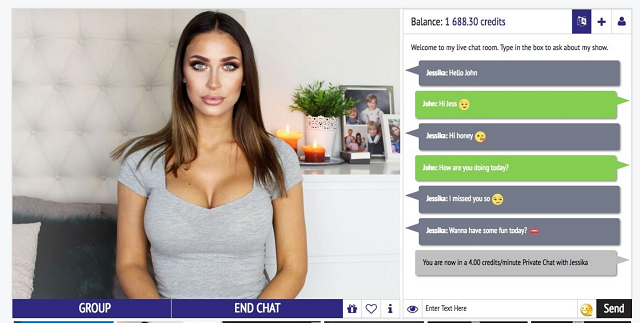
Designed for fast deployment, this option gives users an entire plug-and-play site—complete with templates, performer accounts, and payment gateway support. It’s surprisingly flexible for a ready-made package. Performer dashboards are customizable, and it includes tools for show scheduling and revenue tracking. The only drawback is its slightly dated front-end design. It’s a practical pick for those who want to launch quickly and tweak things as they go, without building a platform from scratch.
PaidVideoChat by VideoWhisper
PaidVideoChat by VideoWhisper is a live video chat script tailored for pay-per-minute models, tipping, and interactive webcam chat. It’s ideal for platforms that want flexibility around pricing and session formats. The script supports private shows, multi-host interactions, mobile streaming, and can integrate with WordPress. It’s more technical to configure than some turnkey platforms, but makes up for it with performance and monetization depth.
xCams by Adent.io
xCams by Adent.io is a white-label live cam site script with a focus on professional-grade performance and customization. It includes high-definition streaming, user and performer dashboards, token-based billing, and advanced moderation features. It is built for businesses that want to launch serious platforms with room to scale. It’s not a plug-and-play tool—you’ll want a developer or their team’s assistance—but in return, you get full control over how your cam site functions and grows.
Scrile Stream
Not a script in the traditional sense—Scrile Stream is a custom development solution. It offers flexibility far beyond plug-and-play tools, making it ideal for those wanting a branded platform with long-term growth in mind. More on that in the next section.
Scrile Stream: The Best Development Solution for Your Webcam Business
Unlike plug-and-play scripts, Scrile Stream offers a custom-built cam site solution tailored to your business model. It’s not just another template—it’s a full development service designed to launch powerful, branded platforms with real-time streaming, interactive chat, tipping systems, paid messages, and virtual tokens.
Scrile Stream also comes equipped with essential tools like affiliate program support, payment gateway integration, and moderation features that help keep your platform safe and monetized. It’s ideal for entrepreneurs who need more than a basic out-of-the-box system.
What sets it apart? Total control. No vendor lock-in, no design limitations, and full ownership of your platform’s code and user experience. If you’re looking for a serious script chat cam alternative with room to scale, Scrile Stream delivers.
That’s the real dividing line between a quick script and a long-term platform: do you truly own the environment your business runs on, or are you renting space under someone else’s rules? Free and semi-free platforms always come with hidden trade-offs.
“Platforms like YouTube or Facebook Live offer free video hosting. But you pay in other ways through limited control, platform ads and lack of ownership.”
— “Video Streaming Hosting in 2025: Best Platforms, Tips & Cost Breakdown”, Bluehost
Scrile Stream follows the opposite logic: you invest in a solution where streaming quality, branding, monetization and data stay under your control, instead of being trapped inside another company’s ad-driven ecosystem
Plug-and-Play Scripts vs. Scrile Stream
| Option | Ownership & Branding | Scalability | Monetization Depth | Support |
|---|
| Typical scripts (Soft112, VideoWhisper, etc.) | Limited, template-based | Harder to expand beyond basics | PPM, tips, private shows | Varies / limited |
| Scrile Stream | Full code ownership, branded UI/UX | Built for growth (enterprise-ready) | PPM, tips, tokens, paid messages, affiliate programs | End-to-end dev & support |
Conclusion: Launch Smarter with the Right Script Chat Cam Solution
A good script chat cam setup is the key to any successful webcam site. Whether you’re going small or going big, the right technology will make you a sensation. Explore Scrile Stream to build a fully branded, revenue-capable webcam chat site built to succeed in 2026 and beyond.
Polina Yan is a Technical Writer and Product Marketing Manager, specializing in helping creators launch personalized content monetization platforms. With over five years of experience writing and promoting content, Polina covers topics such as content monetization, social media strategies, digital marketing, and online business in adult industry. Her work empowers online entrepreneurs and creators to navigate the digital world with confidence and achieve their goals.

by Polina Yan
Ever wished for a personal assistant who never needs sleep, never forgets, and always has the right answer? In 2026, the best AI assistants are stepping into this role, offering virtual support that goes far beyond basic automation. These digital helpers manage everything from scheduling meetings and setting reminders to generating creative content and even managing smart home devices.
AI assistants are no longer just for tech enthusiasts. They have become essential tools for businesses, creators, and everyday users who want to save time and boost productivity. Whether you need help organizing your day, interacting with customers, or simply setting the perfect ambiance at home, there’s an AI assistant designed to make life easier.
AI assistants like ChatGPT, Claude or Gemini feel so natural to use that it’s easy to forget how new this technology actually is. Large research firms now describe this moment as a turning point in how people communicate with software.
“ChatGPT and its competitors have captured the imagination of people around the world in a way AlphaGo did not, thanks to their broad utility—…” — McKinsey & Company
When even conservative analysts highlight the “imagination” and broad utility of these tools, it reinforces that AI assistants are not a niche experiment anymore. They’re becoming a standard interface for search, content creation, and everyday problem-solving — which is exactly why choosing the right assistant in 2026 really matters.
In this article, we’ll explore the top AI assistants of 2026. We’ll look at big names like Google Assistant, Amazon Alexa, and Apple Siri, as well as innovative tools like ChatGPT, Motion AI and custom solutions from Scrile AI. Each assistant brings unique features to the table, making it easier to find the perfect fit for your needs—whether for personal tasks or professional productivity. Let’s find out what makes the best AI assistant and discover which one might become your new favorite virtual helper.
Top 7 AI Assistants in 2026 – Quick Comparison
| Assistant | Best For | Strengths | Limitations | Ecosystem Fit |
|---|
| Google Assistant | Everyday + work routines | Google Workspace & smart home integration, proactive suggestions | Best inside Google ecosystem | Google users |
| Amazon Alexa | Smart home + retail tasks | Huge device network, “Skills” marketplace, shopping & automation | Less natural conversation; retail bias | Amazon ecosystem |
| Apple Siri | Apple device owners | Seamless iOS/macOS integration, HomeKit control, messaging | Limited outside Apple hardware | Apple ecosystem |
| Microsoft Cortana | Office productivity | Deep Microsoft 365 integration, meeting scheduling, smart suggestions | Phasing out for consumer use | Windows/Office users |
| Samsung Bixby | Samsung smart devices | Strong SmartThings control, TV/phone integration | Weak app ecosystem, limited global reach | Samsung ecosystem |
| ChatGPT (OpenAI) | Content & communication | Human-like text replies, content creation, chatbot support | No native voice/device control | Cross-platform |
| Motion AI | Productivity & scheduling | Smart auto-scheduling, task priorities, Slack/Calendar integration | Focused on work tasks only | Teams & professionals |
What is an AI Assistant?

An AI assistant is a smart digital helper designed to manage tasks, answer questions, and streamline both personal and professional activities. These virtual assistants use technologies like natural language processing and machine learning to understand voice commands, manage schedules, set reminders, and control smart home devices.
The best AI personal assistants can integrate with apps and services, providing hands-free convenience for busy professionals and everyday users alike. They excel in business environments, helping with tasks like email management, meeting scheduling, and data organization. On creator platforms and social media, they assist with content generation and audience engagement.
The rise of best AI virtual assistants has transformed how we interact with technology, offering tailored solutions for work productivity and simplifying everyday life. Whether managing a to-do list, setting up a smart home, or enhancing business communications, AI assistants bring efficiency and ease to daily routines.
This isn’t just a new label for old productivity tools. Companies that work with virtual assistants every day note that AI has already reshaped how these assistants feel and what they can realistically handle.
“The impact of AI on virtual assistant tools has been transformative, bringing about significant enhancements in user experience, productivity…” — Brickwork India
Thinking about AI assistants as a “transformative” layer helps frame the rest of this guide: you’re not just picking a chat app, you’re choosing infrastructure for how you plan, communicate and work. The tools we review below — from mainstream assistants to custom solutions — only make sense when you see them through this long-term lens.
Benefits of Using an AI Assistant
AI assistants bring many benefits to both personal and professional life. They help users stay organized, manage tasks efficiently, and maintain a consistent communication style in business settings. Here are the top advantages of using an AI personal assistant for business and everyday use:
- Increases Productivity: AI assistants handle repetitive tasks like scheduling meetings, sending reminders, and organizing calendars. This automation frees up time for more important activities.
- Enhances Time Management: These tools provide smart reminders, integrate with calendars, and help manage daily routines smoothly. They reduce the chances of missed appointments or deadlines.
- Ensures Consistency: Businesses often struggle to maintain a uniform brand voice across all communications. An AI assistant helps keep messages consistent, whether it’s in emails, social media posts, or customer support responses.
- Practical Example: A content creator using a best personal assistant AI can manage fan interactions on social media more efficiently. The assistant can generate quick responses to comments, draft messages, and even schedule posts to maintain regular engagement.
- Versatile Uses: With so many AI assistant names available, choosing who is the best AI assistant depends on specific needs. Some excel at managing business tasks, while others focus on personal organization or creative support.
AI assistants are more than just digital helpers. They act as smart partners that enhance productivity, improve communication, and simplify day-to-day tasks. Whether at work or home, these tools adapt to user needs and make life easier.
From a business perspective, the real test for any AI assistant is simple: does it actually give people back meaningful time? Independent analysts emphasize that the biggest gains appear when assistants take over repetitive, low-value work that clogs calendars.
“AI assistants significantly reduce the burden of routine and repetitive tasks, freeing employees to focus on higher-value work.” — Enterprise Management Associates (EMA)
This is exactly the shift you’re aiming for when you roll out AI assistants across a team or build your own: move routine, rules-based tasks to the AI, and let humans focus on strategy, creativity, and relationships. As you compare the tools in this article — including custom options like Scrile AI — keep that productivity test in mind.
Top 7 AI Assistant Tools in 2026
AI assistants are transforming how we manage tasks, automate routines, and enhance productivity. Let’s explore the first set of top AI assistants making waves in 2026:
Google Assistant
Google Assistant is a powerhouse in the AI assistant world. It offers integration to Google Workspace and smart home devices. With voice commands, one can schedule a reminder, schedule a meeting, and manage routine. For instance, one can easily command, “Hey Google, schedule a meeting at 3 PM,” and it will be scheduled to the calendar. It also offers personalized suggestion like an early leave reminder to catch an appointment based on traffic information. Its usage both home and office makes it an option to be considered by the majority.
Amazon Alexa

Amazon Alexa has retail and home automation functions. It connects to various smart devices to control via voice commands lights to home defense systems. Alexa is also an easy tool to use to manage shopping lists, remind one about appointments, and automate office operations. Small businesses employ Alexa to manage stock quantity, orders handling, and office communications automation. Alexa’s “Skills” option offers flexibility to enable users to use the use to suit some specific purposes, be it office or home.
Apple Siri
Siri is an essential AI partner to the user in the Apple ecosystem. It offers seamless integration to the devices manufactured by Apple, thereby making iPhones, iPads, Macs, and smart home devices voice-controlled through the integration through the use of HomeKit. It offers users routine productivity through the sending of messages, reminder creation, and control of smart home devices. It can be used to send a message, play a song, or control the thermostat. The seamless integration that it offers to the other Apple programs and devices makes the usage seamless.
Microsoft Cortana
Microsoft Cortana has been designed specifically to suit office users. It fully supports Windows integration and Microsoft 365. Hence, using it within an office is the best option. Cortana supports the creation of meeting schedules, the creation of reminders, and the organization of the task. Cortana can compose emails and also offer smart suggestions during the meeting. For instance, a professional can instruct Cortana to schedule the day, and it will create a scheduled calendar based on the entries and priority. Its productivity-related functions enable Cortana to be an efficient tool to enhance the productivity of the work.
Samsung Bixby
Samsung Bixby is the most intelligent to be employed by users under the Samsung ecosystem. It offers robust voice control of Samsung devices like smartphones, tablets, smart TVs, and smart home devices. Samsung Bixby can be used to automate the sending of messages, calling, and controlling smart devices through basic voice commands. As an example, one can easily employ the command, “Turn off the lights, Bixby,” and the command will be executed. It supports Samsung’s SmartThings app that offers easier control of devices through one interface.
ChatGPT by OpenAI
who is the best ai assistant
Unlike traditional voice assistants, ChatGPT is a powerful tool for text-based interactions. It excels in content generation, answering questions, and managing online interactions. Many businesses and creators use ChatGPT as a virtual assistant to draft responses, generate content ideas, and engage with audiences. For instance, a social media manager might use ChatGPT to create thoughtful replies to community comments or to brainstorm creative post ideas. It’s also popular for creating automated chatbots that provide human-like customer support.
Motion AI
Motion AI is an efficient tool that supports users to organize schedules, manage work, and be more efficient. It offers the possibility to add smart scheduling, task organization, and reminder automation. As an artificial tool to professional users, Motion AI can help users organize the meeting calendar, assign priority to the tasks, and streamline the workflow. The best way to understand how Motion AI functions is the integration that it offers to use Google Calendar and Slack to automate the routine to allow teams to work strategically.
Which AI Assistant is Right for You?
Choosing the best AI assistant will be a case of one’s specific needs. Google Assistant and Alexa are best used to control the smart home. Siri and Bixby are best used within each respective ecosystem but Cortana is best used within the office. ChatGPT will create sophisticated writing but Motion AI produces the best productivity and task management. Each one has something to bring to the table to create the best pairing to use within the home and the office.. However, there is also another solution if you need something created just for you.
Why Scrile AI is The Best Solution for Building Your Own AI Assistant
Scrile service offers a robust service for creating customized AI assistants tailored to unique business needs. Unlike generic tools, Scrile AI allows businesses to develop AI personal assistants for business or personal use with features and interactions that align perfectly with their brand and goals.
One of the biggest advantages of Scrile AI is its ability to deliver beyond off-the-shelf tools. Instead of using a standard AI assistant, businesses can design solutions specifically for their industry. Scrile solutions support a wide range of markets, including e-commerce, education, tech services, and niche sectors like creator platforms, influencer accounts, dating sites, social media, and adult websites. This adaptability makes it a versatile choice for businesses aiming to integrate a best personal assistant AI that can handle complex interactions.
Real-world adaptability is another strength of Scrile AI solutions. The AI assistants developed through its platform are not static; they learn from interactions, evolve with the business, and remain relevant over time. For example, a business could create an AI assistant that not only automates communication but also provides personalized responses and enhances user engagement. This assistant might manage customer inquiries, support sales teams, or automate social media interactions—showing why Scrile AI is a top choice for building a dynamic and effective AI assistant.
If you’re looking for the best AI assistant for your business, Scrile offers the tools and flexibility to create an assistant that meets your exact needs. It is the ideal platform for those who want a tailored solution instead of a one-size-fits-all approach. Explore how Scrile can help you develop a personalized AI assistant that keeps your brand ahead of the competition.
Off-the-Shelf AI Assistants vs. Scrile AI
| Option | Branding & Ownership | Flexibility | Monetization | Best Fit |
|---|
| Standard AI Assistants (Google, Alexa, Siri, etc.) | Vendor-controlled | Fixed features, limited customization | None | General users & households |
| Scrile AI (Custom Assistant) | 100% branded & owned | Fully customizable: text, voice, NSFW/SFW, CRM hooks | Built-in: subs, tips, PPV | Businesses, creators, niche platforms |
Conclusion
The best AI assistant can make a real difference in both personal and business life. These digital helpers boost productivity, streamline tasks, and offer valuable support in everyday routines. Whether you’re using Google Assistant for smart home control, Amazon Alexa for managing e-commerce tasks, or ChatGPT for content generation, each tool brings unique benefits to the table.
For businesses looking to go beyond generic solutions, Scrile AI offers a unique opportunity. Instead of settling for a standard AI personal assistant, you can develop a custom assistant tailored to your specific needs. Scrile’s solutions provide all the tools required to build an AI that aligns perfectly with your brand and industry. This flexibility is ideal for companies in niche markets or those with specialized communication needs.
If you’re ready to create a personalized AI assistant that fits your exact needs, explore Scrile AI tools today. It’s the first step towards building a smarter, more efficient digital assistant that can keep your business ahead of the curve.
Polina Yan is a Technical Writer and Product Marketing Manager, specializing in helping creators launch personalized content monetization platforms. With over five years of experience writing and promoting content, Polina covers topics such as content monetization, social media strategies, digital marketing, and online business in adult industry. Her work empowers online entrepreneurs and creators to navigate the digital world with confidence and achieve their goals.
by Polina Yan
You’re juggling five chats, a dozen emails, and three notifications that say “Just following up :)” — all before noon. That’s the chaos most people live in, and it’s exactly why AI respond to text tools have exploded in 2026. People don’t just want help writing. They want smart replies that feel like them, sent in seconds.
Fast isn’t enough anymore. The tone has to be right. The reply has to make sense. And it better not sound like a robot or a broken copy-paste.
That’s where AI comes in — not to flood inboxes with generic messages, but to help you respond like a human, faster than humanly possible.
In this article, we’re looking at five of the best tools on the market. They’re not just clever — they’re useful. They help you reply faster, better, and with less mental load. And if you’re building something bigger? We’ve got something for that, too.
AI Respond to Text — 2026 Quick Comparison
| Tool | Core Use Case | Biggest Strengths | Key Limitations | Integrations / Workflow | Pricing Snapshot* | Best For |
|---|
| Typli.ai | Fast, polished replies for email/DMs | Tone presets; quick edits; good for paste-in → reply | No live chat threads; no native messaging/scheduling | Copy/paste into inboxes; pairs with long-form writing | Freemium; paid unlocks unlimited & advanced | Solo founders, marketers, creators juggling many convos |
| AIFreeBox | One-off, no-login reply generation | 100% free; instant browser use; multiple tones | No memory/history; no integrations; not for ongoing chats | Ad-hoc web usage only | Free | Casual users, micro-biz owners testing styles |
| ChatGPT (custom GPT) | Build a tailored reply assistant | Highly customizable tone & rules; can learn your FAQs | Setup takes time; no native inbox integrations; not realtime by default | Embed via apps/zaps; use inside email/chat as helper | ChatGPT Plus for builder ($) | Creators/consultants/devs needing bespoke behavior |
| Reply.io | Sales outreach & inbound handling at scale | Detects intent; suggests stage-aware replies; CRM sync | Overkill for individuals; B2B focus; not for NSFW/fan DMs | Deep with HubSpot/Salesforce & sequences | Business tiers only | SDR teams, founders running campaigns |
| Jasper AI Chat | Brand-consistent replies & longer responses | Brand Voice memory; pulls from style guides/content | No direct inbox integrations; premium pricing | Content workflows; copy/paste into channels | Premium plans | Brand managers, creators needing consistent tone |
| Scrile AI (custom build) | Your own white-label reply system | Full control: tone, rules, NSFW filters, pay-per-reply, gateways | Requires a custom dev engagement | Integrates with your CRM, payments, apps; owns data | Project-based | Platforms, creators & startups needing branded, monetized chat |
*Indicative only; vendors change tiers often.
Why People Use AI to Respond to Texts Now

Nobody wants to spend their day typing the same sentence twenty different ways. “Thanks for your message!” turns into a full-time job when you’re managing clients, fans, or customers across platforms. That’s the whole point of using AI message reply tools — they shave hours off your week and take the edge off decision fatigue.
People aren’t just tired of typing; they’re also under pressure from rising expectations. Modern messaging benchmarks are brutal: people expect a response almost immediately, even if your team is offline. As Infobip notes in their guide on automated SMS replies:
“Customers expect near-instant replies. Automated responses meet that demand and show you’re available, outside business hours.”
— Infobip
That’s exactly where AI respond-to-text tools shine. They let you acknowledge every message, keep conversations warm, and protect your sanity — without forcing you to be glued to your screen 24/7.
But it’s not just about speed. It’s about how you sound. The way you reply defines your tone, your brand, even your income if you’re working in a chat-based business. A rushed answer can sound cold. An overlong one looks fake. AI tools can adjust that — they know when to be warm, when to be short, when to add a wink or keep it formal.
For adult content creators, NSFW chat hosts, and online coaches, this isn’t optional — it’s survival. You’re expected to respond like you’re always present. AI that responds to texts fills the gap, handling common replies or smoothing out the awkward pauses without breaking the illusion of live interaction. It’s also becoming a quiet backbone of customer support, especially for solo founders or indie operators running lean.
What you’re doing in those DMs, inboxes, or fan chats is very close to what big brands do with AI support agents. Salesforce describes these AI helpers in a way that maps perfectly to the tools you’re reviewing here:
“AI customer service agents are software programs that use artificial intelligence to interact with customers, providing automated responses to common queries,”
— Salesforce
In other words, whether you’re running fan chats, premium DMs, or lean customer support, you’re building your own version of an AI service agent. The only real difference is how much tone, logic, and monetization control you demand from your tools.
The real shift? You’re not just automating messages — you’re automating tone, energy, and attention. AI doesn’t just send a reply. It protects your bandwidth so you can focus where it counts.
That’s why people are leaning hard into this tech — not just to save time, but to stay sharp, stay personal, and stay scalable. If you’re looking for an AI reply to messages, a smarter AI response to text messages, or even a playful AI text reply tool to match your style, you’re not alone. The demand’s massive — and in the next section, you’ll see the tools leading the charge.
5 Best AI Reply Tools in 2026
Whether you’re managing fans, clients, or customers, the ability to respond quickly — without sounding robotic — is now a competitive edge. The best AI respond to text tools in 2026 don’t just spit out phrases. They get your tone, context, and intent. Let’s break down five top contenders, each with their own strengths and blind spots.
Typli.ai — Speed Meets Smart Tone
Typli.ai is more than a writing assistant — it’s built for fast, polished replies across email, social DMs, and text-based communication. Just paste an incoming message, choose a style, and Typli generates a ready-to-send reply in seconds.
Best for: Marketers, creators, and solo founders who juggle dozens of conversations daily.
Pros:
- Tone presets from formal to casual to bold
- Edits replies for clarity and impact
- Works for emails, chats, and social posts
- Seamless long-form writing integration
Cons:
- Not ideal for live chat or conversational threads
- No built-in messaging integrations
- Lacks automation or scheduling features
Pricing: Freemium with paid tiers for unlimited generations and advanced options.
AIFreeBox — Free-Use Tools with No Login Hassle
AIFreeBox offers lightweight AI responders you can use instantly — no setup, no subscription. It’s perfect when you just want to generate a quick, thoughtful reply without opening a full app.
Best for: Casual users, small business owners, or creators testing tone and style variations.
Pros:
- 100% free and browser-based
- Multiple tone options for replies
- No sign-up or installation required
- Useful for short replies and email copy
Cons:
- No memory or chat history
- Can’t integrate into real workflows
- Not suitable for ongoing customer conversations
Pricing: Completely free.
ChatGPT — Personalized AI Reply Bots on Demand
If you’re already using ChatGPT, building a custom GPT for replies is a powerful option. OpenAI now allows users to create GPT-powered bots that can be trained on specific tone, style, or even customer service flows. This makes it a favorite among tech-savvy creators, startup founders, and anyone who needs an AI reply to messages that actually reflects their voice.
You can design a reply assistant that understands your tone, your context, and your audience — whether you’re chatting with clients or managing a community. Custom instructions let you train it on FAQs, preferred phrases, and even rules for what not to say.
Best for: Creators, consultants, and developers who want to fully tailor how their replies sound and behave.
Pros:
- Fully customizable AI behavior and tone
- Can be trained on your data and rules
- Works across email, chat, or internal platforms
- Option to build NSFW or niche support bots
Cons:
- Requires some technical skill or patience to set up
- No native messaging integrations (you’ll need to embed it elsewhere)
- Doesn’t handle real-time conversations out of the box
Pricing: Included with ChatGPT Plus ($20/mo) for GPT builder access.
Reply.io — AI Outreach and Smart Replies for Sales Teams
Reply.io isn’t built for fans or DMs — it’s built for outreach. But its smart reply handling is one of the most effective use cases for AI in B2B. Sales teams use it to automate and personalize responses to inbound messages, especially when scaling cold outreach or follow-ups. It uses AI to scan incoming replies and then suggest context-aware responses based on the conversation stage.
It’s not a one-message-at-a-time tool. It’s a system for ai response to text messages at scale — great for founders, SDRs, and sales-focused businesses who want to manage replies without losing the human touch.
Best for: Sales and lead-gen teams managing dozens or hundreds of conversations at once.
Pros:
- Detects lead intent and prioritizes hot replies
- Suggests smart responses based on context
- Supports outreach campaigns and workflows
- Integrates with CRMs like HubSpot and Salesforce
Cons:
- Overkill for individual creators or casual use
- UX is designed for teams, not solo operators
- Not built for NSFW or fan-based chat use
Pricing: Paid tiers only, geared toward business users and sales orgs.
Jasper AI Chat — Brand-Consistent Replies for Busy Creators
Jasper started as a content creation tool, but its AI chat module has quietly become one of the smartest options for personalized message replies — especially for businesses that care about tone and brand voice. You can train Jasper to match your writing style, use custom knowledge, and respond with a tone that feels like you — whether you’re sending a client update or replying to a fan.
Its strength lies in consistency. If you’re running a content-heavy operation or managing multiple channels, Jasper helps keep your tone aligned without sounding repetitive or forced. It’s not just an ai text reply generator — it’s a brand-safe assistant that keeps your communication sharp.
Best for: Creators, marketers, and brand managers who want replies that align with their voice, tone, and messaging.
Pros:
- Customizable voice presets and memory
- Pulls from your brand style or previous content
- Great for long-form responses or thoughtful replies
- Includes workflows for campaigns, emails, and chats
Cons:
- Less useful for live, short-form chat or NSFW
- No direct message integrations — you’ll copy/paste replies
- Premium pricing may be too much for casual use
Pricing: Premium only, with plans tailored toward marketers and business creators.
Create Your Own AI That Responds to Text with Scrile AI
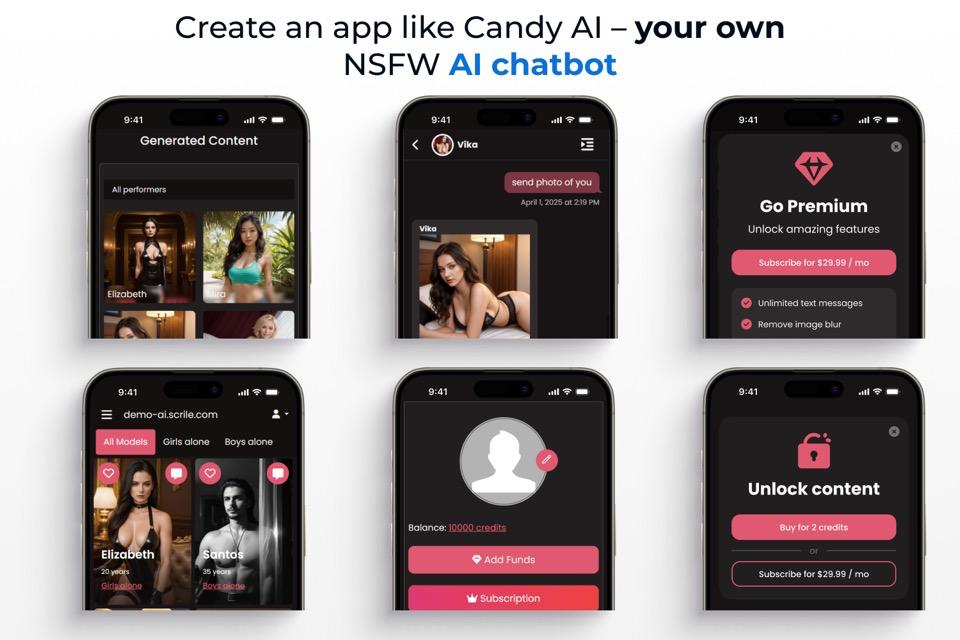
Sometimes, none of the existing tools are enough. You don’t just want quick replies — you want control. You want a chat app that speaks in your voice, reacts on your terms, and earns money while it does. That’s where Scrile AI comes in. It’s not a SaaS tool. It’s a white-label development partner that builds custom AI chat solutions tailored to your brand, your model, and your audience.
Unlike off-the-shelf reply tools, Scrile AI lets you define how your AI respond to text engine works. Want emotional tone shifts? You got it. Want NSFW filters and pay-per-reply logic? Done. You’re not stuck in someone else’s interface — you’re building your own.
Scrile AI is built to support:
- Adult content creators running pay-per-message NSFW chats
- Dating coaches offering roleplay training bots
- OnlyFans-style businesses with custom tip-to-unlock responses
- Therapy and mental health startups building AI journaling companions
- Customer support teams who need branded bots that follow strict tone guidelines
- Creators and influencers monetizing private conversations or content unlocks
You decide how messages are generated, what tone they carry, and what rules they follow. Want to integrate your own payment gateway? Use your own dataset? Add custom onboarding logic or tiered response behavior? Scrile AI doesn’t just allow that — it’s built for it.
Your community, your business, your flow — powered by AI that responds to text, your way. When you’re done testing generic tools, Scrile helps you build the real thing.
Conclusion – Better Replies, Built Smarter
AI tools that reply for you aren’t just novelties anymore — they’re part of how business gets done. From inboxes to DMs, people expect speed, clarity, and a response that sounds like a real human. The right AI respond to text tool can save time, keep your tone consistent, and scale your communication without burning you out.
That’s not just a feeling — it’s backed by adoption numbers. A recent guide on customer service auto-replies cites data from Heymarket showing how widespread automated responses already are in business messaging.
“In fact, 89% of businesses use auto-replies to manage customer expectations, and tailored messages significantly enhance engagement.”
— Sobot, “50 Automatic Reply Customer Service Examples”
When almost nine out of ten businesses rely on auto-replies, the real differentiator isn’t whether you automate — it’s how smart and on-brand those replies feel. That’s where the tools in this list — and especially a custom Scrile AI setup — turn basic automation into a real competitive edge.
But automation only goes so far when you’re boxed into someone else’s design. What happens when you need replies that reflect your brand, your tone, or even your industry rules? That’s where control matters more than convenience.
Scrile AI gives you that control. You don’t get a basic chatbot. You get your own branded reply system — custom logic, tone presets, monetization tools, and even NSFW capability if that’s your space. No limits. No cookie-cutter templates. Just an engine that responds exactly how you want it to.
So if you’re done testing generic tools and ready to build something that’s truly yours, contact the Scrile AI team today and start building your AI respond to text solution from the ground up.
Polina Yan is a Technical Writer and Product Marketing Manager, specializing in helping creators launch personalized content monetization platforms. With over five years of experience writing and promoting content, Polina covers topics such as content monetization, social media strategies, digital marketing, and online business in adult industry. Her work empowers online entrepreneurs and creators to navigate the digital world with confidence and achieve their goals.

by Polina Yan
Imagine transforming your selfie into an engaging, creative digital persona instantly. Thanks to powerful advancements in AI, it’s now simpler than ever to create avatar from photo. AI avatar makers are not just quicker—they’re also affordable and easily customizable. People from all walks of life, including influencers, gamers, and business owners, now use personalized avatars to stand out online. Instead of settling for ordinary profile images, individuals can showcase their creativity by using digital representations. This shift highlights how technology helps users express identity and enhance branding.
Ready to explore the best solutions to effortlessly create an AI avatar? In this article, we’ll guide you through the top five AI-powered tools available in 2026. From free AI avatar makers ideal for beginners, to customized solutions perfect for creators, we’ve covered all you need to know. Let’s dive in and discover how you can turn simple selfies into stunning, professional-quality avatars today.
What is an AI Avatar Maker?
An AI avatar maker is software that transforms ordinary photos into creative and personalized digital avatars using artificial intelligence. These smart tools analyze uploaded images, identifying facial details and expressions with machine learning algorithms and neural networks. After analyzing the original photo, AI then recreates the image as an entirely new avatar, offering various visual styles. Users can effortlessly create AI avatar from photo with realistic, cartoonish, or artistic appearances.
Regular users often use these avatars for social media profiles, gaming accounts, and unique personal branding. Businesses find value by creating a custom AI avatar to represent their brands, enhance marketing, or add personalized interaction on websites. AI avatar makers simplify complex digital design processes, providing high-quality avatars without professional graphic skills. This technology makes creative avatar generation accessible to anyone, from individuals to businesses, regardless of their budget or technical background. It’s an engaging, practical tool for building a standout online identity.
🔎 Best Tools to Create Avatar from Photo in 2026
| Tool | Strengths | Limitations | Best For |
|---|
| Lensa AI | Realistic, polished portraits; viral on socials | Mostly style packs, limited customization | Influencers & social media users |
| Fotor | Free, beginner-friendly, quick results | Basic output, fewer pro features | Bloggers & small businesses |
| StarryAI | Artistic & abstract styles; creative variety | Not suited for realistic avatars | Artists & digital creators |
| Picsart | Avatars + strong editing tools, background tweaks | Subscription needed for full features | Marketers & content campaigns |
| ArtGuru | Stylish options (sketch, watercolor, portraits) | Focused on aesthetics, less pro/business | Creators & hobbyists |
| Scrile AI | Fully custom avatar software, monetization, brand control | Requires tailored setup, not free | Businesses, influencers, niche platforms |
Benefits of Using an AI Avatar Creator

AI avatar makers offer great branding opportunities with the ability to create attractive, memorable online personas. Businesses and users can differentiate themselves in overcrowded platforms with ease through unique avatars. Users can avoid incurring significant design costs through the use of graphic designers, as users can easily create professional-level avatars in no time themselves. AI avatar makers also offer several different creative directions—realistic, cartoon-like, artistic, or abstract.
For instance, influencers frequently adopt custom AI avatars to enhance their personal brands and boost engagement. An influencer who previously struggled with visibility online could instantly improve follower interaction by switching to distinctive, visually appealing avatars. Within days, follower engagement significantly increased, demonstrating the real-world impact of visually appealing avatars.
Moreover, such tools are not used for professional purposes alone. Free AI avatar makers benefit non-professionals in seeking social media or gaming accounts, quickly creating their customized avatars. By using easy interfaces, AI avatar makers simplify design for everyone to enhance their online identity.
Top 5 Tools to Create Avatar from Photo in 2026
Following are five top tools for designing personalized avatars in 2026. Ranging from realistic to stylized, these easy-to-use tools provide the solution for personal branding, social media, or business communication. Learn the features, advantages, and how each tool can simplify the process to create avatar from photo to enhance your online presence and convey your message to people effectively.
Lensa AI
Lensa AI became popular overnight with its realistic and beautiful avatars. Lensa is for social media users and turns plain selfies into classy avatars in just a few seconds. Lensa uses powerful neural networks to capture the look and demeanor of your original image. Influencer accounts, for one, saw over 35% engagement with followers when profiles were updated with Lensa avatars.
Fotor Avatar Maker
Fotor Avatar Maker is an excellent free AI avatar maker, perfect for newbies. The website boasts easy-to-use features, which turn photographs into personalized avatars in a matter of seconds, no design skills required. A selection of various looks, such as cartoon-like, realistic, and artwork styles, is provided. The ease of Fotor made it the go-to tool for bloggers, social media users, and small business owners requiring beautiful branding with or without professional designers.
StarryAI
StarryAI is the perfect option for creators seeking something distinctive. It is known for its extensive range of artwork, creating avatars ranging from abstract painting to highly intricate digital artwork. The user just uploads a photograph, selects the type of artwork desired, and leaves the rest to StarryAI. StarryAI avatars are typically used by artists and digital artists for fan interactions, creating distinctive visual identities, or enhancing portfolios. It is great at creating a powerful look for competitive spaces such as Instagram and TikTok.
Picsart
Picsart combines AI precision with powerful editing features to allow users to create avatar AI from photo in various design concepts with ease. It is both for professionals and hobbyists, and it provides avatars for social media, business branding, or web campaigns. The user can quickly design avatars, edit details, incorporate backgrounds, and customize visual elements. Avatars created by Picsart are used by marketers to fine-tune images in campaigns, which enhances click-through.
ArtGuru
ArtGuru can professionally convert ordinary selfies into unique digital artwork with the simplest efforts. ArtGuru is a beloved choice among artists and influencers and offers fashionable styles including watercolor, cartoon, realistic portrait, and hand-drawn sketch. Its user-friendly interface allows for rapid production of avatars, which can be experimented with speedily until the desired look is obtained. Artists and creators use ArtGuru avatars extensively on social media websites like Instagram or TikTok, which tends to increase the engagement of viewers to a significant extent. The website offers different kinds of avatars suitable for different online groups.
Why Choose Scrile AI for Custom Avatar Generation
Scrile AI isn’t just another generic free AI avatar maker. Instead, it’s a specialized software developement service creating custom solutions for avatar generation. This flexibility makes Scrile AI perfect for businesses, influencers, and digital creators aiming to create avatar from photo tailored precisely to their audience.
The main strength of Scrile AI is its adaptability. Influencers looking to boost audience interaction can effortlessly create an AI avatar tailored specifically to their image. Businesses can build branded avatar tools to attract customers and strengthen loyalty. Even niche markets like adult websites or specialized creators can leverage Scrile’s custom technology to drive engagement.
For instance, imagine a content creator who used Scrile’s tools to design avatars from fan-submitted selfies. This unique feature significantly increased fan interaction, growing subscriptions and revenue by over 40%. With Scrile’s intuitive solutions, creators don’t need technical skills to deliver these experiences effectively.
Scrile AI stands apart through its flexibility, customization, and ease of integration. Users can quickly launch their avatar creation solutions without extensive technical expertise. If you’re exploring how to create an AI avatar, Scrile AI offers the perfect solution—simple, personalized, and designed precisely for your business needs.
Conclusion
AI-based avatar creation turns ordinary images into interactive, customized digital avatars while Scrile AI excels in offering end-to-end personalized services for the easy generation of avatar from photo. Make your online existence brighter with Scrile AI technology by designing innovative, customized avatars exclusively for your use.
Polina Yan is a Technical Writer and Product Marketing Manager, specializing in helping creators launch personalized content monetization platforms. With over five years of experience writing and promoting content, Polina covers topics such as content monetization, social media strategies, digital marketing, and online business in adult industry. Her work empowers online entrepreneurs and creators to navigate the digital world with confidence and achieve their goals.

by Polina Yan
Ever stared blankly at your phone, struggling to craft the perfect reply to an awkward message? You’re definitely not alone. As messaging apps become our primary form of daily communication, figuring out the right words is more important than ever. Fortunately, an innovative technology has emerged to simplify this process: the AI text message generator.
AI-driven messaging is quickly gaining popularity due to its ability to automate replies naturally and effectively. Gone are the days when artificial responses felt robotic and disconnected. Today’s tools can read the tone and context of any conversation, generating appropriate, personalized replies instantly. This is a huge leap forward for personal communication, businesses, social media managers, customer service teams, and creators alike.
In 2026, the competition among messaging tools is fierce, making it challenging to find the best AI text message generator for your needs. To help you navigate this crowded market, we’ve compiled a comprehensive guide highlighting the top ten AI tools currently dominating the industry. Whether you need fast replies, personalized engagement, or professional communication, there’s an AI solution ready to transform your messaging strategy. Let’s explore the best options available and discover how these intelligent tools can streamline your everyday interactions.
📊 Table: 10 Best AI Text Message Generators in 2026
| Tool | Best For | Key Benefits | Limitations |
|---|
| ChatGPT (OpenAI) | General use, customer support | Natural, context-aware replies, versatile | Subscription required for advanced features |
| Jasper AI | Marketing & branding | Consistent brand voice, templates | Less suited for casual messaging |
| Writesonic | Social media, quick replies | Fast, creative, beginner-friendly | Limited depth for professional use |
| Reply.io | Sales & outreach | Personalized engagement, CRM integration | Focused mainly on sales messaging |
| Simplified AI | Small businesses | Very easy to use, good for routine tasks | Basic features compared to larger tools |
| Claude AI | Customer service | Highly natural conversations, nuanced replies | Resource-heavy, higher cost |
| Copy.ai | Email & support | Context-driven, fast response creation | Best for short formats |
| Rytr | Small/local businesses | Affordable, flexible, intuitive | Less robust than enterprise tools |
| Motion AI | Productivity & team workflows | Task integration, scheduling, Slack/Google sync | More about productivity than messaging style |
| GrammarlyGO | Professionals | Polished, grammar-perfect outputs | Focus on correctness over creativity |
| Scrile AI (Custom-Built) | Businesses & creators needing full control | Brand-aligned, monetization-ready, scalable, secure | Requires custom setup (but long-term ownership) |
What is an AI Text Message Generator?
An AI text message generator is software that automatically creates relevant, natural-sounding responses to incoming messages. Smart software utilizes artificial intelligence to read text inputs in context, tone, and intent before generating a response. Machine learning and natural language processing (NLP) drive them, getting better with each use by a user to refine the responses.
AI text message generators aren’t just a fun shortcut for awkward replies. They’re becoming a serious part of customer engagement stacks, helping brands respond faster and with more context across chat, SMS, and social channels. Twilio even describes this shift as part of a broader “age of individualization,” where every interaction can be tailored to one person instead of a generic audience.
“Trend 1: Using AI can greatly improve customer engagement.”
— Twilio, 2024 State of Customer Engagement Report
For anyone choosing an AI text message generator, that’s the key takeaway: you’re not just buying speed, you’re buying better engagement. Tools that understand context and integrate with your communication channels will help you turn automated replies into real, measurable relationship-building.
AI text generators aren’t just for casual messaging—they cover emails, chats, customer support, and even social media interactions. Businesses use them to streamline support, ensuring faster, more consistent replies to customers. Creators and influencers leverage these tools to automate interactions, boosting follower engagement without sacrificing authenticity. Individuals benefit by quickly crafting responses, reducing the mental load of daily communication.
For example, an AI-powered generator can manage incoming customer questions, producing standard and professional answers immediately. Similarly, it helps content creators deal with dozens of fans’ comments every day, interacting with their audience and keeping them happy. With advanced tools that are available today, messages generated using AI now sound natural rather than generic or robotic.
These generators are not limited to plain text messaging, either—they can be used just as effectively for emails and internet chat services. The technology flows seamlessly across digital communication platforms, significantly improving personal and professional communication.
Essential Features When Choosing an AI Text Message Generator
Selecting the ideal AI text message generator requires considering several crucial factors. The right choice is more than just generating messages—it makes interactions contextually accurate, secure, and user-friendly.
Response Quality and Accuracy
The AI needs to recognize context, tone, and intent and provide responses that are human-sounding and customized. The optimal tools employ advanced machine learning so responses sound like they were written by humans and never are canned or mechanical. An ideal message AI generator must be able to deal with varying conversations ranging from friendly discussions to formal emails.
That focus on tone and accuracy isn’t just a perfectionist detail—it’s the foundation of modern, AI-driven communication. In marketing and customer messaging, global consultancies now treat generative AI as the engine behind hyperpersonalization at scale, not just a way to save a few minutes on copy.
“Generative AI is poised to be a catalyst for a new age of marketing capabilities.”
— McKinsey, “How generative AI can boost consumer marketing”
When you pick an AI text message generator, you’re effectively choosing the quality level of that “new age.” Systems that really understand context, segment users, and adjust language for each recipient will feel like a natural extension of your brand—while weaker tools will still sound like canned bots.
Ease of Use and Simplicity
Not all people are technology oriented, so the interface has to be simple and straightforward. The users must not be struggling with complicated settings or instructions. Ideally, the software simplifies the entire process, just indicating how to respond to a text generator with minimal effort.
Integration Capabilities
A strong text message AI generator is completely compatible with your existing platforms. Whether you’re handling social media, customer support, or company communication, compatibility with popular messaging and email systems is essential. Smooth integration ensures workflow efficiency and productivity.
Privacy and Security
Security first, especially when it involves personal conversations or sensitive data. Top-tier solutions offer safe encryption and open privacy policies to enable users to employ AI generated messages safely without any concerns for privacy.
Security and encryption are only one side of the trust equation. The other side is how people perceive AI-written messages. Research from Harvard Business School shows that even when chatbots write messages that sound convincingly human, employees may still judge those communications as less credible once they know AI is involved.
“A chatbot might be able to write emails that sound human, but can the technology respond to staff questions just like the boss would?”
— Ben Rand, summarizing research by Prithwiraj Choudhury, Harvard Business School Working Knowledge
For your AI text message strategy, that means safety and transparency should go hand in hand. The best generators don’t just produce fluent text—they help you design flows, disclosures, and handoffs to humans so that automated messages remain both secure and genuinely trustworthy.
Quick Checklist for Choosing an AI Generator Message:
- Contextual accuracy and human-like replies
- User-friendly interface with clear instructions
- Compatible integration with existing tools
- Strong privacy and data security
- Clear tutorials showing how to respond to a text generator
Considering these essential features ensures you’ll find the best solution to simplify and enhance your AI text messaging experience.
10 Best AI Text Message Generators in 2026
Here is my Top 10 of AI Messages Generators for your consideration:
ChatGPT by OpenAI

ChatGPT is a versatile AI text message generator renowned for natural and accurate conversational abilities. It easily creates personalized replies, understanding context and tone accurately. Businesses often use it to automate customer support messages, improving efficiency and client satisfaction. For example, online communities use ChatGPT to craft engaging replies instantly, keeping conversations lively without manual effort. Additionally, content creators benefit by quickly generating ideas and responses, streamlining their workflow significantly.
Key Benefits:
- Highly accurate contextual responses
- Ideal for engaging conversations
- Versatile in content creation and support messaging
Jasper AI
Jasper AI is optimal for creating professional-quality messages with consistent branding, perfect for promotional and marketing messages. It optimizes much time spent on producing personalized messages, enhancing marketing efficacy. Businesses widely utilize Jasper for automated email responses, blog posts, and customized messaging. A recent case illustrates Jasper increasing customer email interaction by approximately 40% in an online business, proving its efficacy in the workplace. Individuals interested in how to respond to a text generator will discover Jasper offering simple-to-use templates for easy implementation.
Key Benefits:
- Professional, brand-consistent messages
- Easy-to-use templates for rapid messaging
- Boosts engagement in marketing scenarios
Writesonic
Writesonic provides fast, creative, and concise messaging suitable for social media and quick interactions. Its user-friendly interface helps beginners quickly master AI messaging, creating engaging replies effortlessly. Individuals appreciate its speed and ease of use, crafting short social posts or responding quickly to community messages. A social media administrator, for example, can create numerous creative responses daily, increasing audience interactions by a significant amount. Writesonic integrates seamlessly into current tools, becoming a go-to message response generator for busy creators.
Key Benefits:
- Fast, creative message generation
- User-friendly for beginners
- Integrates smoothly with social media platforms
Reply.io
Reply.io is a powerful solution for sales and marketing teams. It stands out by generating highly targeted, personalized messages to engage potential customers effectively. The platform helps businesses respond to customer queries in a timely manner and also boost sales conversion rates. A sales team achieved a 45% client response when using Reply.io due to customized, targeted AI-generated messages. This AI message text generator integrates seamlessly with CRM and email systems, boosting business productivity.
Key Benefits:
- Strong personalization for sales messages
- Seamless integration with CRM systems
- Increased customer response rates
Simplified AI
Simplified AI is perfect for new users of AI text messaging, offering simplicity and ease without sacrificing quality. It’s especially perfect for small business owners or single operators who prefer straightforward tools. Users can quickly craft clean, concise messages ideal for customer service or general use. For example, a local business used Simplified AI to handle routine customer inquiries, saving a lot of response time. Simplified’s intuitive interface simplifies the process of people knowing how to respond to a text generator, thus it’s easy to embrace AI.
Key Benefits:
- Extremely user-friendly and beginner-focused
- Ideal for routine business communications
- Effective for quickly automating repetitive tasks
Claude AI by Anthropic
Claude AI is renowned for having very human-like conversation messages. Unlike the typical AI-generated messages, Claude generates responses that not only appear but actually are natural and subtle. Businesses use Claude routinely in customer service so that clients have meaningful interactions rather than generic responses. For instance, an online fashion store uses Claude AI to handle customer inquiries effortlessly, greatly improving user satisfaction with engaging, personalized conversations.
Key Benefits:
- Exceptionally realistic conversational style
- Ideal for customer service interactions
- Generates personalized, nuanced replies
Copy.ai
Copy.ai is streamlined communication built for customer support and marketing use cases. This AI message generator excels at creating brief, context-driven responses for text messages and emails. A tech support business might leverage Copy.ai to automate replies, speeding up communication without a loss of quality or personalization. It’s ideal for businesses that need precise messaging in a timely fashion.
Key Benefits:
- Ideal for email and text-message communication
- Tailored messages for marketing and customer support
- Speeds up response time significantly
Rytr
Rytr is a versatile AI-powered text message software perfect for small businesses looking to automate customer interactions. Easy and affordable, Rytr seamlessly adapts to various messaging requirements, including promotional messages or social media replies. For example, a small local café used Rytr to manage customer inquiries and promotional messages, and their community engagement skyrocketed tremendously.
Key Benefits:
- Flexible and adaptable for multiple messaging needs
- Excellent for small and local businesses
- Affordable and intuitive platform
Motion AI
Motion AI is a productivity-driven messaging solution designed to streamline and manage communication efficiently. It is perfect for businesses with several messaging tasks, which streamlines internal communications and task assignment. Businesses often utilize Motion AI to remove internal email noise, automate standard responses, and manage complex scheduling tasks effectively. Teams love how it integrates easily with productivity tools like Slack and Google Workspace, making daily work easier.
Key Benefits:
- Strong focus on productivity and task management
- Excellent integration with popular apps
- Simplifies internal business communication
GrammarlyGO
GrammarlyGO specializes in generating polished, grammatically accurate text messages ideal for professional contexts. Businesses and professionals trust GrammarlyGO for crafting error-free emails, messages, and professional communications instantly. It’s particularly valuable for industries that prioritize clarity, professionalism, and grammatical precision. Professionals frequently rely on GrammarlyGO to create emails and texts, ensuring every message reflects professionalism and clarity.
Key Benefits:
- Grammatically polished messaging
- Perfect for professional and business communications
- Enhances clarity, credibility, and professionalism
Why Scrile AI is the Best for Developing Your Custom AI Text Message Generator
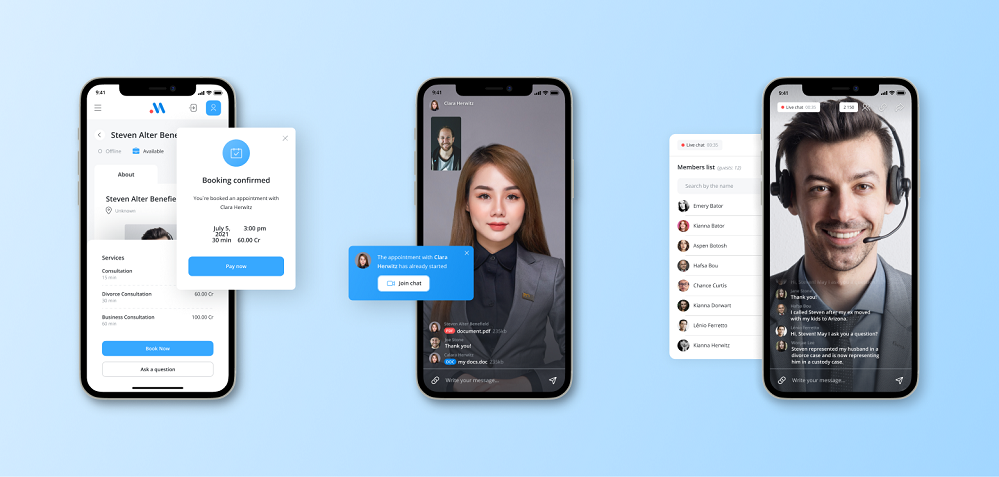
Scrile AI isn’t your average AI messaging tool—it’s a specialized software development company. Instead of providing standard off-the-shelf products, Scrile designs fully personalized AI-generated message solutions. Businesses don’t have to adjust their strategy to fit generic tools. Scrile’s custom approach ensures every message aligns perfectly with brand identity, tone, and target audience.
Ultimate Flexibility Across Industries
Flexibility is what sets Scrile apart. Its tailored solutions find their place in diverse industries, from content creators and influencers to social networks and dating sites. Businesses use Scrile AI for customer support, marketing automation, or online community management with ease. Whether automating casual chat or formal email, Scrile adapts to the style of communication required.
Complete Customization and Ease of Use
Scrile places customization firmly in the hands of users, even demonstrating how to properly respond to a text generator. Tone of message, style, and personality of their AI-powered conversations are in the hands of companies. What this translates to is every message sounds real, not robotic. The interface is easy to use, making integration straightforward without technical expertise or large-scale resources.
Influencer Success Story: Personalized Engagement
An influencer used Scrile’s proprietary messaging technology to create personalized responses for fan interaction. Scrile AI worked meticulously to learn the tone of the influencer and craft responses identical to those penned manually. The result was far more active audience interaction, increased loyal followers, and increased engagement on their site. The personalized approach enabled authentic interactions without losing any efficiency or quality.
Robust Privacy and Security
Scrile AI takes privacy and data security seriously. The company ensures all conversations and private data are kept private and secure, providing a peace of mind to users. Businesses from sensitive industries, including adult or dating websites, confidently use Scrile technology, depending on its cutting-edge security features to protect user information every step along the way.
Continuous Improvement Through Adaptability
Unlike standard messaging tools, Scrile’s custom solutions evolve dynamically alongside your business. Every interaction helps refine the AI’s responses, steadily increasing their accuracy and relevance. Over time, this ensures that your AI-generated messages consistently improve, always meeting audience expectations and business goals effectively.
Scrile AI provides complete, end-to-end support, guiding clients seamlessly from concept to launch at every step. This dedicated approach ensures your custom AI solution aligns perfectly with your brand’s unique voice and goals, simplifying how you interact through technology.
Conclusion
AI for text messages has transformed communication, productivity, relationships, and engagement with audiences. Personal conversations, customer support interactions, and professional communication are all enhanced by efficient, contextually tuned AI-generated messages. The right AI text message generator will significantly automate your routine, allowing more natural, customized interaction without wasted time.
Scrile AI is the ideal partner for users who need tailor-made messaging solutions compared to mass-market software. Its technology delivers customization, adaptability, and unmatched flexibility across diverse industries and communication styles. Whether you’re an influencer, a business, or an online platform, Scrile AI provides comprehensive support—from initial concept through full integration.
If you’re looking to revolutionize your messaging strategy and create genuinely personalized conversations, explore Scrile AI’s custom development solutions today. Discover how tailored AI messaging technology can enhance your connections and interactions, making every message impactful and meaningful.
Polina Yan is a Technical Writer and Product Marketing Manager, specializing in helping creators launch personalized content monetization platforms. With over five years of experience writing and promoting content, Polina covers topics such as content monetization, social media strategies, digital marketing, and online business in adult industry. Her work empowers online entrepreneurs and creators to navigate the digital world with confidence and achieve their goals.