
Quick answer
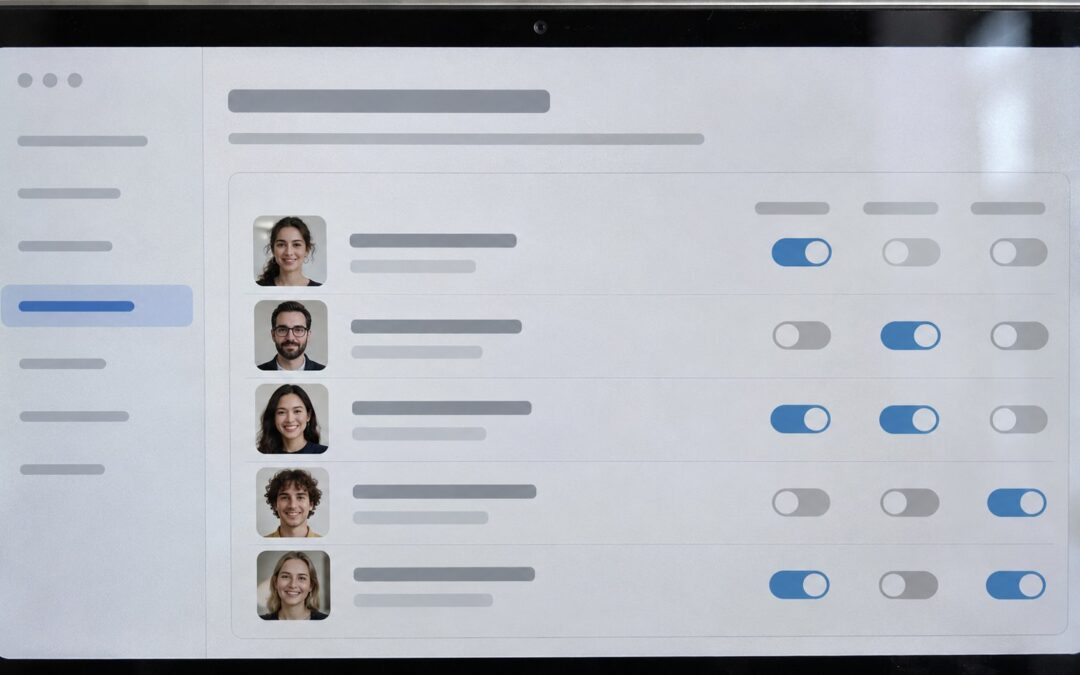
Creator platform team account management should give each worker a named identity and explicit permissions for assigned creators. Keep publishing subject to creator approval, label team replies, and exclude payout destination and ownership changes from ordinary delegation. Test both permitted and forbidden actions, including removal from an open session. If a boundary cannot be enforced, keep that function creator-operated.
Choose creator platform team account management by task
An assistant needs to prepare posts and answer routine fan questions. The creator’s login gets both jobs moving, but also opens private conversations and account controls that neither assignment requires. Give the assistant a named identity with separate grants for each creator and task; keep affected work creator-operated if the platform cannot enforce those limits.
Team account management here means delegated creator work; platform administrators use a separate route. A login identifies the worker. Authorization determines their permitted work. Shared credentials blur attribution and selective removal. Separate logins improve attribution, but broad account access still bundles unrelated powers.
Allow work only when the person is active, their creator assignment is active, the action is permitted, the requested material belongs to that creator, and any required approval remains valid. Deny everything else. Apply that rule to files, exports and queued work as well as visible pages. A role names possible tasks; it does not assign every creator to the person holding it.
Begin with draft preparation; add messaging only on a separate creator request. If reporting requires an owner login, the creator supplies a minimal report until a restricted view exists. Fan content access rules govern viewing paid content, not staff authority.

Turn delegated work into a permission matrix
Use the matrix below as a proposed starting policy. Each assignment names the individual, creator, task, necessary data and approving creator. Deny omitted permissions. Give exceptions an expiry and an approval owner; an agency’s staffing request alone cannot authorize access to a creator.
| Role or task | Assigned creator and necessary data | Permitted actions | Approval or exception gate | Fan-facing attribution | Forbidden actions |
|---|---|---|---|---|---|
| Content assistant | Named creator; assets and drafts | Upload, edit drafts, propose price and schedule | Creator approves exact release terms; routine exceptions expire | Published creator content; retain staff identity internally | Unapproved release, published-content deletion, ownership changes |
| Messaging assistant | Named creator; assigned conversations only | Read assigned threads; send approved routine replies | Creator approves scope and offer list; escalate personal commitments | Visible Team label; actual actor retained internally | Other inboxes, unapproved offers, payout changes |
| Analyst | Named creator; aggregate performance | View approved aggregate reports | Creator approves fields; fan-level exceptions expire | None | Inbox, payment credentials, fan-level export by default |
| Bookkeeper | Named creator; period, amounts, fees, payout status | View statements and reconcile earnings | Creator approves records; no money-moving grant implied | None | Inbox, payout approval or destination changes, credentials |
| Agency coordinator | Named creators; queue and assignment information | Coordinate queues; request staff assignments | Creator approves each staff grant and expiring exception | No authority to speak as creator | Automatic client access, self-granted permissions |
| Creator owner | Own creator profile and necessary records | Approve grants, releases, exceptions; request own payout changes | Fresh owner checks for sensitive changes; exceptions expire | Creator label for personally sent messages | Other creators without a separate grant |
| Platform finance/support | Case-specific creator and necessary records | Separately authorized finance or support duties | Recorded reason and actor; time-limited exception with independent review | Support identity when contacting fans | Routine agency work or unrestricted impersonation |
A bookkeeper can reconcile a period using creator name, amounts, fees and payout status without reading fan conversations. An analyst can use aggregate sales without identifiable fan lists. Prove the restricted view supports the actual task. Creator payout reconciliation covers the adjacent accounting checks after statement access is settled.
Agency membership organizes workers; it should not grant every client’s records. Display the active creator in messages, drafts, exports and confirmations. Profile switching is navigation, not authority. A worker assigned to Ben’s conversations must be denied Asha’s inbox through navigation and direct requests, including attachments, search, notifications and exports.
Fanvue’s documented default gives team members access to all creators under their manager; narrower boundaries require separate manager accounts. Its team role covers chatting and content review, not publishing. Those limits belong to Fanvue. Evaluate whether your actual assignments fit a product without shared credentials.
For delegated messaging, adopt a notice before purchase and distinguish each reply’s sender. An adaptable notice is: “Authorized team members may read and reply in this inbox. Messages marked ‘Team’ are sent by the creator’s team. A personal reply from the creator is not guaranteed unless the offer expressly includes it.” Show a visible Team label on staff replies and a creator label on personally sent replies. Retain the actual worker’s identity internally without exposing their private account details.
Keep routine replies within the creator-approved content and price list. Escalate personal commitments, exceptions and new offers. Staff answer sender questions honestly. An assistant response cannot fulfill a purchased personal creator reply; route it to the creator or support for the stated remedy. This proposed experience policy does not establish legal compliance.
Statement viewing, payout requests, payout approval and destination changes are separate permissions. Exclude destination changes, ownership credentials and closure from ordinary delegation. An agency’s claim that the creator is unavailable does not authorize redirection.
For an owner-requested destination change, require fresh owner authentication, masked old and proposed details, and notification through an existing trusted channel. Reject agency redirection through the delegate route. Use separately reviewed owner recovery, holding the change and affected payout. Read-only reconciliation can continue.

Make approval fit the creator’s actual workload
Use a draft, submission, creator approval and release sequence. Approval covers the exact content, assets, audience, price and schedule. A material change requires fresh approval. A rejection returns the draft with a reason; a missed deadline leaves it unpublished and notifies the creator.
In this illustrative case, Asha and Ben each submit six posts weekly, each taking five minutes to review. Each creator reserves three ten-minute windows. Maya drafts for Asha and answers Ben’s assigned routine conversations; the bookkeeper receives statements. A broad agency role looks convenient until the operator notices it also exposes Asha’s inbox, which Maya does not need.
Six posts at five minutes require 30 review minutes per creator, matching three ten-minute windows. Asha increases to ten posts; other assumptions stay fixed. Her review requires 50 minutes, leaving a 20-minute gap. She adds two ten-minute windows. Reducing output would also work. Giving Maya unrestricted publication would conceal the missing review capacity.
Asha approves Maya’s submitted content, assets, audience, price and schedule. Maya then changes the price: the revised post waits for fresh approval. Enforce the same boundary for direct publication outside the dashboard and for queued release. An approval click must authorize the version actually published.
A creator may explicitly authorize a narrow class of routine releases, with approval retained outside it. Missed reviews never expand permissions. If the distinction cannot be enforced, leave publication with the creator. The creator content calendar workflow helps resolve late submissions and review timing.
The intended acceptance result is completed drafts and routine replies, denied unrelated inbox and payout requests, and reconciliation from restricted statements. These illustrate the proposed policy, not reported product tests.

Pilot the boundaries, review access, and prove removal
Release each delegated function only after assigned work succeeds, forbidden actions fail and removal stops existing access. Pilot with a creator before expanding agency workflows. A changed permission screen is evidence of an administrative action; the next protected request shows whether the boundary actually holds.
- Record the matrix and creator approvals. Name the person, creator, minimum data, permitted work, approval owner and assignment end. Make exceptions explicit and expiring.
- Implement consistent permission checks, publishing approval, sender attribution and access removal. Use synthetic creator, fan, content and financial records before exposing real private material.
- Pair permitted and forbidden tasks for every role. Check the interface, direct requests, attachments, exports and queued work, rather than accepting hidden menu items as sufficient.
- Pilot the approved functions with a creator. Inspect review backlog and denied access attempts with the creator, resolve unexpected behavior, and expand only after the owner accepts the outcomes.
Maya saves Asha’s draft but cannot open Asha’s inbox. She answers Ben’s assigned thread but cannot retrieve an unassigned creator’s attachment. A revised post cannot use old approval; the bookkeeper cannot update a payout destination. Cross-creator exposure, approval bypass, payout privilege leaks or surviving access block release of that function. Keep affected work creator-operated.
Use a proposed monthly review, plus immediate review after assignment changes, departure or suspicious activity. Identify workers and creator assignments; inspect scope, expiry, last activity and active credentials or integrations. The creator confirms continuing need. The administrator retains, reduces or revokes access and tests the result. A continuing agency contract does not justify every worker’s access.
Disable affected grants and invalidate existing access server-side. Revoke affected integration credentials, close connections and remove pending invitations. Pause queued messages, posts and exports until the creator reviews and takes ownership. Preserve attribution history. Deleting a browser cookie or waiting for a tab to close does not prove removal.
Ben ends Maya’s assignment during an open conversation with a queued reply. After removal, her next protected request for Ben must fail and her connection must stop receiving his messages. The reply stays paused until Ben reviews and takes ownership. Her independent Asha drafting grant continues. A purchased personal reply goes to Ben or support for the stated remedy.
For staff departure or a compromised identity, remove all that person’s access. Test an open session and retained test credentials; record removal and observed denial times. If access persists, suspend affected delegation and block the route pending repair. Downloads cannot be recalled: restrict exports and include return or deletion terms in the working agreement.
The creator offboarding process covers broader departure administration. Use the creator platform security checklist for surrounding controls. Delegation acceptance answers whether assigned work succeeds while withheld powers and records remain inaccessible; it is not a guarantee against every security failure.

Take the delegation requirements to Scrile Connect
Take a completed delegation matrix into the product conversation. Request a demonstration with distinct staff identities and creator profiles, then compare observed behavior with the same acceptance criteria used for a custom implementation. A profile switcher alone cannot establish client isolation.
Demonstrate draft preparation for an assigned creator, denial of an unassigned inbox, a changed approved release and a restricted payout attempt. Remove the assignment while access stays open. These outcomes reveal what fits, needs development or must remain creator-operated.
Request a written assessment separating demonstrated controls from customization, with acceptance outcomes for unresolved boundaries. Agree which functions enter the pilot and which remain creator-operated. General fan content access settings do not prove staff permissions.

Request a demonstration against your matrix
Scrile Connect is hosted white-label software for running a branded creator platform with subscriptions, paid content, messaging and creator payouts. Its Agency offering includes a profile catalog and profile switching. Use the Scrile Connect page’s contact route to send your matrix and request a demonstration with distinct staff identities and two creator profiles. Ask which isolation, approval, attribution, payout restriction and active-access removal controls are native and which require development. Request the written fit assessment before approving the pilot.
Frequently asked questions
Is a separate assistant login enough?
Only if its permissions are narrow enough. A named login identifies the worker; an active creator assignment must also limit the tasks, records and approval requirements.
What should a bookkeeper see?
The relevant creator statements, reporting period, amounts, fees and payout status. Inbox access and permission to request, approve or redirect payouts are separate decisions.
Does joining an agency grant access to every creator?
Under this proposed model, no. Each worker needs creator-approved assignments. Inspect product defaults and test unassigned resources through direct requests as well as navigation.
How should team replies appear to fans?
Disclose team access before paid messaging and mark staff replies with a visible Team label. Keep the actual worker attributable internally and answer sender questions honestly.
Can an assistant fulfill a paid personal creator reply?
An assistant response cannot fulfill an expressly promised personal creator response. Route the request to the creator or support for the platform’s stated remedy.
What happens when a creator misses a publishing review?
The unapproved post remains unpublished and the creator is notified. Add review capacity, reduce output or explicitly approve a bounded routine exception; lateness does not grant permission.
How often should delegated access be reviewed?
A proposed monthly review is a starting point. Review immediately when assignments change, a relationship ends or suspicious activity appears; the creator confirms continuing need.
How can an operator verify immediate removal?
Use an already open session after revocation. Its next protected request must fail, live updates must stop and queued work must pause for creator review. Test affected integrations too.

Builds SaaS platforms for content creators, agencies, and entrepreneurs. Writes about the business mechanics behind creator-economy products and how custom software actually ships.