
Social media app development starts with choosing a clear niche and defining one core user action. From there, you build a focused MVP with built-in monetization like subscriptions or paid content. Typical costs range from $20K to $300K+ depending on complexity. Faster launches use white-label solutions, while custom builds offer more control. The right approach depends on how quickly you want to launch, your budget, and how much flexibility you need long term.
Social media app development today looks very different from what it did even five years ago. It’s no longer about building a generic platform and hoping users show up. The strongest apps are built around one clear behavior and one clear way to make money.
The audience is still massive. Over 5.6 billion people worldwide use social media every month, which means demand is not the problem. What changed is how new apps compete. Smaller, focused products now outperform broad networks in revenue per user because they solve one specific need well.
That shift affects every decision you make, from features to architecture. In this guide, we’ll walk through how to approach social media app development in 2026, including product logic, monetization models, and the real cost behind building something that actually works.
Why Launch a Social Network in 2026

Social media app development still makes sense in 2026, just not in the “let’s build the next Facebook” way. That door is closed. The interesting part is what’s happening around it.
The money is still huge. Social platforms generated roughly $230 billion in revenue in 2024, and that number keeps climbing. What’s changing is where that money flows. A big chunk is shifting away from pure advertising toward subscriptions, paid access, and direct transactions. The creator economy alone is already past $100 billion, and it keeps pulling users into more focused platforms.
Where new apps actually win now:
- Private communities. People are tired of noisy feeds. Smaller spaces feel more useful, and users are more willing to pay to stay in them.
- Creator-led platforms. When someone builds an audience, they want control over how they earn, not just views.
- Transactional apps. Booking, paying, unlocking content — all inside the app, no extra steps.
So the opportunity isn’t scale first. It’s picking one behavior and building a product around it that makes money early.
Types of Social Media Apps That Actually Scale
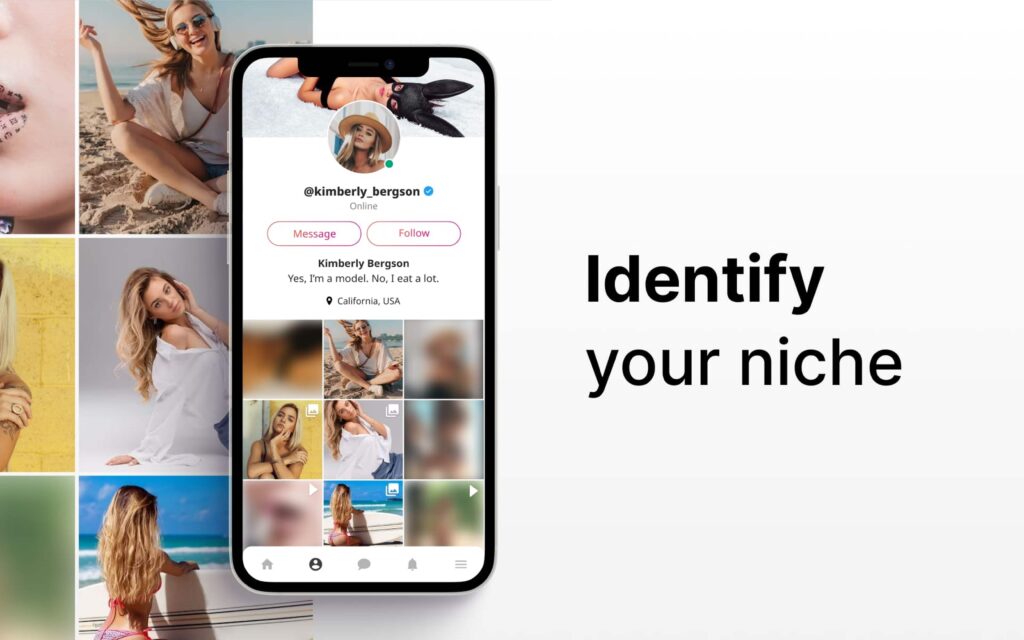
Not all social apps play the same game. Some chase scale, others build tighter systems that earn faster. The difference is in how they’re structured from day one.
Mass-market platforms
These are the classic “everyone is welcome” networks. The logic is simple: keep users scrolling, show ads, grow the audience as wide as possible. Think endless feeds, suggested content, and constant notifications.
The upside is obvious. Huge reach, massive data, and strong ad revenue once scale is there. But getting to that point is brutal. You’re competing with giants, and monetization takes time because ads only work when the audience is already large.
High-efficiency formats
- Creator platforms focus on direct payments. Users subscribe, tip, or unlock content, which turns attention into revenue immediately.
- Community apps prioritize interaction inside smaller groups. Engagement stays high because people actually care about the topic.
- Dating apps are built around repeated actions like matching and messaging, which creates strong engagement loops and high revenue per user.
- Content apps rely on discovery algorithms to keep users watching or scrolling longer.
- Adult social platforms use subscriptions and premium content, often combining several monetization layers at once.
“Small, engaged groups may not make headlines with viral reach, but they consistently outperform larger, disconnected audiences in engagement, conversion, and long-term loyalty.”
— Social Media Enthusiasts, The Rise of Micro-Communities: Why Small Groups Outperform Big Audiences on Social Media
This is where most social media app development projects land today — in formats that convert early, not just grow.
Step 1: Define the Core Action (Not the Audience)

Most founders start with “who is this for.” That sounds logical, but it rarely leads to a strong product. What actually matters is what people do inside the app, over and over again. That repeated action becomes the backbone of everything else.
Look at how different apps are built around one clear behavior. Dating apps revolve around swiping and matching. Creator platforms center on posting content and earning from it. Community apps focus on replying, discussing, and staying in conversations. Content-driven apps rely on scrolling and discovering something new every few seconds.
You need to define three things early. First, the primary action users will take without thinking. Second, how often they repeat it during a session. Third, what they get in return, whether it’s attention, money, or connection.
A common mistake is trying to combine several behaviors at launch. Feed, chat, marketplace, video, everything at once. It spreads attention thin and weakens engagement. Strong apps feel simple because one action drives everything.
Step 2: Competitive Analysis Through Monetization Gaps
Before you start building, spend some time being a slightly obsessive user. Download a few competing apps. Scroll, click, try to pay for something, read the reviews. This is where a lot of social media app development ideas actually come from.
Look at three things:
- how the app makes money
- what people complain about (App Store reviews are gold)
- what feels like it should exist but doesn’t
You’ll notice something pretty fast. Many apps are great at keeping you busy, but awkward when it comes to spending money. Or they monetize well, but the experience feels forced.
The interesting spots are where users are already trying to pay but can’t do it easily. Closed communities without paid access. Creators pushing people to external links. Messy checkout flows. That friction is your entry point.
Social App Models vs Monetization Efficiency
| Model | Example | Revenue Logic | Weak Point |
| Ad-based | scale | low per-user revenue | |
| Subscription | Tinder | recurring income | churn |
| Hybrid | OnlyFans | direct monetization | content dependency |
| Freemium | Discord | retention | weak ARPU |
Step 3: What Features You Actually Need at Launch

It’s tempting to stack features early. Feed, chat, video, marketplace, everything in one place. That’s how projects slow down and lose focus. At launch, you only need what supports one clear interaction and one way to earn.
Interaction layer
- Feed or matching system. Pick one. A content feed works for discovery, while matching fits apps built around connections. Running both at the start splits attention and makes the product feel messy.
- Messaging or comments. Users need a way to respond, but it should match the core action. Messaging fits private interactions, comments fit content-driven flows.
- Notifications should be minimal — just enough to pull users back when something actually matters.
Revenue layer
- Subscriptions. Gives users ongoing access inside the app.
- Tips or microtransactions. Lets users support others directly during interaction.
- Paid content. Controls access to specific posts or messages.
- Wallet and payouts. Handles how money moves between users.
Good social media app development separates engagement from monetization early, but connects them in the same flow. When monetization is delayed, apps grow usage without building revenue.
Step 4: Real Social App Case Studies
Big platforms aren’t useful as direct templates. You’re not building the next TikTok from scratch. What matters is understanding the one mechanic that made each of them work, and applying that idea in a smaller, focused product. That’s where social media app development actually becomes practical.
OnlyFans — Direct Monetization Model
OnlyFans didn’t invent social media. It focused on one thing: turning interaction into income. Subscriptions, tips, and paid content are all built into the core flow. Creators keep around 80%, which keeps them active.
The heavy cost comes from payments and moderation, not features.
What to take from it:
Build monetization into the product from day one, not as an add-on.
Tinder — Interaction as a Product
Tinder reduced everything to one simple action: swipe. That’s it. The entire experience revolves around that loop, and monetization comes from increasing visibility.
The expensive part is real-time matching and scaling user activity.
What to take from it:
One strong interaction can drive the entire product.
TikTok — Distribution First
TikTok works because of how content is delivered, not just what users post. The algorithm keeps users watching longer without effort.
Revenue comes later through ads and creator tools.
What to take from it:
Control how content is discovered, not just how it’s created.
Discord — Retention Over Growth
Discord isn’t built around feeds. It’s built around staying. Private servers keep users engaged over time, not just scrolling.
Monetization is secondary and tied to long-term usage.
What to take from it:
Retention creates more value than constant growth spikes.
Step 5: Monetization Models That Work

Most apps don’t fail because of bad features. They fail because the money logic doesn’t match user behavior. You can have subscriptions, tips, and paid content in place, but if they don’t fit how people use the app, they stay unused. That’s where social media app development often breaks down.
- Subscriptions work when users come back regularly and expect ongoing value. Typical conversion sits around 2–5%, and pricing usually lands between $5 and $20 per month depending on the niche.
- Tips perform better in apps where there’s a strong personal connection. Think creators, experts, or personalities. Without that emotional layer, tips barely move.
- Paid content works when access feels limited. If everything is available for free elsewhere, users won’t pay.
- Premium access fits tools or communities where users get a clear advantage.
Here’s how it plays out:
- 2,000 users
- 4% convert
- $12/month
→ $960/month
→ with tips: ~$1,250
If build cost is $60K, break-even can stretch to ~48 months with slow growth. With scaling, that usually drops to 6–18 months.
Step 6: Technology Stack

The stack itself isn’t the hard part. The decisions behind it are. Most social apps today run on a fairly predictable setup, but what matters is how early you think about scale.
On the backend, Node.js or Python is typically used to handle user data, feeds, and API logic. On the frontend, React for web or Flutter for mobile keeps development flexible. Real-time features like chat or live updates rely on WebSockets, while video-based apps use WebRTC, which adds serious load and complexity.
Infrastructure usually sits on AWS or Google Cloud, but the real question is how you structure it. Poor decisions here lead to slow feeds, broken messaging, or rising server costs.
Scaling isn’t something you fix later. If the architecture isn’t designed for growth from the start, the app will feel it long before it becomes popular.
Step 7: Moderation, Compliance, Risk
The moment your app allows user-generated content, you’re responsible for what happens inside it. That includes spam, abuse, illegal content, and how user data is handled. App stores check this before approval, and regulators look at it after launch.
You’ll need reporting and blocking built into the product from day one, plus a way to review issues quickly. Without that, problems pile up fast as activity grows.
Privacy rules depend on where your users are. In Europe, GDPR requires clear consent and control over personal data. In the US, laws like CCPA and CPRA give users the right to know, delete, and opt out of data collection. If minors can access your app, COPPA applies. Platforms with adult or sensitive content also need age verification systems.
How Much Does Social Media App Development Cost in 2026?
The range looks wide for a reason. Cost depends on how complex the app is and where your team is located.
- MVP: $20K–$80K
- Mid-level app: $80K–$150K
- Full-scale platform: $150K–$300K+
- Dating or video-heavy apps usually add another 20–40% because of real-time systems and moderation
A big part of that difference comes down to hourly rates. In 2025–2026, developers can cost anywhere from $25 to $200+ per hour, depending on region and experience.
- North America: $70–$200/hour
- Western Europe: $60–$150/hour
- Eastern Europe: $25–$80/hour
- Asia: $20–$50/hour
Now the part most people underestimate — time.
A simple MVP usually takes around 400–800 hours to build. A mid-level product can reach 1,000–2,000 hours, and more complex platforms easily go beyond that.
Where the budget goes:
- Backend: $20K–$70K
- Frontend: $15K–$50K
- Real-time features (chat/video): $10K–$80K
- Payments: $5K–$20K
- Moderation systems: $5K–$30K
Choosing the Right Development Approach
At some point, every founder runs into the same problem: the product in their head doesn’t quite match what the tools allow them to build. That gap is where most decisions get made.
No-code can get you through the first version, but it starts to feel tight as soon as users actually do something inside the app. Custom development is the opposite. You can shape everything exactly the way you want, but you’re also responsible for building every piece that makes the platform work.
So most teams land somewhere in between. They don’t want to assemble payments, user systems, and real-time features from scratch, but they also don’t want to give up control over how the product behaves. That’s why working with a social media app development company often means starting from a ready foundation and then bending it around your own idea, instead of adjusting the idea to fit the tool.
What matters here is ownership. Your domain, your payments, your rules. The closer your setup is to that model, the easier it becomes to build something that can grow without being restricted later.
In practice, the choice depends on a few concrete factors. If your product relies on subscriptions, payments, or gated content from day one, you need a setup that supports monetization natively. If your idea requires custom user flows or integrations, flexibility becomes critical. Simpler concepts with minimal monetization can start with lighter tools, but anything beyond that quickly demands a more structured foundation.
Create Your Own Social Media App Using Scrile Connect
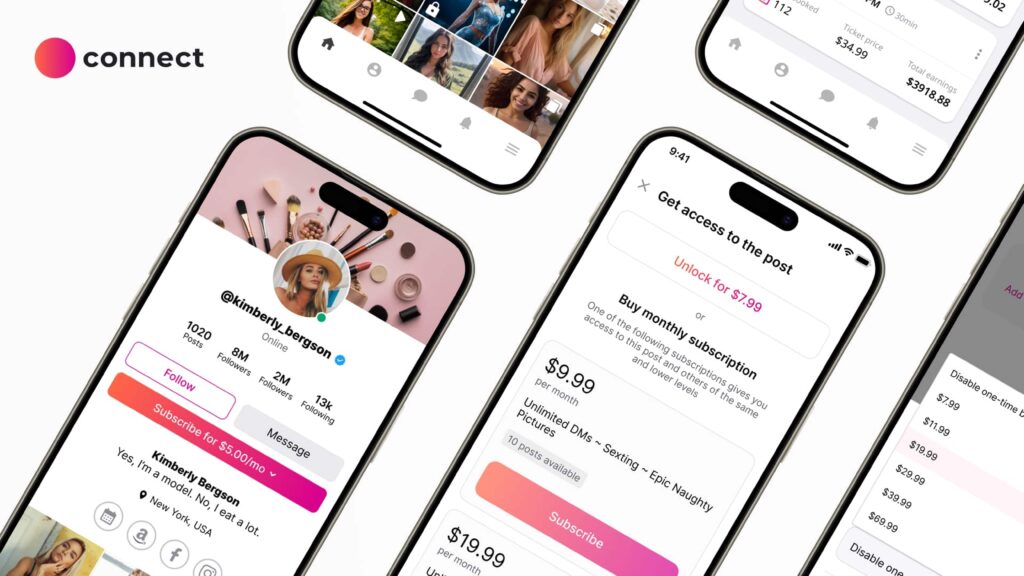
Scrile Connect is not a typical SaaS builder and not a blank custom project either. It’s a white-label foundation designed for launching monetized platforms where you fully control how everything works. This is where social media app development services shift from writing code to shaping a product that already has the core logic in place.
The platform is used to build:
- creator platforms with subscriptions and paid content
- dating apps with private access and monetization
- community platforms with gated content and memberships
What you actually get:
- built-in monetization tools like subscriptions, tips, pay-per-view, and live interactions
- direct payments to your own accounts with no platform cut
- support for multiple payment systems including cards and crypto
- full control over pricing, access rules, and content structure
- real-time features like messaging, live streams, and private sessions
- white-label setup with your domain, branding, and platform identity
It gives you a working product you can adapt, extend, and run as your own business without limitations.
Best Approach by Product Type and Business Goals
| Product Type | Core Action | Monetization Model | Budget Range | Best Approach | Why |
| MVP / idea validation | Simple interaction | None or basic | <$30K | No-code | Fast testing without heavy investment |
| Creator platform / niche social app | Content + interaction | Subscriptions, tips, paid content | $30K–$120K | White-label (Scrile Connect) | Built-in monetization + full control |
| Dating / community app | Matching or discussions | Premium access, subscriptions | $80K–$200K | White-label or hybrid | Real-time + monetization ready |
| Large-scale social platform | Feed / discovery | Ads + ecosystem | $150K+ | Custom development | Full flexibility and scalability |
Conclusion
Strong social media app development comes down to a few decisions made early. Define one clear user behavior, connect it to a working monetization model, and build on an architecture that won’t limit you later. Broad ideas rarely hold. Focused products grow faster and earn earlier.
Pick a niche where users already interact and are willing to pay. Launch with monetization in place, not as a future update. Keep the structure flexible so the product can evolve without breaking.
If you want full control over your platform, branding, and revenue, reach out to the Scrile Connect team and discuss your idea.
How do you validate a social media app idea before development?
Start with a simple prototype or landing page that shows the core interaction and measure user interest. Early validation through real behavior is more reliable than surveys or assumptions.
What is the best way to monetize a social media app from the start?
The most effective approach is to integrate monetization directly into the core user action, such as subscriptions or paid access. Delaying monetization often leads to high usage with no revenue.
How do social media apps handle payments and payouts to users?
Most platforms use integrated payment systems that manage subscriptions, tips, and payouts automatically. The key is controlling transaction flow and minimizing friction between earning and withdrawing money.
What makes users pay inside a social media app?
Users pay when there is clear value tied to access, interaction, or exclusivity. Strong monetization comes from combining emotional engagement with limited or premium content.
How to choose between custom development and ready-made solutions?
The decision depends on how much control you need over monetization, user flows, and integrations. More complex products usually require flexible foundations rather than rigid tools.
What are the biggest mistakes in social media app development?
The most common issues include trying to build too many features at once, delaying monetization, and targeting too broad an audience. Successful apps focus on one core action and scale from there.
How do you scale a social media app after launch?
Scaling starts with improving retention and monetization before adding new features. Growth comes from refining the core loop, not expanding the product too early.
How long does it take to reach break-even for a social media app?
It depends on user growth and monetization efficiency, but many apps reach break-even within 6 to 18 months if revenue is built into the product from the start. Without early monetization, timelines increase significantly.

Polina Yan is a Technical Writer and Product Marketing Manager, specializing in helping creators launch personalized content monetization platforms. With over five years of experience writing and promoting content, Polina covers topics such as content monetization, social media strategies, digital marketing, and online business in adult industry. Her work empowers online entrepreneurs and creators to navigate the digital world with confidence and achieve their goals.