
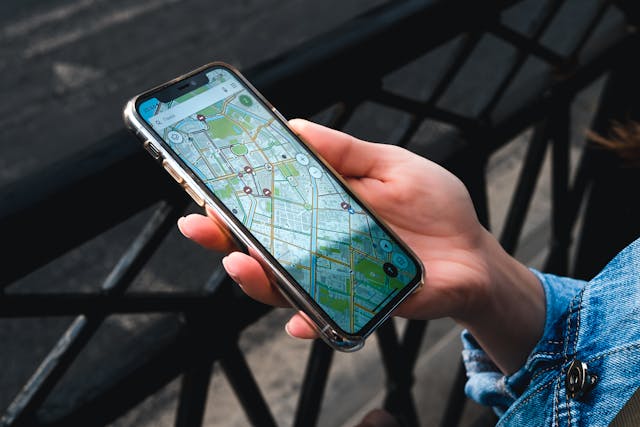
Driver tracking in 2026 is not just “GPS on a map”. The best driver tracking software combines real-time location, dispatch communication, driver performance monitoring (speeding, harsh braking, idling), and drive time tracking for compliance and payroll.
This guide covers what people actually search: driver tracking app vs driver tracking software, the best software for real-time driver tracking, platforms that monitor driver performance, truck driver tracking (HOS/ELD), and delivery tools that can share a live tracking link via text message (SMS).
A driver tracking app is an application for tracking drivers’ locations in real-time through GPS and mobile internet connectivity. Apps allow tracking of route progress, delivery times, and taking most efficient routes for drivers, enabling them to manage and monitor them through one platform. Apart from tracking routes, most tracking software for drivers includes other features such as performance reports, behavior tracking (e.g., idling and excessive acceleration and braking), and communications tools for dispatchers and drivers.
With increased demand for delivery, long haul logistics, and electronic commerce, small and larger companies have embraced driver tracking software in a search for optimized operational effectiveness. In this article, we introduce 10 best tracking software for drivers in 2026, including key value propositions and features for companies to select an app best suited for them. No matter your fleet, a driver tracking app can make a big impact in your practice of managing your business.
What Is a Driver Tracking App?
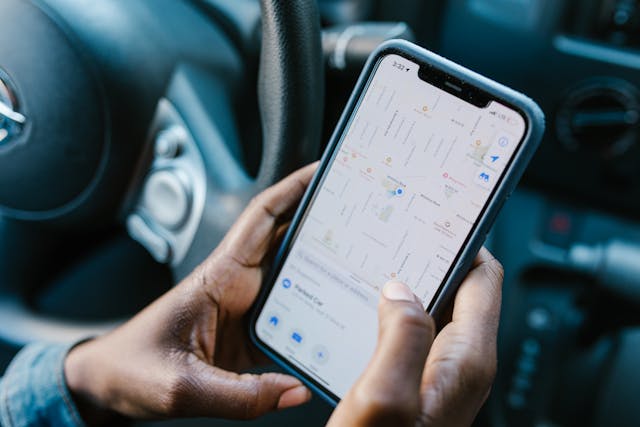
A driver tracking app is a software solution designed to monitor the location and movement of drivers in real-time. By using GPS technology and internet connectivity, these apps provide businesses with live updates on their fleet’s routes and activities. Through a central platform, managers can view driver locations on a map, assess route progress, and make adjustments as needed to optimize operations.
The driver tracking app carries out its function through GPS information captured via drivers’ smartphones or in-car tracking and uploaded to a cloud-managed platform. The platform aggregates information for several drivers, and companies can view an entire fleet in a single view. Real-time warnings inform managers about delays, deviation from routes, and potential security concerns, and allow them to respond in a timely manner.
Application of driver tracking solutions extends beyond tracking location. Apps drive business productivity through route planning, idling, and analysis of drivers’ performance. Apps promote safer driving behavior through tracking such driving habits as excessive acceleration and braking and over-speeding. Communication capabilities become even stronger with additional dispatchers’ tools, allowing them to contact drivers and coordinate operations with ease, resolving concerns in a timely manner.
For industries such as delivery, logistics, and field service, driver tracking software is a useful tool for exercising control over fleet operations and delivering uniform, reliable service.
What “Real-Time Driver Tracking” Means in 2026
“Real-time” is about update frequency and reliability. Some platforms refresh location every few seconds on higher plans, while others update every 30–60 seconds to save costs. For dispatch, that difference is huge: it changes whether you can reroute instantly or only “review what happened”.
When you compare tools, check: live map refresh rate, ETA accuracy, geofences/alerts, and whether the driver app can receive tasks and message dispatch in-app.
Tracking Delivery Driver Locations via Text (SMS Tracking Links)
If your question is “can I track a delivery driver via text?”, the usual pattern is not “texting GPS coordinates”. Instead, the platform sends the customer an SMS with a live tracking link and delivery updates (ETA, status, proof of delivery).
Delivery-first platforms typically support:
– automated SMS notifications with tracking links
– a customer tracking page showing driver location in real time
– optional customer-to-driver communication (SMS/call), depending on your policy
Overview of the 10 Best Driver Tracking Apps in 2026
Here are 10 top driver tracking apps that are set to lead the fleet management industry in 2026, offering advanced features to enhance real-time tracking, driver performance, and overall operational efficiency.
STL Traffic by Scrile

STL Traffic is designed specifically for large-scale logistics operations, enabling businesses to track truck drivers and couriers across vast regions. The app provides real-time GPS updates, allowing administrators to monitor every vehicle’s location on a live map. Additionally, it offers robust communication tools and administrative dashboards, helping fleet managers optimize routes and coordinate with drivers. The platform’s scalability and customization options make it ideal for businesses that require tailored tracking solutions.
Best for: Large fleets and logistics companies.
Timeero
Timeero is a user-friendly driver tracking app that combines geofencing with route optimization to track delivery drivers efficiently. It also includes features for mileage tracking and payroll integration, helping businesses automate key operational tasks. Timeero is particularly well-suited for small and medium-sized businesses that need to monitor driver locations and ensure timely deliveries without investing in complex enterprise solutions.
Best for: Small to mid-sized businesses with delivery operations.
Geotab Drive
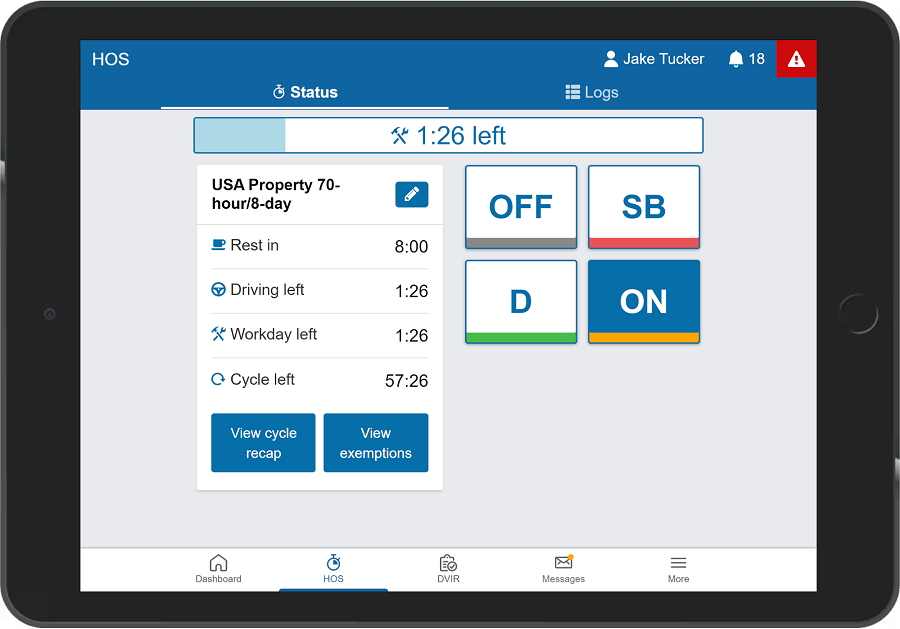
Geotab Drive offers a comprehensive driver management solution with real-time GPS updates and compliance monitoring features, such as Hours of Service (HOS) tracking. This platform supports the running of analytics in detail, monitoring driver behavior, vehicle diagnostics, and observance of rules and regulations. This application comes in handy and is one that every large business fleet needs because of its unique data tracking feature and safety specifications to meet up to the regulatory requirements.
Best for: Large enterprise fleets for compliance and safety.
Verizon Connect
Verizon Connect boasts a multi-featured on-road telematics system, with great features such as route planning, driver performance, and real-time alerts. The fleet manager is notified on unsafe driving practices, vehicle diagnostics, and deviations from routes. Being strong in complex logistics, it is suitable for business entities with a large fleet and at the same time very involved in operations.
Best for: Businesses with complex logistics operations.
GPS Insight
GPS Insight focuses heavily on safety and efficiency by providing robust analytics for monitoring driver behavior. It tracks critical metrics such as speeding, idling, and harsh braking, while also offering fuel efficiency reports. Businesses can use these insights to improve safety practices and reduce operational costs. GPS Insight is particularly beneficial for companies aiming to enhance driver accountability and fleet performance.
Best for: Safety-focused businesses aiming to reduce costs.
Samsara
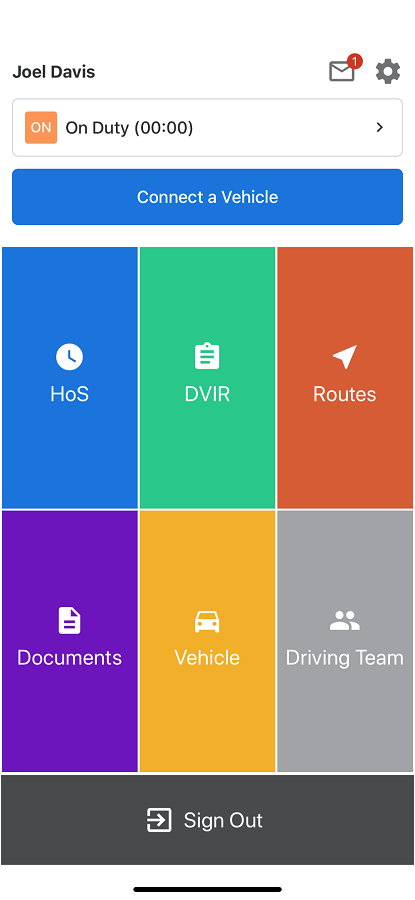
Samsara is a cloud-based platform that offers real-time GPS tracking along with AI-powered dash cams and driver coaching tools. Its all-in-one solution gives fleet managers visibility into both driver performance and vehicle conditions. Samsara’s AI tools analyze driving behavior to provide instant feedback, helping businesses improve safety and operational efficiency.
Best for: Companies focused on fleet visibility and driver safety.
Azuga Fleet
Azuga Fleet focuses on risk management through driver behavior tracking, accident alerts, and scheduling preventative maintenance. The platform offers even rewards programs to encourage safe driving. This will be an excellent app for those businesses that give importance to safety as well as compliance regarding the operations of their fleet.
Best for: Businesses that want to cut down risk and focus on compliance.
Motive (formerly KeepTruckin)
Motive is among the most widely used driver tracker apps because it offers electronic logging device compliance that helps a business stay within the limits of driver work hours. The platform includes real-time GPS tracking, performance metrics, and automated compliance reporting. It is very popular among trucking companies where following regulations is key.
Best for: Trucking and logistics companies requiring ELD compliance.
WorkWave Route Manager
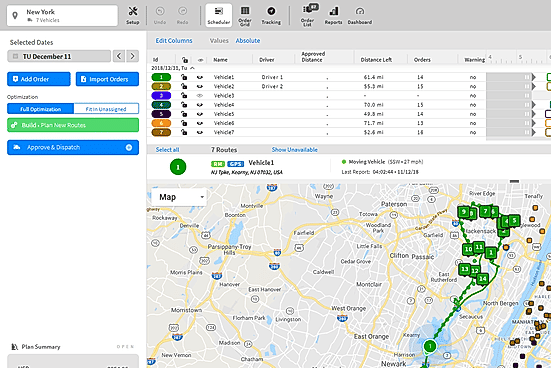
WorkWave Route Manager: This is a complete route optimization and dispatch scheduling solution. In addition, it offers real-time GPS tracking whereby the fleet managers can easily keep track of any delivery or appointment for service. Its robust routing tools will make your business achieve minimal travel time and improve your on-time performances, hence the best for field service operations.
Best for: Delivery services, field service businesses.
Fleetio
Fleetio is much more than just a driver-tracking platform; it’s a fleet management platform. In addition to real-time GPS tracking, the app allows users to track vehicle maintenance, fuel, and inventory on one screen. With data as the backbone, Fleetio provides the functionality to manage a whole fleet on a single platform, streamlining both driver and vehicle operations.
Best for: Companies operating large-scale fleets with highly intensive maintenance requirements.
These driver tracking apps range in functionalities, suiting the various needs of every business, from a small-scale delivery service to highly scaled logistical operations. It enhances safety and cost reduction for a firm in fleet management because of real-time data, performance monitoring, and route optimization provided by these applications.
Drive Time Tracking and Truck Driver Tracking (HOS/ELD)
If you manage trucks or regulated fleets, “drive time tracking” usually means Hours of Service (HOS) and ELD workflows — not just GPS history. You want the driver app to show remaining driving time, log duty status automatically, and reduce violations.
For this use case, look for platforms where the driver app is built around HOS and compliance workflows, not only dispatch and map tracking.
Why Scrile’s STL Traffic Is the Best Driver Tracking App Solution
STL Traffic is a driver tracking app from Scrile, highly customizable for large-scale logistics operations. It is designed to track truck drivers and couriers’ movement and location with real-time GPS updates that show the administrator where the drivers are over the big area on a live map for better coordination and quicker response time for both routine and unexpected situations.
Advanced tracking features include live mapping, route optimization, and direct communication tools within the platform. These capabilities allow managers to achieve optimal fleet operations: assign efficient routes and maintain constant contact with drivers. The app provides driver behavior monitoring that allows businesses to drive improvement in both safety and performance by data-driven decisions.
A success example of STL Traffic’s implementation can be seen in a large logistics operation in Russia, where the platform supports a vast network of truck drivers. The solution provides real-time tracking and administrative oversight, significantly enhancing fleet efficiency and operational control.
Besides that, Scrile offers custom development for the adaptation of STL Traffic in different industries. Its scalability ensures that organizations can scale it down to particular business needs and requirements, thus making it a perfect fit for enterprise needs where driver tracking has to be accurate and long-lasting.
How to Choose the Best Driver Tracking App for Your Business
Selecting the right driver tracking app starts with identifying your business’s unique needs. Consider factors such as your fleet size, driver locations, and the level of tracking required. For smaller fleets, simple location tracking may suffice, while larger operations might need advanced features like route optimization and real-time performance monitoring.
Next, evaluate features that align with your goals. Essential features include real-time GPS updates, driver performance reports, and automated route suggestions to optimize delivery schedules and reduce costs. Apps offering these capabilities can greatly enhance productivity and efficiency.
Scalability and integration are also crucial. A good driver management app should be capable of growing with your business and integrating with other systems, such as payroll or vehicle maintenance software. This ensures long-term functionality without disruptions.
Lastly, prioritize user experience and support. An intuitive interface reduces training time, while reliable customer support ensures issues are resolved quickly, keeping your fleet operations running smoothly.
By carefully assessing these factors, businesses can choose driver tracking apps that meet both immediate and future operational needs.
Conclusion
Investing in the right driver tracking app is essential for improving fleet performance, safety, and operational efficiency. With features like real-time GPS tracking, route optimization, and driver performance monitoring, these apps streamline logistics and reduce costs.
Amongst such solutions, STL Traffic from Scrile holds top priority. The scalability it assures, coupled with advanced tracking and control over administration, positions this as the number one choice among big-time players. The result is enterprise capabilities that let organizations optimize their operations.
Contact Scrile now for more about how STL Traffic custom driver tracker app can solve your problems.
FAQ – Driver Tracking App (Real-Time GPS, Alerts, HOS/ELD, Customer Tracking)
Practical answers about tracking drivers in 2026: what “real-time” really means, how SMS tracking links work, and what features matter for safety, compliance, and payroll.
What is a driver tracking app, and how does it work?
A driver tracking app is a system that shows where drivers are and what’s happening on routes in near real time. It typically uses GPS data from a driver’s phone or an in-vehicle device, then sends updates to a cloud dashboard.
Managers see locations on a live map, route history, stop times, and alerts (late delivery, route deviation, geofence entry/exit). Drivers often get tasks, messaging, and status buttons in the same app.
Driver tracking app vs driver tracking software: what’s the difference?
People use both terms, but usually “app” refers to the driver-side mobile tool, while “software” is the full system: admin dashboard, analytics, dispatch tools, integrations, and sometimes hardware.
If you’re evaluating solutions, focus on the whole workflow: driver experience + dispatcher tools + reporting + integrations. A great driver app without a solid back office is still a bottleneck.
What does “real-time driver tracking” actually mean in 2026?
“Real-time” is mostly about update frequency and reliability. Some platforms refresh location every few seconds, while others update closer to once per minute to save battery and costs.
For dispatch, this changes everything: fast updates enable live rerouting; slower updates are still fine for reporting and proof-of-service. When you compare tools, check refresh rate, ETA accuracy, and how well the app behaves with weak signal.
Can I track a delivery driver via text message (SMS)?
Usually it’s not “texting coordinates.” The common approach is an SMS with a live tracking link that opens a customer-facing tracking page (location, ETA, delivery status).
The best setups automate these messages: “out for delivery,” “arriving soon,” and “delivered,” optionally with proof of delivery. Make sure you define your policy on customer-to-driver contact (SMS/call) so it doesn’t turn into chaos.
Phone-based tracking vs vehicle devices: which one is better?
Phone-based tracking is faster to launch and cheaper to start. It works well for couriers and field service teams, especially when the driver app also handles tasks, photos, signatures, and messaging.
Vehicle devices can be more consistent for long-haul fleets: better uptime, access to vehicle diagnostics, and fewer “my phone died” issues. Many serious fleets use both: phone app for workflow + device data for telemetry.
What is driver behavior monitoring, and what can it detect?
Driver behavior monitoring turns raw movement data into safety signals: speeding, harsh braking, harsh acceleration, sharp cornering, and excessive idling. Some systems also add dash cam events and coaching workflows.
Use it to improve safety and reduce costs, not to “spy.” The best implementations focus on coaching, clear thresholds, and fair reporting (context matters: city traffic vs highway).
What is drive time tracking (HOS/ELD), and who needs it?
Drive time tracking is more than route history. For regulated fleets, it often means HOS/ELD workflows: duty status logs, remaining driving time, and compliance reporting.
If you manage trucks or any fleet under strict labor/compliance rules, choose a solution where the driver app is designed around compliance (not only map tracking). It will reduce violations and simplify audits.
Which features matter most when choosing a driver tracking app?
Start with the basics you’ll actually use: live map, route history, stop detection, geofences/alerts, accurate ETAs, and simple dispatcher-to-driver communication.
Then add business levers: route optimization, automated customer notifications, proof of delivery, and reporting that your team will read (late deliveries, idle time, safety events, utilization).
How do I integrate driver tracking with payroll, CRM, or maintenance systems?
Integrations are where tracking becomes operational leverage. Payroll needs clean drive time, mileage, and job completion records. Maintenance needs vehicle usage and service triggers. CRM needs delivery status and proof-of-service data.
When evaluating platforms, ask what’s native and what requires custom work: API access, webhooks, export formats, and how “job IDs” are mapped across systems. Integration quality is often the real difference between tools.
Build vs buy: when should I develop a custom driver tracking solution?
Buy a ready-made platform when your workflow is standard and you need speed. Build custom when tracking is core to your competitive advantage: unique dispatch logic, custom client portals, special compliance rules, or deep integrations that off-the-shelf tools can’t support cleanly.
Custom also makes sense when you want full control over branding, data ownership, and roadmap. If you’re tired of feature gaps and vendor lock-in, a tailored system can be cheaper long-term than patching limitations forever.

Polina Yan is a Technical Writer and Product Marketing Manager, specializing in helping creators launch personalized content monetization platforms. With over five years of experience writing and promoting content, Polina covers topics such as content monetization, social media strategies, digital marketing, and online business in adult industry. Her work empowers online entrepreneurs and creators to navigate the digital world with confidence and achieve their goals.