
An omni channel chatbot is a conversational system designed to follow the customer across platforms while keeping the conversation intact. Instead of treating website chat, social media messages, and messaging apps as separate inboxes, it connects them into a single flow where context carries over naturally.
This matters because people rarely stick to one channel. A customer might start asking a question on a website, continue it later on Instagram, and expect the same answer when they move to WhatsApp. When those channels are disconnected, users repeat themselves and businesses lose momentum. Unified conversations solve that friction.
Real behavior backs this up. Multiple studies show that over 70 percent of customers use more than one channel during a single interaction cycle. They switch based on convenience, not brand preferences. If the conversation resets every time, trust drops fast.
That shift from isolated tools to connected conversations explains why omnichannel chatbots are no longer optional for growing businesses. They match how people actually communicate, not how software menus are organized.
What an Omnichannel Chatbot Really Is
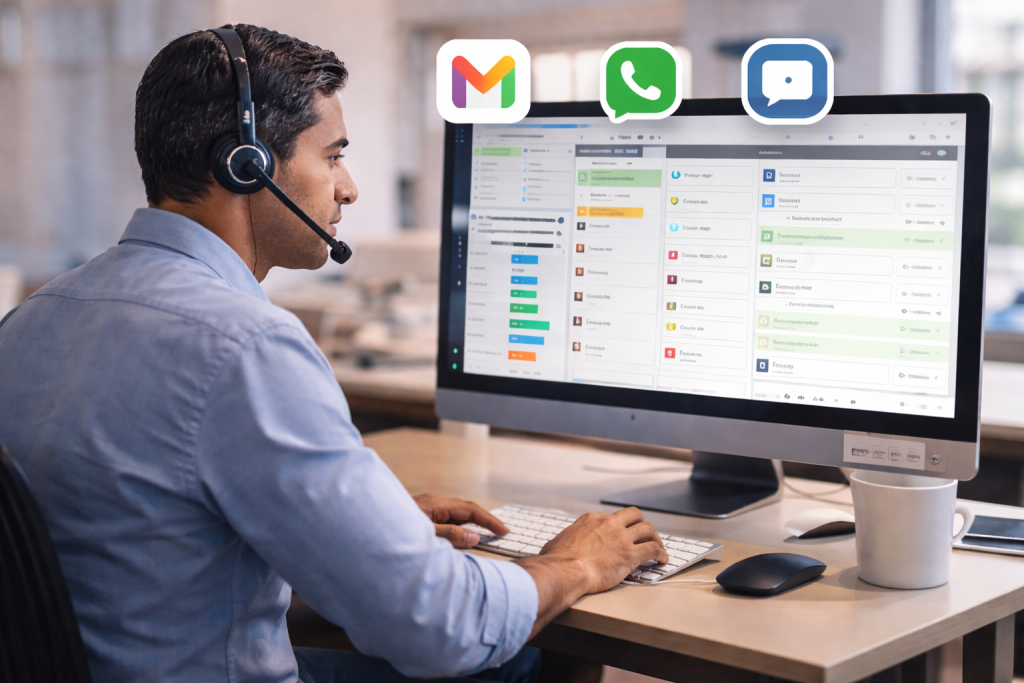
An omnichannel chatbot is not just a chat interface duplicated across platforms. At its core, it’s a system built around continuity. Every message, no matter where it comes from, is tied to the same user profile and the same conversation history. The backend acts as a single source of truth, storing context, intent, and previous actions so the conversation can move freely between channels.
This is where many basic solutions fall short. A simple chat widget on a website may answer questions well, but once the user leaves that page, the context is gone. Social media bots often suffer from the same limitation. They respond inside one platform, but they don’t “know” what happened elsewhere. A true omnichannel chatbot connects all those touchpoints and treats them as parts of one dialogue rather than separate threads.
In practice, the mechanics usually include:
- A shared conversation store that logs messages, user attributes, and intent across all channels
- Channel adapters that translate messages from Facebook, web chat, or messaging apps into a unified format
- Orchestration logic that decides what happens next based on history, not just the latest message
A common real-world example is retail support. A customer messages a brand on Facebook asking about an order delay. Later, they open the website and use live chat to follow up. With a proper omni channel chatbot in place, the agent or bot immediately sees the original Facebook message, the order number, and the earlier response. No repetition. No starting over.
That difference is what separates real omnichannel systems from stitched-together chat tools. It’s not about adding more channels. It’s about making them behave like one continuous conversation.
Where Omnichannel Chatbots Operate — Channels and Flows
Multi-touch conversations behave very differently from basic multichannel setups. In a multichannel model, each platform works in isolation. A message on the website lives there, a DM on social media lives somewhere else, and email becomes a separate thread again. Users don’t see those boundaries, but systems do. That gap is where frustration usually starts.
With an omni channel chatbot, the flow is built around movement. People jump between devices and platforms depending on time, mood, and urgency. A question asked during a lunch break on mobile often continues later on desktop. A conversation that begins in public moves into private messages. The chatbot’s job is to keep pace with that movement without breaking context.
How Channels Connect in Real Workflows
In practice, omnichannel chatbots work by stitching together very different communication environments into a single, continuous conversation.
- Website live chat tied to a CRM, where visitor behavior, past purchases, and support history are immediately visible, allowing the chatbot to respond based on who the user is, not just what they typed.
- Messaging apps like WhatsApp, Telegram, and Messenger, often used for quick follow-ups or confirmations, where customers expect short, informal replies that still reflect earlier conversations started elsewhere.
- Social platforms such as Instagram DMs or X, where conversations may begin casually, then shift into support or sales once the user moves to a private channel.
- Email, SMS, and ticketing systems, which handle longer updates, receipts, or confirmations while staying connected to the same conversation thread instead of creating duplicates.
- Voice assistants and IVR routing, used when users prefer speaking, with chat history passed along so agents or bots don’t start blind.
Real businesses already rely on this flow. A hotel chain may confirm room availability through WhatsApp, then send booking details and invoices by email, all linked to the same conversation. An ecommerce store might remind a shopper about an abandoned cart on the website, then follow up with an SMS offer later the same day. That’s omni channel chat in practice, shaped around how customers actually communicate rather than how software menus are designed.
Business Benefits That Actually Matter
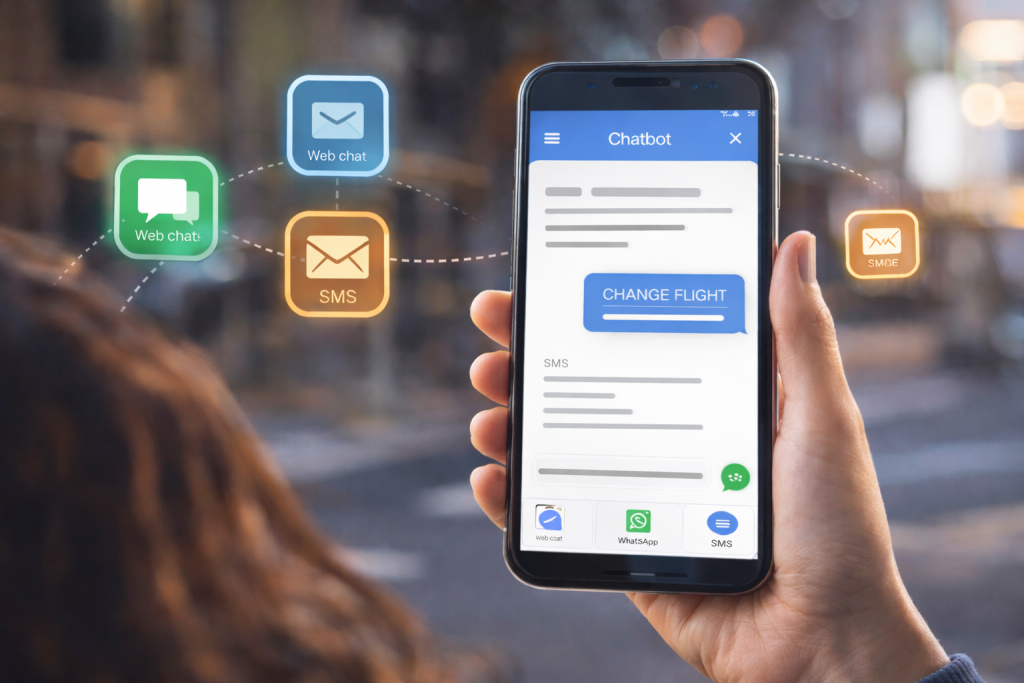
When teams switch to an omni channel chatbot, the first change isn’t some abstract KPI. It’s practical relief. Fewer tabs open. Fewer “can you repeat that?” moments. Conversations stop feeling fragmented, and support work becomes easier to manage during real traffic spikes, not just in demos.
Response time improves almost immediately, mostly because agents no longer hunt for context. A question that started on social media and continued on the website arrives with its history intact. That saves minutes on every interaction. Over a day, that adds up. Over a month, it changes how support teams plan shifts and handle peak hours.
Customer satisfaction usually follows the same pattern. People don’t mind waiting briefly if they feel understood. They do mind explaining the same issue again. Continuous conversations reduce that friction and quietly build trust, even when automation handles part of the exchange.
Operationally, the gains tend to look like this on the ground:
- Support teams work from a single interface, handling web chat, messaging apps, and social requests without jumping between disconnected tools or losing track of active cases.
- Conversation analytics show real movement between channels, revealing where users switch platforms and where responses slow down or drop off.
- Marketing teams use chatbot interaction data to adjust messaging, timing, and segmentation based on what customers actually ask, not assumptions.
- Automation takes over repetitive questions and routine actions, which reduces burnout and lets human agents focus on edge cases.
All of this is coordinated by omnichannel AI, which connects intent, history, and user data behind the scenes. The result isn’t flashy. It’s smoother daily operations and conversations that finally feel continuous.
Solution Examples — What Works and What Doesn’t
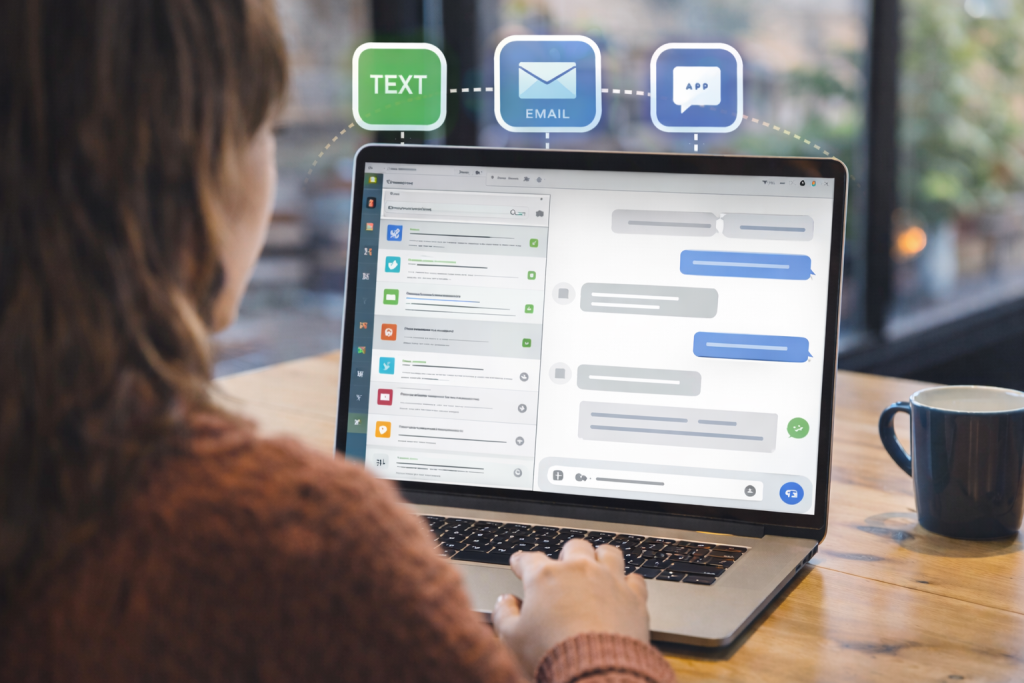
Seeing omnichannel systems in action makes the difference clear very quickly. Some implementations feel natural to users. Others expose the limits of basic automation almost immediately.
Good real-world implementations usually share one trait: continuity is treated as a requirement, not a bonus. An airline support bot is a common example. A traveler checks a delay on the website, receives an update later on WhatsApp, and gets a boarding reminder by SMS. The conversation doesn’t reset. The system already knows the flight number, the passenger, and the previous message. That’s where an omni channel chatbot proves its value.
A streaming service offers another solid case. Billing questions often start in public spaces like Discord, then move into private app chat for account-specific details. When the context carries over, users don’t need to explain what subscription they’re on or what went wrong. The handoff feels quiet and intentional.
When basic bots fail, the cracks show fast. A user asks a question on social media, then repeats it on the website, only to get the same opening prompt again. The bot ignores earlier context and asks for information that was already provided. Another common issue is systems limited to web chat only. Agents end up copy-pasting conversation history between tools just to keep up.
These failures usually happen because the setup focuses on channels instead of conversations. True omnichannel chatbots are built around continuity. Anything less starts to feel like automation pretending to be helpful rather than actually supporting users.
When You Need a Custom Omnichannel Chatbot Built for Your Brand
Off-the-shelf chatbot platforms usually cover basic scenarios well. Trouble starts when conversations become part of the business logic itself. Unique workflows, layered user roles, or strict data handling rules don’t translate cleanly into preset templates. Teams end up stacking workarounds, and the chatbot becomes harder to maintain than the conversations it was meant to simplify.
A custom omni channel chatbot takes a different path. Instead of adapting your process to the tool, the system is designed around how your business actually communicates. Scrile Connect and Scrile AI work as custom development services, not ready-made platforms. That means architecture, logic, and integrations are built from scratch to match real requirements, including edge cases many tools ignore.
This approach is especially relevant in complex environments. Real examples include:
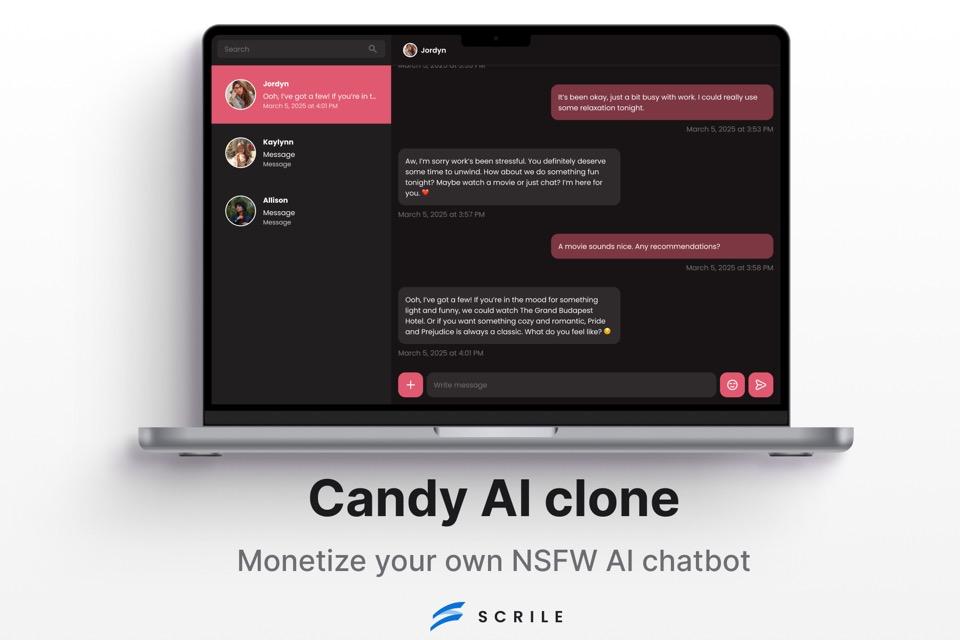
- An adult chat platform offering personalized AI characters with persistent memory, where conversation tone, boundaries, and permissions must remain consistent across devices and channels
- A telecom provider combining billing data with social DMs and website chat, without exposing sensitive account details
- An enterprise support operation that requires centralized reporting across channels for compliance and performance tracking
In these scenarios, a second omni channel chatbot built to specification performs better than patched integrations. It also supports omni chat experiences where users move freely between platforms without losing context.
What Scrile Builds Around Omnichannel Chatbots
With Scrile Connect and Scrile AI, features and benefits are delivered as part of a single system:
- Custom conversation flows mapped directly to your business rules and user roles
- Backend orchestration that unifies web, social, and messaging channels
- Smart context carryover so users keep state across every touchpoint
- ML-powered personalization for adaptive responses and routing
- Analytics and dashboards built around metrics your teams actually use
The result is an omnichannel chatbot that fits the brand, scales with growth, and avoids the limitations of generic solutions.
Conclusion
Omnichannel chatbots work when they replace patched systems with a single, coherent conversation layer. Instead of stitching together web chat, social messages, and email, teams manage one flow where context follows the user. The key decision isn’t which tool has more features. It’s whether the solution fits real workflows, data rules, and growth plans.
Businesses that succeed choose based on how conversations actually happen, not on buzzwords or demo screens. When standard tools start to limit flexibility, a custom approach becomes the logical next step. If you’re planning to build or scale an omnichannel chatbot that reflects your brand and operations, it makes sense to reach out to the Scrile Connect and Scrile AI teams and discuss a tailored solution.
FAQ
What is an omnichannel chatbot?
An omnichannel chatbot is a system that keeps conversation context across channels such as websites, social media, email, SMS, and messaging apps. Instead of restarting each time a user switches platforms, it resumes the same conversation and preserves history, intent, and user data.
What is omni channel chat?
Omni channel chat is a unified communication setup where support teams manage all conversations from one workspace. Customers can move between channels freely, while agents see the full conversation history and avoid fragmented threads or repeated questions.
What are the 4 C’s of omnichannel?
The four C’s of omnichannel engagement are customer experience, context preservation, consistent content delivery, and collaboration among systems and agents. Together, they define whether an omnichannel setup feels seamless or disconnected.

Polina Yan is a Technical Writer and Product Marketing Manager, specializing in helping creators launch personalized content monetization platforms. With over five years of experience writing and promoting content, Polina covers topics such as content monetization, social media strategies, digital marketing, and online business in adult industry. Her work empowers online entrepreneurs and creators to navigate the digital world with confidence and achieve their goals.