

Scan a T-shirt. Watch it move. Trigger a sound. Unlock a message. Augmented reality is already sewn into fabric, printed on hoodies, embedded in patches. It’s not hype. It’s already out there — and it works.
The question now is simple: how to make augmented reality clothing that doesn’t feel like a cheap trick. Something that sticks. Something people want to wear, share, and come back to.
Designers are experimenting with motion graphics on sleeves. Educators use AR shirts to show anatomy in real time. Streetwear drops go viral because a camera reveals something the naked eye can’t. These aren’t concepts. They’re products in the wild.
This article breaks it down. The gear you need. The process, step by step. How brands are doing it. What’s actually worth building. And how anyone with a strong idea — not just major labels — can start putting interactive clothing into the world.
What Is Augmented Reality Clothing?
Augmented reality clothing refers to garments that trigger digital visuals or interactions when viewed through a phone or AR glasses. It could be an animation mapped to a printed design, a video layered on a logo, or 3D content that appears to hover just above the fabric.
The experience depends on how the garment is designed. Some respond to image markers or patterns, others use QR codes or embedded chips. Once scanned, they activate extra content: moving graphics, audio, virtual buttons, or full-screen scenes. It’s a way to add motion and story to physical products without screens.
Augmented reality try on clothes refers to digital fitting tools that let users preview how a garment might look, often using a mobile camera or smart mirror. Meanwhile, augmented reality clothing fitting uses body tracking and virtual overlays to simulate real-time fit, helping shoppers make better decisions without needing a physical fitting room.
This technology blends novelty with function. It helps brands turn clothing into interactive media. Artists use it to create immersive installations. Educators apply it to visualize anatomy, geography, or science in classrooms. For independent creators, it opens a way to sell not just fabric, but digital storytelling through clothing.
Real-World Use
Fashion retailers are already testing and deploying AR at scale. H&M launched AR try-ons through Snapchat, allowing users to select and preview outfits directly through their phones.
Other examples include:
- Music merch that unlocks unreleased tracks
- Event tees that act as digital passes or memory vaults
- Kids’ clothing that tells interactive stories
- Collectible drops tied to NFTs or limited-edition content
AR adds a second layer to clothing. It gives people a reason to look again — not just wear it once and forget.
The Tech Behind AR Clothing
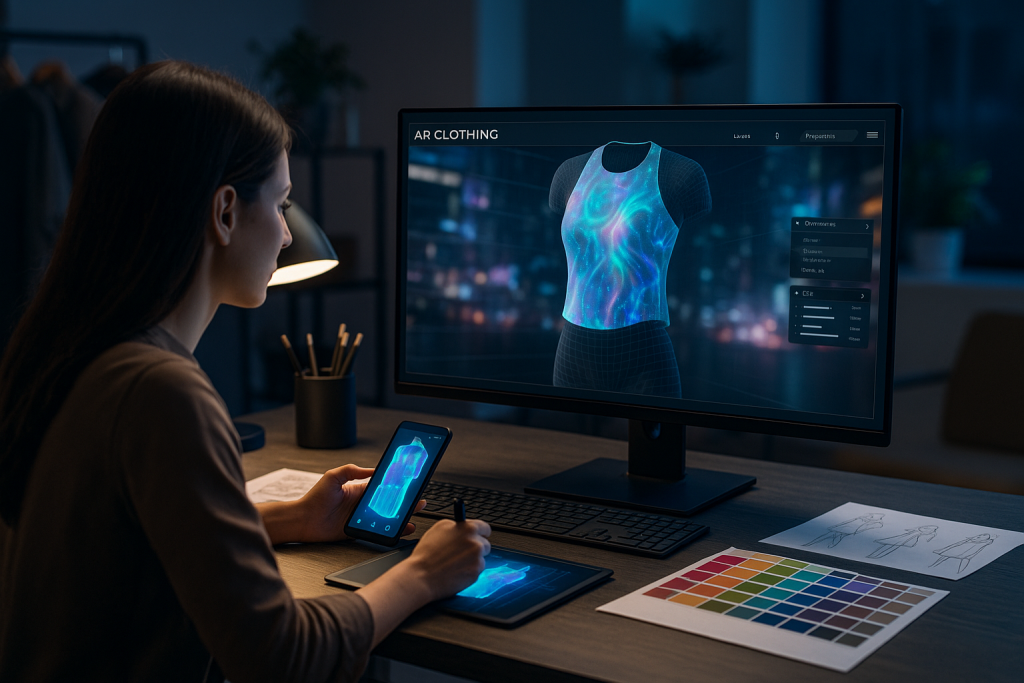
Before anything looks cool through a camera, it has to be built right. How to make augmented reality clothing depends on a few moving parts: visuals, markers, motion tracking, and the software that ties it all together.
Start with design. Most creators use 3D modeling tools like Blender or Marvelous Designer to shape digital garments or visual elements. These can range from simple pop-up text to full characters animated over the shirt.
Then comes delivery. There are two main approaches:
- Marker-based AR: A printed image or logo on the garment triggers the digital layer. This is the most common approach for T-shirts and jackets.
- Markerless AR: The app tracks the body or clothing without needing a printed reference. It’s trickier to build but creates a smoother experience.
To keep the visual stable while the person moves, the system uses AI tracking. That includes face and body detection, pose estimation, and sometimes depth mapping. These tools help the content stay “stuck” to the right part of the garment.
Apps come in two formats:
- WebAR: Runs directly in the browser. No download needed. Easier to access, but with some performance limits.
- Native mobile apps: More powerful and smoother but require users to install something.
Platforms like Unity, 8thWall, Vuforia, and Spark AR handle the development layer. Each has different strengths. For example, Spark is popular for filters, while Unity gives full control over interaction and animation. This is where your augmented reality clothing app takes shape.
From Fabric to Framework
To connect real garments with digital content, creators use:
- QR codes stitched into tags or labels
- Printed markers blended into the graphic design
- Image recognition that links a shirt’s design to a hidden animation
- Digital twins, where each physical item has a virtual copy
These methods are what turn regular AR clothes into experiences. Whether you’re building immersive merch, educational tools, or virtual reality clothing, everything starts with a decision: what does the shirt unlock, and how does it know when to do it?
Step-by-Step: How to Make Augmented Reality Clothing
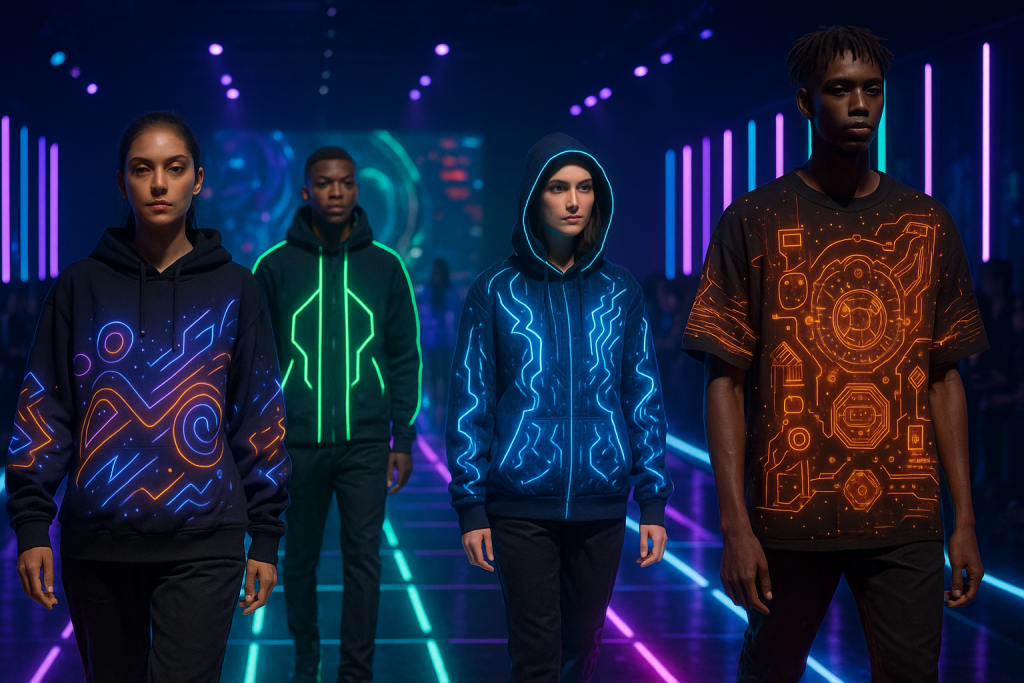
Creating an interactive garment looks complex from the outside, but the workflow becomes clear once you break it into stages. Anyone exploring how to make augmented reality clothing will follow a path that moves from concept to design and then into development, testing, and launch. Each step shapes the final feel of the product.
Step 1 — Define Your Concept
Start with a simple question: what should the clothing activate? Some creators build story-driven animations. Others focus on music, product information, or collectibles. The concept guides the style of the artwork, the type of animation, and the platform you will use. It also helps identify the audience. Kids, festival-goers, sports fans, or educators respond to very different visual cues. A clear direction keeps the project from drifting.
Step 2 — Design the Garment
The physical item needs to work with the digital layer. Choose a spot for the trigger image that stays visible when the garment is worn. That spot might be the chest, sleeve, or back panel. A detailed illustration, logo, or symbol often works best because it gives the tracking system enough information to lock onto. Think of the design as a stage: clean shapes help the camera recognize the target quickly.
Step 3 — Choose the Platform
The engine you select shapes the development process. Unity is popular for animated scenes with movement and depth. WebAR tools allow users to scan garments without installing an app. Meta Spark works well for camera-first experiences shared on social networks. Each option has its own workflow, so it’s best to match the tool to your idea rather than forcing the idea into the tool.
Step 4 — Build the Digital Layer
This is where the visual content takes form. It can be a short animation, a looping 3D object, a sound-reactive graphic, or a simple text reveal. The digital layer should enhance the design rather than overwhelm it. Clear timing, readable motion, and smooth interaction give the effect depth without confusing the user.
Step 5 — Link the Content
After the animation is ready, connect it to the chosen marker. Platforms offer tools that map digital visuals onto an image so the scene appears in the right place every time. Good alignment is essential. Poor mapping makes the AR look shaky.
Step 6 — Test Across Devices
Phones differ in camera quality and performance. Test on as many devices as possible. Check tracking stability, lighting conditions, and how the AR reacts when the person moves or turns.
Step 7 — Launch and Promote
Once everything feels solid, release the product. Share demos, record try-on clips, create hashtags, and encourage your community to post their reactions. AR clothing spreads fast because people enjoy showing it off.
AR Clothing Brand Examples and Ideas
There’s no shortage of real brands proving that AR clothing isn’t a gimmick — it’s a tool that gets attention, tells stories, and drives engagement. If you’re serious about how to make augmented reality clothing, it helps to study what others have already done and why it worked.
Here are a few standout examples from both big players and smaller experiments:
- H&M ran AR try-ons through Snapchat. Pick an outfit, open your camera, see it mapped on your body. It worked inside the app and on the H&M website. No extra hardware. No separate app. Just scroll, scan, and try.
- Red Bull dropped shirts that launch interactive games. You scan the chest print, it opens a branded AR scene with characters, effects, movement — all tied into their “Wiiings” campaign. Merch became the controller.
- Pepsi used AR on bottles and apparel. Some shirts unlocked video messages. Others worked as part of limited-edition drops tied to music events.
- Zalando took the sizing headache and turned it into an AR preview. You could stand in front of your phone and check how a jacket fits. It didn’t just show the product — it helped you decide.
- IKEA went heavy on product AR, then let that same idea spill into branded clothing and displays. The logic was the same: place the thing in your space. Let people imagine owning it before they buy.
- Artists are doing this too. Shirts that show moving sculptures. Logos that turn into faces. Generative graphics triggered by your camera.
- Some creators are pairing this with NFTs. The shirt is real, but the AR layer is a digital twin with unlockable perks.
If you’re thinking about how to make augmented reality clothing, don’t just chase effects. Figure out what the shirt gives people once they scan it.
Build Your Own AR Fashion Brand
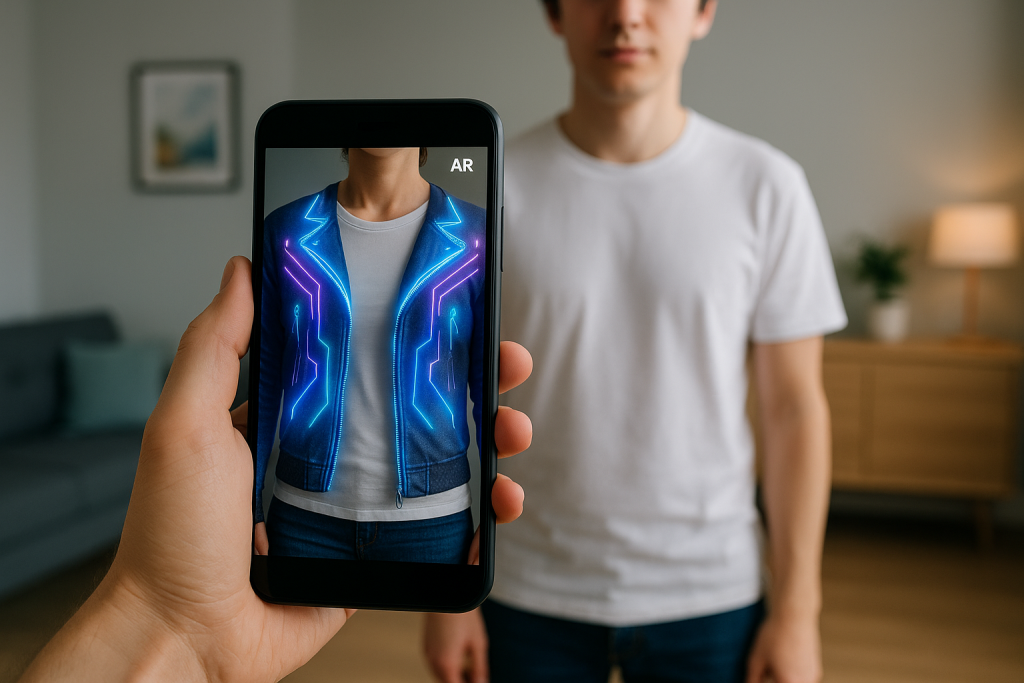
The tech matters, but the branding decides whether anyone cares. A clean marker won’t save a weak idea. People remember how something looks, feels, and moves — both in their hands and through their camera.
Start with your visual identity. Your logo, colors, graphic style — all of it has to read clearly in print and on screen. Some designs break apart once scanned. Fine lines blur. Busy backgrounds confuse trackers. Design with contrast. Test at different sizes. Hold the shirt up to a camera and move it around. If the AR effect only works when the shirt is perfectly still, fix it.
The user experience goes beyond what the app shows. Think about lighting. Think about front-facing vs. rear cameras. Make sure your content works on both high-end and older phones. Not everyone scans your work with a brand-new iPhone. The real world is messy. Build for it.
Now: how do you sell it?
You don’t need to launch with 30 pieces. A single strong design, dropped in a small run, can do more than a full collection. Start with a theme. Tie it to a moment, a message, or a story. Offer it in a limited batch. Set up a basic online store or collaborate with a brand that already has reach.
AR gives you room to do things printed clothing can’t. That’s your edge. Don’t waste it with empty effects. Let the shirt unlock something worth coming back for. A visual. A sound. A memory. A reason to care.
Develop Your Own AR Product with Scrile Custom Development Services
Building something that actually works takes more than a template. You need a team that understands how to turn your concept into a full product — not just an effect. That’s where Scrile comes in.
Scrile isn’t a platform. It’s a custom development service. That means you don’t adapt your idea to a preset tool. We build the tool around your idea.
If you’re serious about how to make augmented reality clothing, and you’re ready to move from a test file to a live product, this is the stage to get in touch.
Here’s what Scrile can develop for you:
- Virtual try-on apps that simulate fit and style using body tracking
- Marker-based AR clothing systems that trigger animations, games, or product info
- Backends for AR commerce, including user analytics, content control, product syncing, and real-time data
- Admin tools for managing drops, updating designs, and tracking campaign performance
- Custom viewer interfaces — browser-based, app-integrated, or branded standalone
You bring the visual direction, the brand story, or even just a rough sketch. Scrile handles the architecture, the integrations, and the features needed to bring it to life.
We don’t offer one-size-fits-all packages. Every build is shaped around your goals, your stack, and your users. Whether you need a lightweight demo or a full ecosystem ready to scale, we work with you to make it happen.
Interactive clothing deserves interactive thinking. If the idea is ready, Scrile’s the partner that knows how to build it right.
Conclusion
AR clothing is functional design with digital depth. It’s built to be scanned, moved through space, and talked about. Every piece becomes more than its print. It becomes part of the story you’re telling.
Anyone with a clear vision can start building. The tools are out there. The workflow is manageable. What matters is choosing the right team to put the parts together and make sure it works where it counts — in someone’s hands, through their lens, on their screen.
Scrile builds full custom systems for interactive products like AR clothing. From visual triggers to app frameworks, from backend logic to user experience — everything is built to match your idea, not restrict it.
You can launch a working product, bring it to market, and grow it into something bigger. Start by exploring how Scrile Custom Development Services can help you build a real AR product from the ground up.
FAQ
How do you make an AR T-shirt?
Start with a clear idea. Decide what the shirt should trigger — animation, sound, video, or something else. Design the graphic so it works as a visual marker. Tools like Unity or WebAR platforms let you build the digital content and link it to the image. Test it on multiple devices. Once everything tracks smoothly, publish it and share your launch with the audience you’re building for.
Does H&M use AR in their clothing?
Yes. H&M partnered with Snap to create AR try-on experiences. Users can select clothes, see how they fit, and share the look, all through their phone’s camera. It works in both the Snapchat app and the H&M mobile app.
What companies are using AR for branding or clothing?
Brands like Red Bull, Pepsi, IKEA, Zalando, Philips, Walmart, and even Arsenal FC use AR in different ways — from merch drops and product previews to interactive ads and digital collectibles.

Polina Yan is a Technical Writer and Product Marketing Manager, specializing in helping creators launch personalized content monetization platforms. With over five years of experience writing and promoting content, Polina covers topics such as content monetization, social media strategies, digital marketing, and online business in adult industry. Her work empowers online entrepreneurs and creators to navigate the digital world with confidence and achieve their goals.