
Booksy made online scheduling easy for barbershops, salons, and wellness studios. For a while, that was enough. You got a booking page, a customer app, and a few basic tools to run things. But as more businesses built loyal client bases and expanded, the cracks showed up. The software didn’t scale with them. Owners started looking for Booksy alternatives that fit better. Maybe they needed tighter control over fees. Maybe they wanted to remove third-party branding. Some just got tired of working around limitations instead of having software that worked how they do.
This guide breaks down why people leave Booksy, what really matters when choosing a new tool, and which five options actually get it right in 2026. It also explains when it’s time to move beyond premade apps and build something custom.
If you’re in the market for Booksy alternatives, this list doesn’t just throw names at you. It gives you a clear picture of where each one fits, what you’re signing up for, and what to expect once you switch.
What Users Really Want from Booking Software
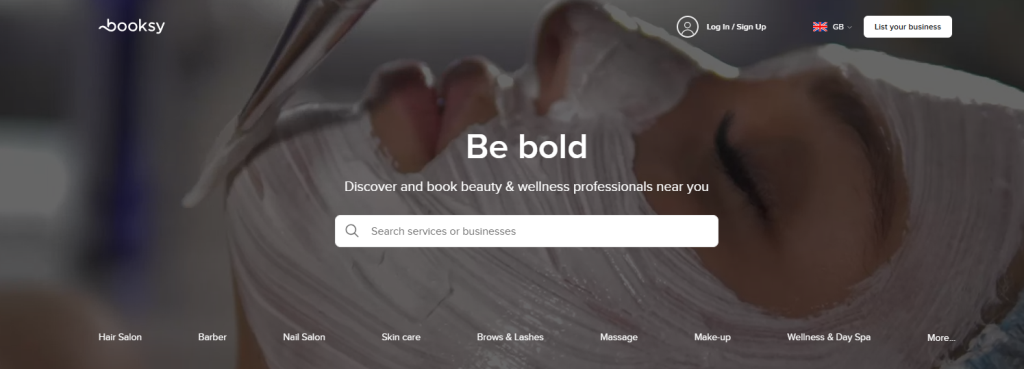
People who start looking for Booksy alternatives usually don’t do it out of curiosity. They’re reacting to small frictions that add up over time—confusing fees, lack of control, or limits on how they present their business.
One of the top complaints is pricing. Many service providers don’t want to deal with layers of commissions, boosts, or sliding fees. They want a flat cost, something they can plan around without surprises. It’s not about being cheap. It’s about knowing exactly what they’re paying for.
Then comes branding. A lot of salon owners don’t want their business name sitting next to dozens of others in a shared marketplace. They want a direct link, their logo, their look, their booking flow.
From hundreds of user reviews and software comparisons, these five priorities come up again and again:
- Transparent pricing with no hidden extras
- Full control over branding and booking pages
- Clean mobile experience for clients
- Rescheduling that doesn’t take extra steps
- Data access without third-party limits
Many Booksy competitors now focus on these areas, because they’ve seen where users get stuck. Tools that lock client data or force visibility into crowded directories tend to wear out their welcome.
For salon owners and independent professionals, the right software feels invisible. It works in the background, lets them stay on brand, and doesn’t interfere with how they run things. That’s the bar now. And anything less feels outdated.
Top 5 Booksy Alternatives for 2026
When salons look beyond Booksy, different paths emerge. Some tools keep costs predictable. Others bundle payments and scheduling in one place. A few focus on simplicity. Here are five strong options worth considering in 2026.
Fresha
Best for: Salons and spas on a tight budget or early stage.
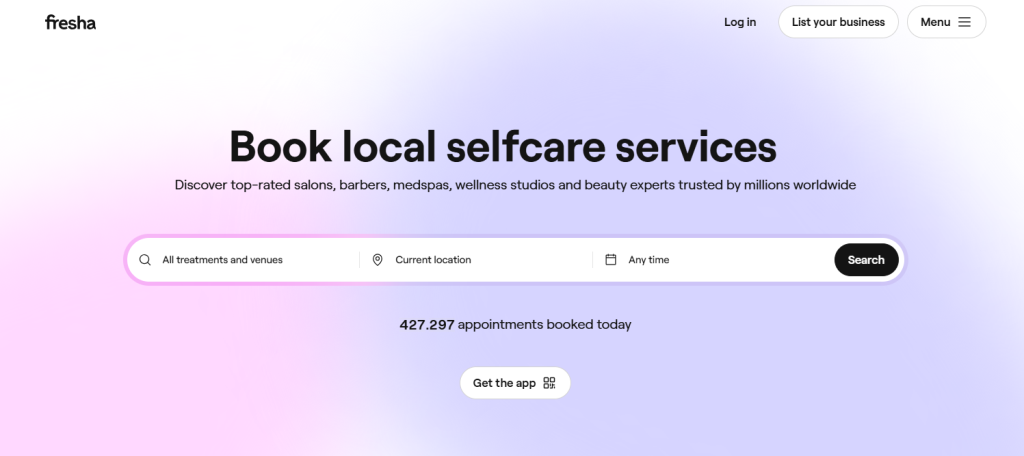
Fresha attracts attention because it doesn’t charge a monthly fee. Many small businesses use it to keep overhead low while still offering online bookings, appointment reminders, and point-of-sale tools. Its dashboard shows appointments, sales, and daily tasks all in one place. Fresha also handles client notifications and payment links without needing a separate system.
Pros:
- No subscription cost for core features.
- Clients can book online without jumping through extra steps.
- Built-in inventory and POS tools help upsell retail products.
Cons:
- Its free model includes transaction fees that can add up.
- Advanced branding options are limited.
- If you want deeper marketing tools or custom branding, you might hit a ceiling.
Pricing: Free subscription tier for solo stylists; Plus plan starting at $9.95 monthly per bookable team member.
Square Appointments
Best for: Teams that want booking and payments under one roof.
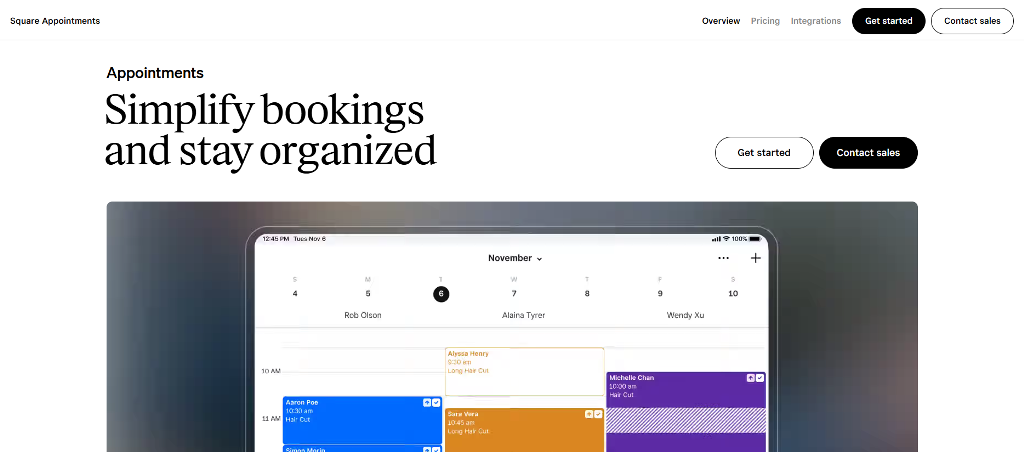
Square Appointments fits businesses that want tight links between schedules and payments. It handles online booking, client reminders, calendar management, and payments all in one interface. Salons that already use Square for retail or in-person checkout find this especially convenient.
Pros:
- Unified system for bookings and payments.
- Works smoothly with Square POS hardware if you need it.
- Flexible plans for individual stylists up to multi-location shops.
Cons:
- Processing fees apply to every transaction.
- Some advanced features are gated behind higher plans.
- True power comes when you lean into the broader Square ecosystem.
Pricing: Free core plan available; Plus plans start from $49/month.
GlossGenius
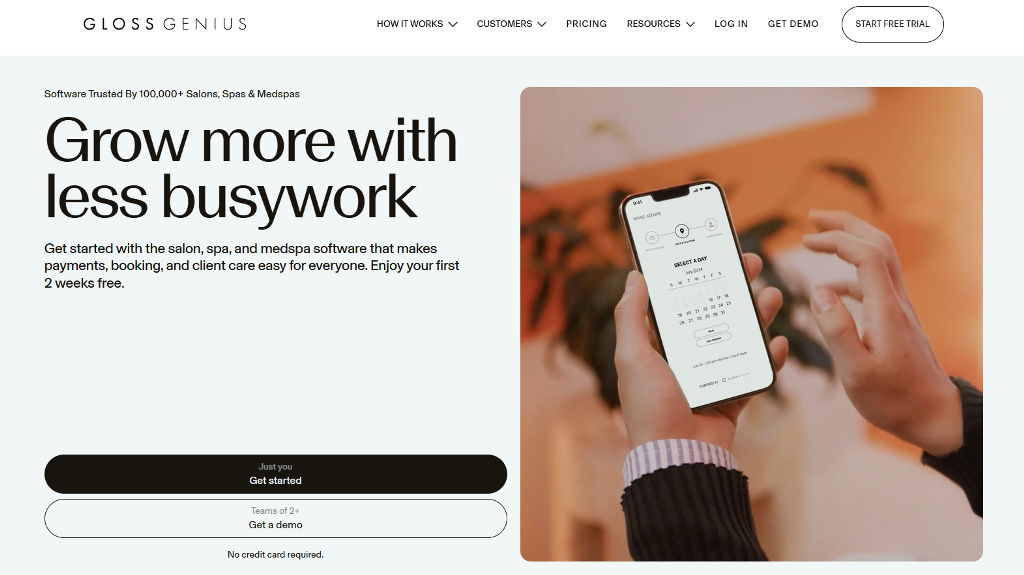
Best for: Solo stylists and small teams who want simple, stylish tools.
GlossGenius focuses on ease of use. The interface looks modern and is built around mobile devices first, so clients can book without fuss. It also includes built‑in payment processing and basic marketing tools. Many users say it feels friendlier than most legacy salon software.
Pros:
- Simple setup with strong mobile booking experience.
- Payments and tips handled in the same app.
- Automatic reminders and no‑show protection built in.
Cons:
- Customization options are limited compared to larger suites.
- Monthly price can feel high for very small shops.
- Some advanced reporting tools aren’t as rich as competitors.
Pricing: Plans typically start around $24 per month for basic tools, with payment processing fees around 2.9% + $0.30 per transaction on card payments. Tip and booking fees vary by region.
StyleSeat
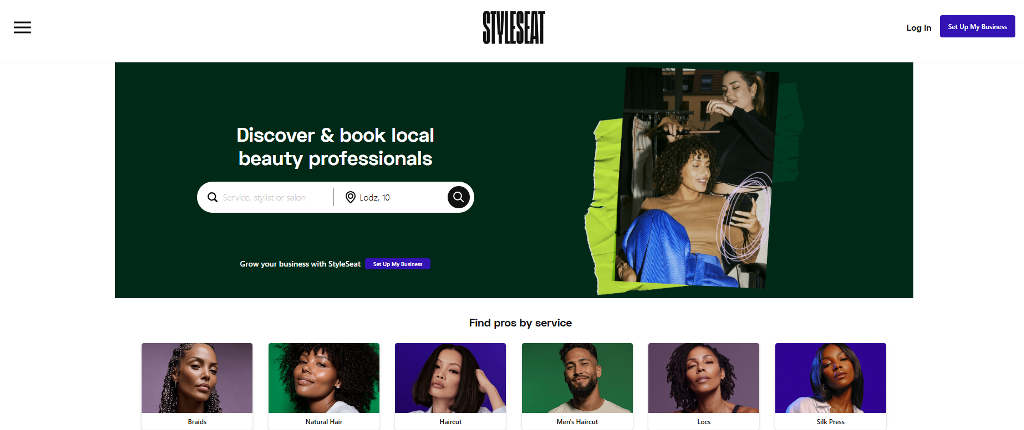
Best for: Independent stylists and freelance beauty pros focused on discovery.
StyleSeat combines appointment booking with a built‑in marketplace where clients browse and choose providers. Many professionals compare Booksy vs StyleSeat when deciding how much visibility they want versus how much control they’re willing to give up. StyleSeat leans heavily toward discovery, which works well for stylists who rely on new client traffic rather than repeat bookings alone.
Pros:
- Built‑in client discovery helps new customers find you.
- Integrated reviews and profile pages make marketing easier.
- Simple client reminders and calendar sync.
Cons:
- Marketplace models often take a percentage per booking.
- Custom branding is limited within marketplace listings.
- Some users find the fee structure harder to predict.
Pricing: StyleSeat’s pricing is a $35/month subscription. Fees vary, but many pros report fees around 20–30% per appointment depending on features used.
Vagaro
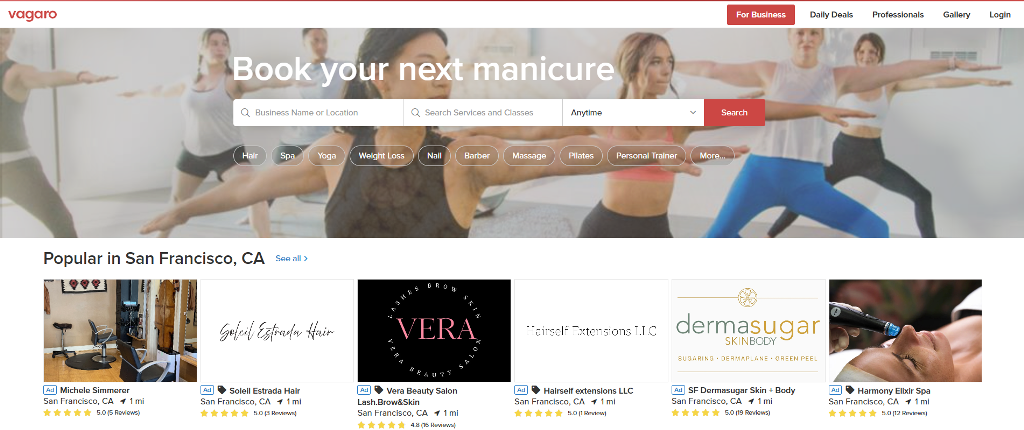
Best for: Growing salons and multi‑location studios.
As one of the Booksy alternatives, Vagaro aims to be a full salon and spa management suite. It includes scheduling, client history, email marketing, and robust reporting. Many larger businesses use it because it scales from solo use to complex setups with many employees.
Pros:
- Feature‑rich with advanced scheduling and client management.
- Built‑in marketing tools and reporting dashboards.
- Works for salons, spas, massage clinics, and fitness studios.
Cons:
- Can feel overwhelming if you only need basic booking.
- Some features are add‑ons that increase total cost.
- Learning curve is steeper than the simplest tools.
Pricing: Vagaro plans generally start around $24 per month per user, with additional costs for added marketing tools or payroll/management modules. Payment processing is typically an extra fee similar to industry standards (~2.7% + per transaction).
Table: Quick Comparison of Top Alternatives
| Platform | Pricing Model | Best For | Key Limitation |
| Booksy | $29.99 a month, with each additional team member costing an additional $20 a month | Marketplace exposure | Commission cuts on Boost |
| Fresha | Commission-based + Pro plan from $9.95 monthly per bookable team member | Budget salons | Limited custom branding |
| Square Appointments | Free + Plus plans start from $49/month. | Solo professionals | Best in Square ecosystem |
| GlossGenius | Monthly subscription from $24 per month | Luxury solo salons | No team scheduling |
| StyleSeat | Commission + subscription $35 per month | Discovery via marketplace | High fees, few customization options |
| Vagaro | Tiered pricing starting from $24 per month | Growing small salons | Feature overload |
This chart gives a quick glance, but the real answer lies in how you work and what you’re building long-term. Some will benefit from plug-and-play tools. Others may need something custom.
Why a White-Label App Might Be the Real Upgrade
Most salons start with a booking tool that’s easy and cheap. That’s fine in the beginning. But over time, marketplace apps start to feel crowded. You end up competing on the same platform that’s supposed to support you.
That’s why more businesses are looking for Booksy alternatives that give them real ownership. A white-label app puts your brand front and center. Your name, your colors, your features. You’re not renting space—you’re building it.
Unlike apps like Booksy, white-label systems don’t promote competitors or charge you to get noticed. Clients book directly through your app or website without distractions.
Who Should Consider White-Label?
White-label works best when your brand already has momentum. It’s built for:
- Independent stylists tired of marketplace rules
- Chains with multiple locations that want full control
- Professionals searching for StyleSeat alternatives that aren’t tied to commission-based pricing
If client loyalty matters more than discovery, white-label is the natural next step.
Build Your Own Booking System with Scrile Connect
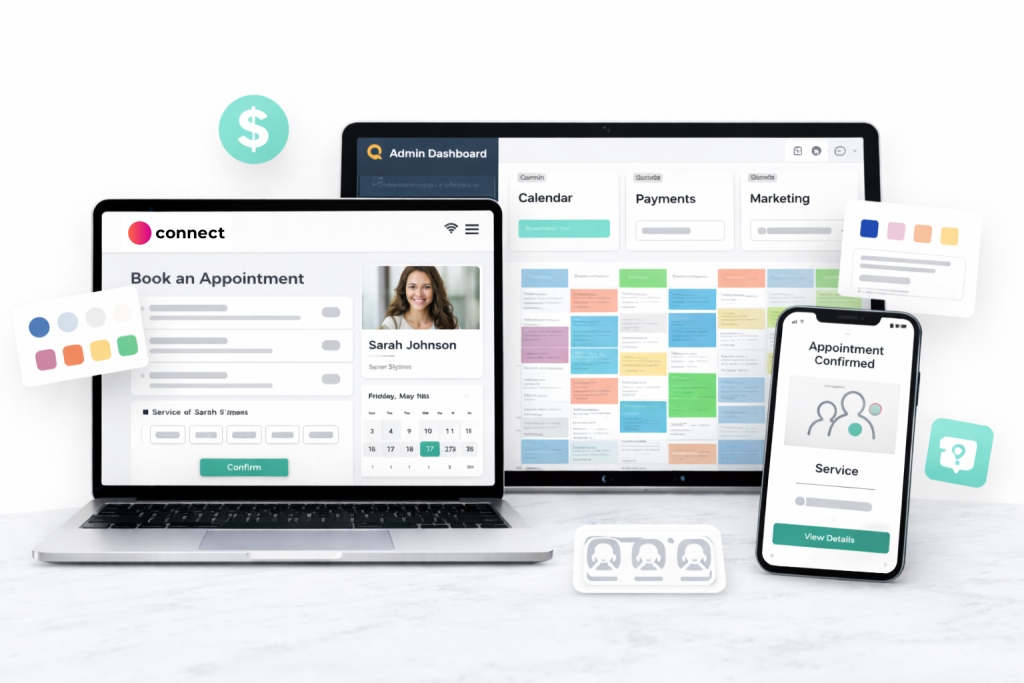
If you’re tired of boxed-in templates and commissions that eat into your earnings, it’s time to consider building your own tool. Scrile Connect isn’t another off-the-shelf product. It’s a custom development service that helps you create a branded, white-label booking system from the ground up.
You decide how it looks, how it works, and how it fits into your business. No more bending to someone else’s logic. Whether you’re running a multi-location salon or offering one-on-one sessions as an independent provider, this is the foundation you actually own.
Here’s what you can build with Scrile Connect:
- A client experience that starts with your brand, including custom sign-up flows, loyalty tiers, or exclusive content gates
- A booking engine tailored to your service logic: split sessions, prep time buffers, or specialist-specific rules
- A payment system that fits how you operate—whether you prefer Stripe, crypto, or bank transfers, with no platform cuts
- A mobile-first interface that feels native to your clients, with styling and UX that match your brand
- Admin tools that give you full oversight: analytics, appointment data, payout flows, and role-based access
If you’re serious about long-term control, Scrile Connect gives you a Booksy alternative that doesn’t ask you to compromise. It’s not a workaround. It’s your system, built your way.
Conclusion
Looking for Booksy alternatives usually starts with wanting something better—fewer commissions, more control, simpler tools. But the real upgrade doesn’t always come from picking a new app off a list. It comes from deciding you want full control over how your booking system looks, feels, and functions.
Pre-built software locks you into fixed designs, unclear fees, and crowded marketplaces where your brand fades into the background. Even if you switch tools, you’re still playing by someone else’s rules. But what if you didn’t have to?
When you build your own system, your branding stays front and center. Your payment logic, calendar flow, user experience—every part can reflect how your business actually works. That’s the core advantage of going custom.
Scrile Connect is a white-label development service, not a plug-and-play app. It gives you the tools to design your booking system from backend to interface—fully owned, commission-free, and made for your audience.
Reach out to the Scrile Connect team to explore what your own booking tool could look like.
FAQ
Which is better, Fresha or Booksy?
As one of Booksy alternatives, Fresha appeals to professionals looking for a free-to-use platform with built-in marketplace exposure. It doesn’t charge monthly fees but takes a commission on new client bookings. Booksy, on the other hand, charges a monthly subscription but gives providers more control through its optional “Boost” feature. This lets you pay for visibility when you need it—without giving up a cut of every new client. The better option depends on whether you value upfront savings or flexible control over marketing.
Is StyleSeat or Booksy better?
Many solo professionals prefer Booksy over StyleSeat, especially those frustrated by StyleSeat’s commission-heavy structure. Booksy offers flat-rate pricing with optional promotional tools, which can be easier to predict and manage. However, both platforms limit your control over branding and workflow, which becomes a problem as businesses grow.
Is there a free version of Booksy?
The Booksy app for clients is completely free to use. Clients can browse, book, and review appointments at no cost. For providers, however, Booksy charges a monthly subscription. Additional features like Boost or marketing automation may add to the total cost, especially if you rely on them to grow your client base.

Polina Yan is a Technical Writer and Product Marketing Manager, specializing in helping creators launch personalized content monetization platforms. With over five years of experience writing and promoting content, Polina covers topics such as content monetization, social media strategies, digital marketing, and online business in adult industry. Her work empowers online entrepreneurs and creators to navigate the digital world with confidence and achieve their goals.