

Quick answer
Telegram chatbot development should start with a bounded task, a reliable source of business data and a recovery path when automation fails. Launch with the smallest flow that completes the task; defer AI, payments and Mini Apps unless they are essential to proving it. Estimate integrations, exception handling, testing and support separately. Keep Telegram as the interface while it fits, and consider a branded platform when content discovery, subscriptions and account management become the main product.
Start Telegram chatbot development with a promise you can keep
A booking button is easy to demonstrate. Confirming a place that still exists is the harder job. Telegram chatbot development becomes a custom system when the chat must change business records, enforce access or recover from a failed transaction.
Consider a hypothetical training studio that already answers workshop questions in Telegram. Its owner wants a bot for FAQs, enquiries and bookings, then paid lessons later. The initial idea is a conversational menu. During scoping, the team discovers that staff also sell places outside Telegram. A bot with its own availability list could confirm a seat already sold at reception. The important discovery is not a missing button; it is a competing source of truth.
For this hypothetical studio, launch with approved answers, enquiry capture, the existing booking system and a staff handoff. Defer payments, AI and a content library. Telegram is a useful testing channel because customers already ask questions there. That advantage depends on audience behaviour: a bot does not make a channel relevant merely by existing in it.
| Use case | Launch essentials | Defer unless essential | Release dependency |
|---|---|---|---|
| FAQ and support | Approved answers, fallback, staff handoff | AI interpretation, multilingual answers | Content owner and response route |
| Lead capture | Relevant questions, consent wording, CRM destination | Lead scoring and enrichment | Field mapping and failed-submission handling |
| Orders or bookings | Live availability, confirmation, cancellation path | Recommendations and elaborate menus | Authoritative inventory or booking system |
| Content and community | Delivery rules, member access, moderation escalation | Personalized feeds and broad broadcasts | Content ownership and access revocation |
| Payments or subscriptions | Verified payment state, entitlement, refund process | Additional payment methods | Applicable payment requirements and reconciliation |
| Telegram Mini App | Web interface only where chat obstructs the task | Rich browsing unrelated to the pilot | Web hosting, session validation and interface testing |
Write the acceptance condition before requesting features: a customer gets either a confirmed reservation from the booking system or an explicit pending response with a staff route. An enquiry is not a reservation. For a subscription bot, apply the same discipline to active access, expiry and cancellation. For a community bot, define which decisions moderators retain. These boundaries turn a feature request into something a developer can build and a buyer can verify.

Separate the conversation from the business operation
Choose deterministic flows for actions with clear rules, AI for language interpretation where it earns its complexity, and a Mini App when a visual interface materially improves the task. Custom development and AI are separate decisions: a custom bot need not generate answers.
BotFather provides the bot setup, while the Telegram Bot API connects messages and actions to your application. The backend should own conversation state, authorization and integration logic. For the studio, Telegram asks which workshop the customer wants; the booking system decides whether a place can be reserved. Document that boundary in the integration specification. The same rule prevents a CRM lookup from becoming an accidental permission to expose somebody else's record.
Sketch complete conversations, including interruptions. Let a customer go back, cancel, correct a selection and ask for help without restarting every answer. Avoid menus that hide the task beneath departmental labels. After a timeout, explain whether an operation is pending before inviting another attempt. The studio's confirmation message should reflect the reservation state, not merely receipt of a button press. A cheerful success message cannot compensate for an uncertain booking.
Add AI if customers phrase relevant questions too diversely for the chosen menu, then restrict answers to maintained information and test unsupported questions. Keep booking execution behind explicit validation and confirmation. A knowledge base chatbot needs an accountable content owner as much as a model choice. A Mini App makes more sense for comparing schedules or browsing a catalogue than for answering opening hours; it also introduces a web interface that needs its own deployment and testing.
Ask what happens when the booking system accepts a reservation but its reply never arrives. The design should recognize retries without creating another reservation and let staff inspect unresolved operations. Establish record identifiers, field mappings and reconciliation rules early. Test the real interface before building the full dialogue; a mocked success response proves little about the service behind it.
Price the exceptions as well as the happy path
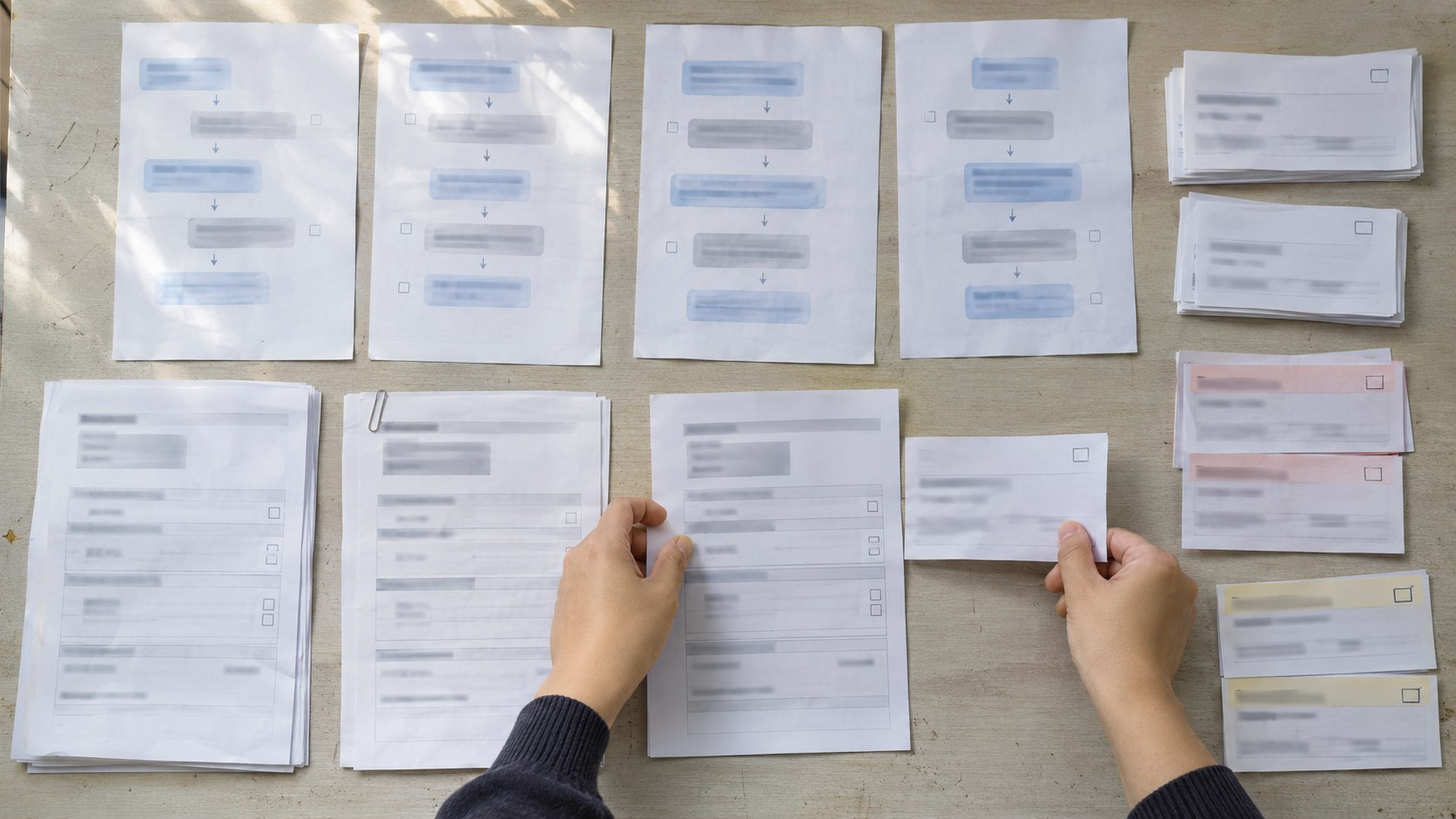
Telegram bot development cost depends on what the bot must reliably do: integration depth, business rules, AI evaluation, payment handling, administration, languages and support. A flat price for a feature name conceals these decisions; request an estimate against acceptance conditions.
A basic FAQ bot needs answer maintenance, navigation and a fallback. An automation bot adds stored state, credentials, data mapping and failure recovery. Payment or AI-heavy scope adds financial-state reconciliation or answer evaluation and model monitoring. These are effort categories, not universal price bands. Request separate estimates for implementation, integration discovery, testing, deployment and ongoing operation.
Return to the hypothetical studio with the same scope: FAQs, enquiries and bookings through its existing system, without payments or AI. If that system cannot expose live availability or accept reservations through a usable interface, the launch promise must change. The owner can fund the missing interface or launch enquiry capture with staff confirmation. The latter tests demand for Telegram bookings, but it must be described as a booking request. Calling it instant booking would move an engineering gap into customer support.
An admin panel adds permissions, editing rules and audit needs; multilingual support adds content maintenance and dialogue testing across languages. Payment scope adds failed, pending, refunded and revoked-access states. AI adds evaluation cases and recurring usage expenses. Hosting, monitoring, backups and incident response remain after launch. Ask who owns each responsibility and which changes require a new quote. A cheap build with no named operator is an unfinished procurement decision.
When you hire Telegram API developers, send the proposed flow, external-system documentation, access constraints and failure examples together. Request source code, deployment instructions, account ownership and a defined support boundary in the handover. Compare proposals against the same scope and acceptance tests rather than headline totals. AI-assisted or vibe-coded prototypes can help explore a conversation, but generated code still needs review for credentials, authorization and retry behaviour before it handles live records.
Protect the bot token and the records behind it
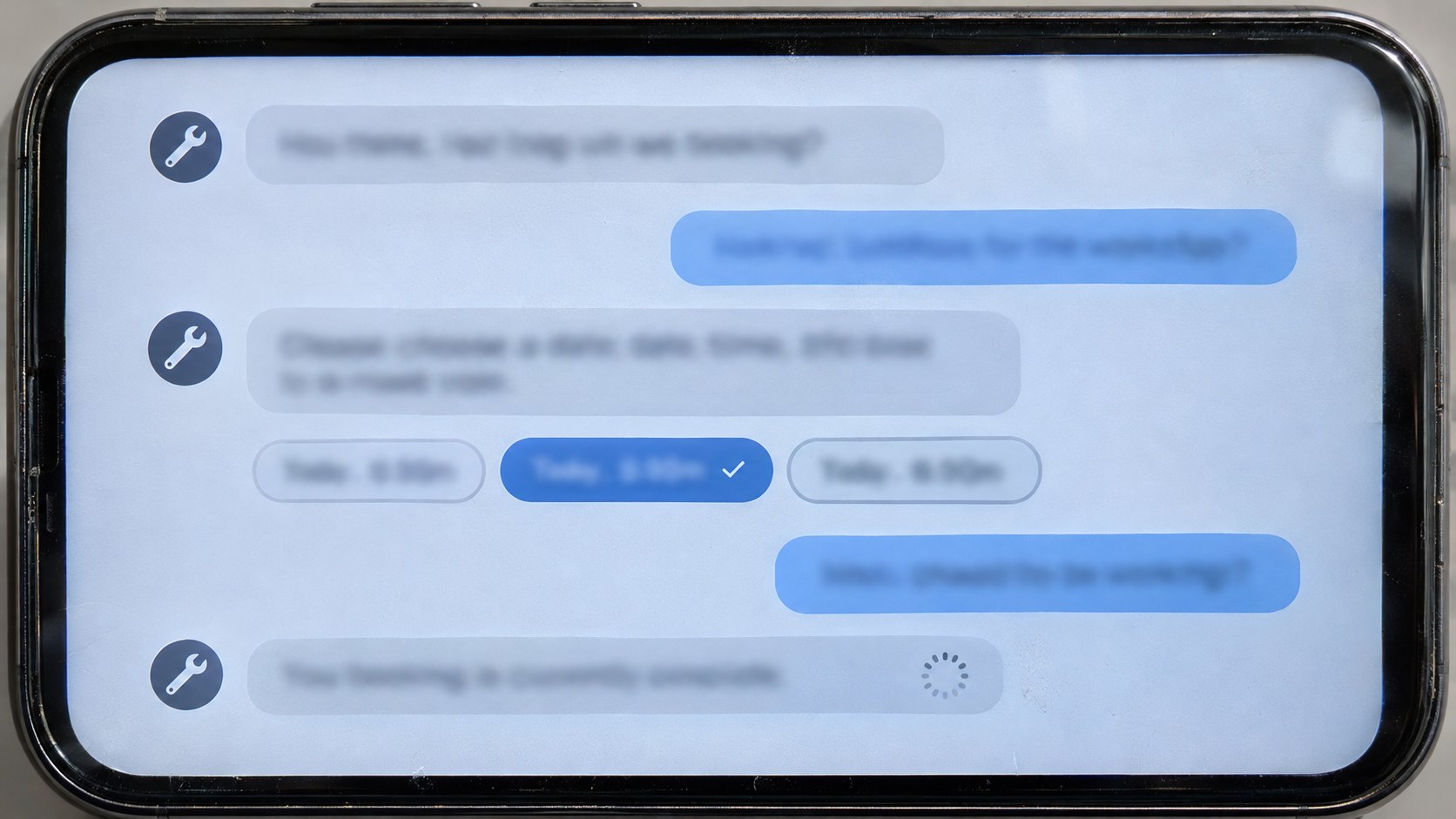
Treat the bot token as a production credential, validate incoming webhook requests, and authorize every operation against the relevant business record. Telegram access alone should not become permission to view a booking, change another customer's data or use an administrator function.
Keep credentials out of messages, repositories and diagnostic output. Establish rotation procedures and separate test access from production. For webhooks, use encrypted transport and a validation mechanism checked before processing requests. Review external-system privileges too: protecting the bot token does not repair an integration account with excessive access. Ask for a demonstration of rejected unauthorized requests.
Decide which conversation details the backend actually needs. The studio may need a reservation identifier and contact route without retaining every message indefinitely. Define retention, deletion, staff access and backup recovery for the data you choose to store. Mask sensitive fields in logs while retaining enough context to trace a failed operation. These are proposed design controls to adapt to your requirements; a chat interface does not settle your data-handling obligations.
Plan anti-spam and notification behaviour before opening access. Restrict administrative actions, validate submitted fields and limit abusive repeated requests. Confirm applicable Telegram API constraints during implementation rather than assuming unlimited delivery. Use queued retries and backoff for transient failures, with an explicit stop condition. For group moderation, provide a staff review route for contested actions. Automation that cannot explain how to recover from its own decisions creates another moderation queue.

Release against a Telegram-specific readiness checklist
Move from requirements to dialogue design, integration proof, build, failure testing and controlled deployment. Connect and test external systems before declaring the bot ready; leave a named operator, a rollback route and a staff fallback in place after release.
- Requirements: name the completed business action, its authoritative record and the conditions that require staff intervention.
- Flow review: walk through start, back, cancel, correction and help paths; make pending states distinguishable from confirmed outcomes.
- Setup and build: assign BotFather ownership, protect the token, configure webhook validation and prove integration permissions in a test environment.
- Failure testing: repeat button presses, interrupt sessions and simulate an external-system timeout after it accepts an action; check for duplicate records.
- Payment validation, if included: verify applicable payment requirements, confirmation handling, reconciliation and refund-related access changes before collecting money.
- Deployment: check configuration, monitoring, backups and restoration; demonstrate how to suspend a failing action while keeping the staff contact available.
- Pilot and support: invite a bounded audience, inspect incomplete flows, assign incident ownership and document deployment and recovery steps for handover.
For the studio, monitor booking attempts that reach a confirmed reservation, pending requests needing intervention and failures at the integration boundary. Define an attempt consistently so repeated button presses do not inflate demand. Link diagnostic events to a reservation reference without copying unnecessary personal information. Completion alone is insufficient: inspect whether customers received the correct outcome. A fast, incorrect confirmation is still incorrect, only more efficiently delivered.
Make the fallback operational: tell staff where a pending request appears, who accepts it and how the customer hears back. Suspend automated writes if reconciliation shows uncertain outcomes. For the next design step, automation to human handoff explains how to give staff usable context; workflow automation testing checklist helps translate failure cases into release checks. The handoff belongs in the pilot, where you can observe whether anyone actually receives it.

Keep the bot as a channel until the product needs a home
Stay with a bot when customers need a short interaction and your existing systems can fulfil it. Consider a separate platform when browsing content, managing subscriptions, controlling branded access and administering accounts become the central experience rather than occasional chat actions.
The studio's booking pilot does not justify a platform by itself. Paid lesson libraries and member accounts would change the scope: customers would need discovery, access history and subscription controls. Assess those requirements separately instead of accumulating commands. A Telegram Mini App improves interaction inside Telegram; a branded website provides a distinct destination. Both still need backend ownership and maintenance.
Sometimes the wrong assumption is the channel. If your customers organize service conversations on WhatsApp, examine how does WhatsApp Business work before commissioning a Telegram build. If the unresolved question is what customers will pay for in an AI conversation, Telegram AI bot monetization use cases addresses that commercial question. Neither channel selection nor a revenue model is resolved by choosing a bot framework. Settle the underlying question before buying implementation.
Prepare a brief that separates the Telegram entry point, business records and any future member website. Mark what must work at launch and what evidence would justify expansion. For this studio, confirmed bookings and recoverable failures remain the immediate test. A branded content platform becomes relevant only if the business commits to a paid-content experience. That boundary preserves a useful bot without asking a conversation window to become the entire business.

When paid content needs its own branded destination
If your validated use case expands into a creator or fan community with subscriptions, paid content and messaging, Scrile Connect is a relevant platform to evaluate. It provides hosted white-label software under your own brand and domain, with creator payout management and configurable content access rules.
Compare that platform scope with the member experience you actually intend to launch. Keep Telegram delivery and any connection to existing systems as separate implementation questions to confirm.
Frequently asked questions
Can the first release work without AI?
Yes. Approved answers and deterministic flows can handle a bounded task. Add AI when interpreting varied language creates a clear benefit, and keep consequential actions behind explicit business rules and confirmation.
What should happen if the booking system has no usable API?
Choose between funding an integration and changing the promise to a staff-confirmed request. Do not maintain an independent availability list unless you have designed how it stays consistent with other sales channels.
Is BotFather setup enough to launch a business bot?
No. Bot setup does not supply your business logic, hosting, data storage, integrations or operating procedures. Those components must support the outcome the bot promises.
Should a Telegram Mini App replace the chat flow?
Use a Mini App when a visual task, such as schedule comparison or catalogue browsing, warrants a web interface. A short enquiry flow may not justify the additional interface and deployment work.
Can payments be added after the pilot?
They can be scoped as a later release, but payment state, reconciliation, refunds and access changes need explicit design. Confirm the applicable requirements for the intended goods and payment flow before implementing it.
How long will a custom Telegram bot take to build?
A useful schedule requires a defined flow, integration access and acceptance tests. Ask the developer to identify discovery dependencies and distinguish build work from waiting for external access or approvals.
What must be included in the development handover?
Agree on source code, account ownership, configuration and deployment instructions, recovery procedures and support responsibilities. Check that your team can identify the operator when the bot or an integration fails.
Does choosing Scrile Connect include a Telegram integration?
Treat a Telegram connection as a separate integration question to validate. Scrile Connect provides a hosted branded creator or fan platform; that does not establish compatibility with a particular bot or booking system.

Heads marketing at Scrile. Writes about positioning, content systems, and how SaaS companies find product-market fit in narrow niches.