Online buying habits changed quietly but decisively. Shoppers no longer want to browse endless categories just to check a price, confirm availability, or compare options. They expect instant answers, right where the question appears. That expectation is what pushed the best shopping bot from a novelty into a sales tool.
Early chat automation focused on support. It answered delivery questions and return policies. Over time, retailers noticed something else. The same conversational layer could guide product discovery, remove hesitation, and move buyers closer to checkout. Automation stopped being defensive and started generating revenue.
This article looks at how shopping bots actually work, where they perform best, which real tools are used today, what benefits and limits businesses should expect, and how teams can build a sales-focused bot instead of relying on generic solutions.
What Shopping Bots Actually Do in Modern eCommerce

Shopping bots are often described as helpers, but that undersells their role. In practice, they act like a guided layer between the shopper and the catalog. Instead of forcing users to translate intent into filters, the bot does that work for them. A question replaces a search, and the answer moves the session forward.
The best shopping bot focuses on behavior, not buzzwords. It reacts to what a shopper is trying to achieve and adjusts the path in real time. That’s why these systems outperform static interfaces in many stores. Filters wait to be used. Bots engage first.
Most modern shopping bots handle a small set of actions extremely well:
- Product discovery and guided search by narrowing choices through questions about budget, use case, size, or preferences, rather than endless scrolling.
- Recommendations based on intent or history, adjusting suggestions when a shopper hesitates or changes direction mid-conversation.
- Pricing alerts and availability checks that remove friction around stock status, discounts, or timing-sensitive purchases.
- Cart assistance and follow-ups, answering last-minute questions, suggesting add-ons, or recovering abandoned sessions.
This is where shopping chatbots differ from traditional UI elements. They don’t wait for perfect input. They work with partial intent and still move the buyer closer to a decision.
Conversion improves because the path feels shorter. Fewer clicks, fewer dead ends, fewer reasons to leave. Instead of navigating the store, shoppers feel guided through it.
Where the Best Shopping Bots Make the Biggest Impact
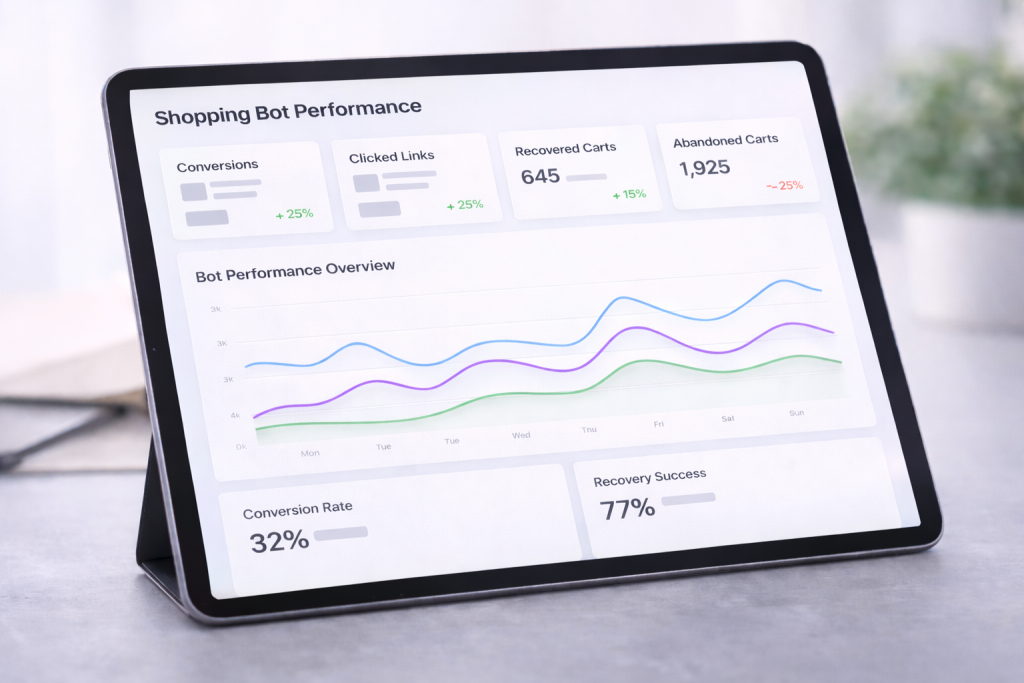
Shopping bots tend to get grouped into a single category, but their impact varies a lot depending on where they sit in the buying journey. Some moments benefit from conversation far more than filters or banners. This section breaks down the two areas where automation consistently moves revenue, not just engagement.
Product Discovery and Recommendations
Product discovery is where many stores lose buyers. Too many options create hesitation, and hesitation kills carts. A well-designed bot shortens the path by asking a few targeted questions about budget, size, brand preferences, or the exact use case. That conversation trims thousands of SKUs down to a shortlist that feels manageable.
Retail case studies often point to a 10–30% conversion uplift when guided selling replaces manual filtering. The exact number depends on catalog size and traffic quality, but the pattern is consistent. Shoppers respond better when they feel assisted rather than overwhelmed. The best shopping bot turns browsing into a dialogue, which makes the experience feel curated instead of chaotic.
Pricing, Stock, and Purchase Timing
Price and availability drive urgency. Bots can monitor inventory changes, track discounts, and notify users when a product hits a target price or comes back in stock. That creates a trigger to buy, not just a reminder to revisit.
Speed matters here. In competitive retail categories, popular items sell out in minutes, and price drops disappear fast. Bots act instantly, which shifts buying from passive browsing to event-driven decisions. This is another area where the best shopping bot becomes a revenue tool rather than a support feature.
How Shopping Bots Are Used in Real Sales Scenarios
Most retailers don’t choose a shopping bot because of feature lists. They choose it because it fits into an existing sales flow without forcing the team to change how they work. Looking at real usage makes the differences clearer.
Intercom
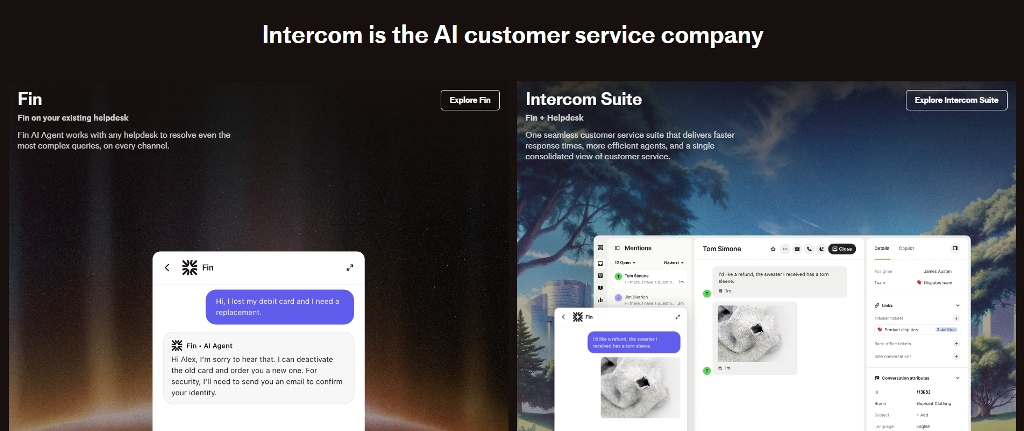
In eCommerce, Intercom is rarely treated as a full shopping assistant. It’s used to catch questions at the moment they appear. A shopper asks about sizing, delivery time, or compatibility, and the bot responds immediately. When interest turns serious, the conversation moves to a human. Retailers use it as a gatekeeper that keeps sales teams focused on buyers who are ready to act.
Botpress
Botpress tends to show up in stores with complex products. It’s used where a simple answer isn’t enough and the conversation needs structure. Retailers build logic around product configuration, conditional questions, or guided selection. That control is why Botpress is often discussed as a best shopping bot option for teams that want automation without losing decision logic.
Shopify Messenger
Shopify Messenger is built around conversational commerce inside social platforms. It lets shoppers browse a store’s catalog, get product recommendations, check prices, and even receive order updates through Messenger. Retailers use it to keep customers engaged on channels they already frequent rather than forcing them back to a website. Shopify Messenger also supports abandoned cart nudges directly in the chat environment, and some brands report double-digit lifts in completed purchases after implementing it.
WeChat Shopping Bot
The bot lets customers explore products, add items to a cart, handle payments, and receive order updates—all inside the messaging app. Because WeChat combines social and commerce features, the shopping bot becomes a sales channel rather than just a support tool. Stores use it to push promotions and handle questions in localized contexts, and its open API makes it extensible for loyalty programs or direct payment flows.
Botsonic
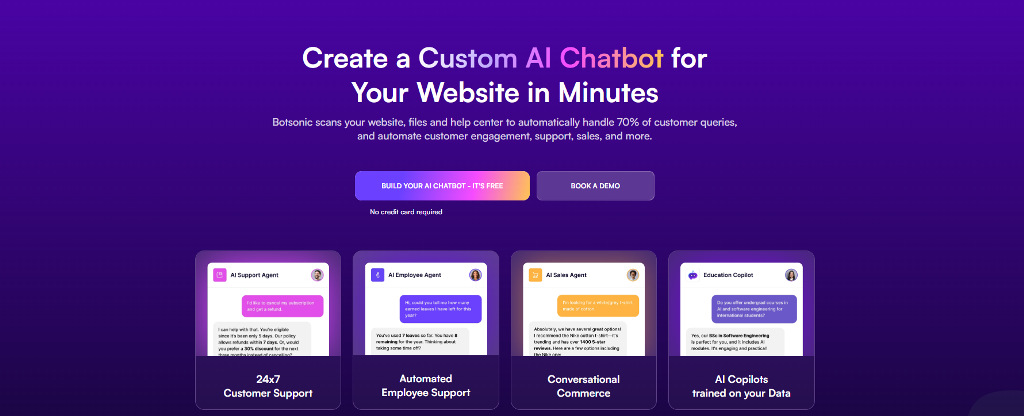
Botsonic is chosen for speed. Teams connect a site, scan product pages, and launch quickly. It’s commonly used to handle repeat questions and basic discovery without deep customization. The appeal is low friction, not flexibility.
InDMShopBot (Telegram)
InDMShopBot reflects a different habit. Some buyers prefer messaging over browsing. Sellers use it to show catalogs, confirm availability, and take orders inside Telegram chats. There’s no storefront experience. The chat is the store.
These examples show why comparisons often miss the point. The best shopping bot isn’t universal. It’s the one that fits how people already buy.
Business Gains That Go Further Than Simple Automation
Most teams start shopping bots to reduce workload. What surprises them is where the real value shows up. A well-implemented best shopping bot doesn’t just answer questions. It changes how people move through a purchase.
Guided conversations reduce hesitation. Instead of dumping filters on a category page, the bot narrows options step by step. That alone lifts conversion, especially on mobile. Support pressure also drops during traffic spikes, because routine questions never reach agents. Coverage matters too. A bot doesn’t clock out, which gives smaller teams round-the-clock sales presence without adding staff.
Retention is the quiet win. Post-purchase follow-ups, delivery checks, and reorder reminders keep the relationship alive after checkout.
A common example comes from fashion retail. A shopper lands late at night looking for a jacket. The bot asks about climate, fit, and budget, suggests two options, confirms stock, and offers sizing help. No browsing spiral. No abandoned cart. The sale happens because the interaction feels guided, not automated.
Are Shopping Bots Legal? Where the Line Actually Is
The legality question usually comes from confusion, not risk. Shopping bots fall into very different categories.
One group covers legitimate use:
- customer service and sales bots that answer questions, recommend products, or assist with checkout
- conversational assistants embedded on websites, apps, or messaging platforms
These are legal and widely used.
The other group causes problems:
- sneaker bots designed to bypass checkout limits
- scalping tools that flood retailers with automated purchases
Those tools often violate terms of service. Retailers respond with bot detection, purchase limits, IP bans, and account closures. In some regions, large-scale abuse can trigger legal action, especially when resale fraud is involved.
The distinction matters. The best shopping bot built for discovery and sales operates in the open. It helps customers decide. It doesn’t exploit infrastructure or bypass safeguards. As long as automation supports the buying process rather than manipulating it, businesses stay on solid ground.
Building Your Own AI Sales Bot with Scrile AI and Scrile Connect
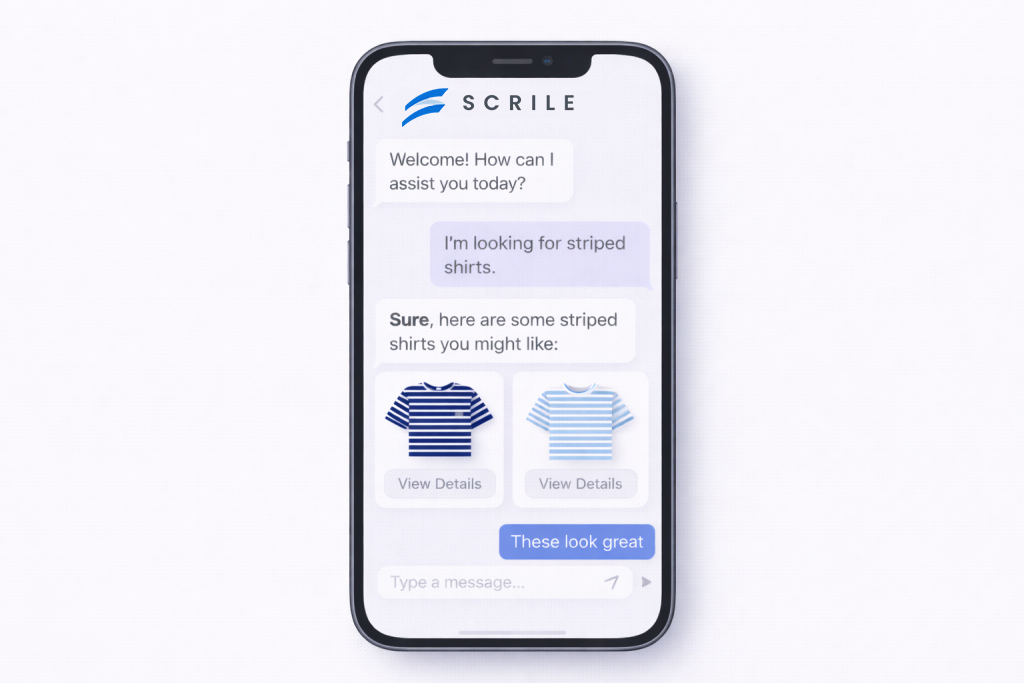
Ready-made shopping bots work until they don’t. The break usually comes when product logic gets messy, personalization starts to matter, or revenue depends on more than answering questions. At that point, teams stop “adding a bot” and start building a system they actually own.
That’s where Scrile AI and Scrile Connect fit. They are not platforms with fixed limits. They are custom development services designed to assemble an AI sales bot around how a business sells, not how a template expects it to.
With a custom build, teams can shape behavior instead of working around it:
- product logic that reflects real buying decisions, not generic filters
- memory that adapts to returning users, not just sessions
- personas tuned to brand voice, audience, or market segment
Scrile AI handles the intelligence layer. It defines how the bot understands intent, reasons through options, and maintains context over time. Scrile Connect covers the commercial side:
- payments and subscriptions
- gated access and user roles
- messaging across web, mobile, and chat platforms
This approach removes platform dependency. Data stays owned. Flows evolve without rebuilding from scratch. Monetization is designed in, not bolted on later.
For growing stores, that’s how a best shopping bot stays effective long after traffic, catalog size, and expectations increase.
Conclusion
Shopping bots didn’t become popular because they were clever. They spread because they removed friction. What started as basic chat support slowly turned into a sales layer that guides decisions, answers doubts, and keeps buyers moving. Used thoughtfully, a shopping bot becomes part of the revenue flow, not a side feature.
The real difference shows up over time. Ready-made tools help teams test ideas quickly. Custom systems define how far those ideas can go. Stores that care about data ownership, deeper logic, and long-term growth eventually outgrow templates.
That’s where building matters more than choosing. Teams exploring scalable conversational commerce can look to Scrile AI and Scrile Connect to design sales bots that fit their business, not the other way around.
FAQ
What is the best shopping bot?
There’s no single answer. Intercom works well for qualifying shoppers and routing conversations. Botpress suits teams needing deeper logic and scalable AI behavior. Botsonic fits quick website-based deployments with minimal setup. The best option depends on sales complexity and control needs.
Are shopping bots illegal?
Shopping bots are legal when used for customer service, discovery, and sales. Problems arise with bots that bypass checkout limits or violate retailer terms. Most enforcement targets misuse, not conversational commerce.
Which is the best shopping bot in Telegram?
InDMShopBot is a common example. It’s used for catalog browsing, order handling, and direct sales inside Telegram chats, where conversation replaces the storefront.

Polina Yan is a Technical Writer and Product Marketing Manager, specializing in helping creators launch personalized content monetization platforms. With over five years of experience writing and promoting content, Polina covers topics such as content monetization, social media strategies, digital marketing, and online business in adult industry. Her work empowers online entrepreneurs and creators to navigate the digital world with confidence and achieve their goals.